
When Winter Comes as Rain in the Sierra Nevada
A warm, wet start to the season is reshaping snowpack — and what it means for local businesses in Truckee and beyond.
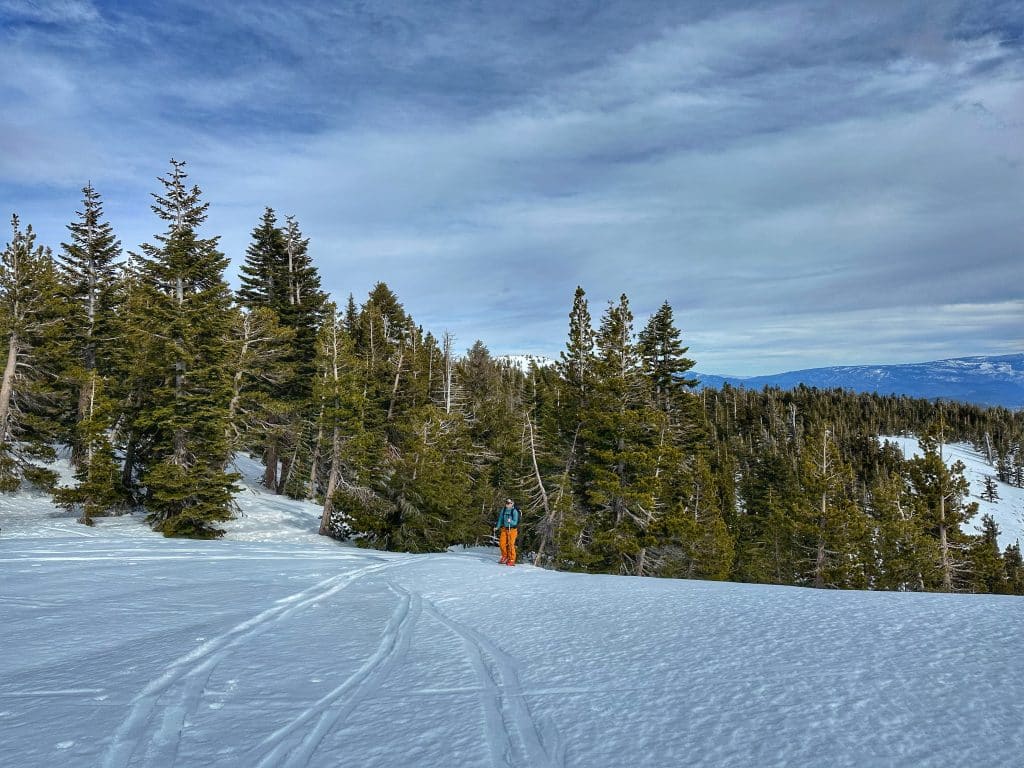
Snow finally touched down in the Sierra Nevada on Christmas Day after an unusually warm, rain-heavy start to winter — a shift locals have been watching closely, especially those accustomed to the snowy days that come with living in the Sierra.
For Piper Johnson, an artist and the owner of Piper J Gallery in Truckee, the rain has been a mixed bag for business.
“When I saw rain in the forecast this December, as much as I want snow, I thought, at least the tourists who came up to ski might be looking for something else to do,” Johnson said.
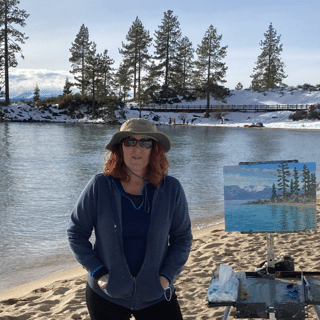
Originally from the East Coast, Johnson moved to Incline Village in January of 1995 for what she thought would be just one ski season before “going back to the real world to get a real job,” as she puts it. Thirty years later, she’s still living, working, and skiing in the place that first got her hooked on winter.
But now, those winters are starting to look different from what Johnson remembers from her first few years in the Sierra.
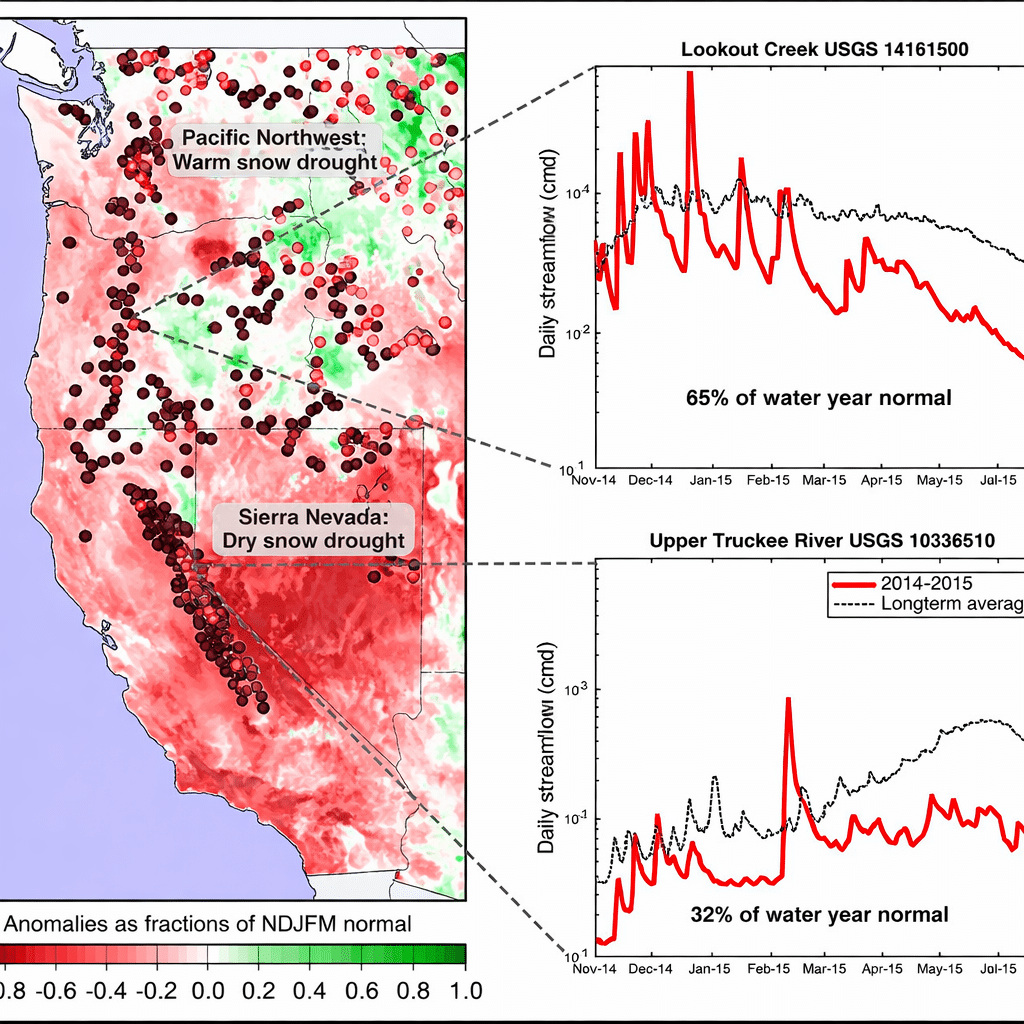
A drought status update released on December 11 by the National Oceanic and Atmospheric Administration’s (NOAA) drought monitoring team found that nearly every major river basin in the West experienced record-high temperatures in November. Both the Sierra Nevada in California and the Great Basin in Nevada were in extreme snow drought, with snow water equivalent levels at less than 50% of the median recorded during November and early December. In contrast, rain levels have been much higher than normal, with soil moisture “118% of the median due to above-normal rainfall.”
“It’s been an interesting season in the sense that it hasn’t been incredibly dry,” said Dan McEvoy, a climatologist at the non-profit research organization Desert Research Institute, which contributed to the NOAA drought report. “We would probably have above-normal snowpack if it was colder, but the temperatures have been very warm.”
Up until last week, most of the locations that Desert Research Institute uses to measure snowpack were getting rain instead of snow.
“That put us in this situation that’s referred to as a warm snow drought, which is where we still have had a lot of precipitation, but we have very little or no snow because it’s been too warm to snow,” McEvoy said.
Johnson said that the rain can occasionally be good for her gallery because it draws people who would otherwise be recreating outdoors into her shop, but this year, business has been slow.
“We’ve had some okay weekend traffic, but this has been probably the longest shoulder season I can remember since before the pandemic as far as October, November, December just being really quiet, especially during the week,” Johnson said.
That could be because many of the region’s ski resorts were closed or operating with limited terrain for November and most of December, until the Christmas week snowstorm. Warmer-than-average temperatures also limited the amount of snow ski resorts could make artificially, since snow machines require below-freezing temperatures to operate.
“We would probably have above-normal snowpack if it was colder, but the temperatures have been very warm.”
Dan McEvoy, climatologist with the Desert Research Institute
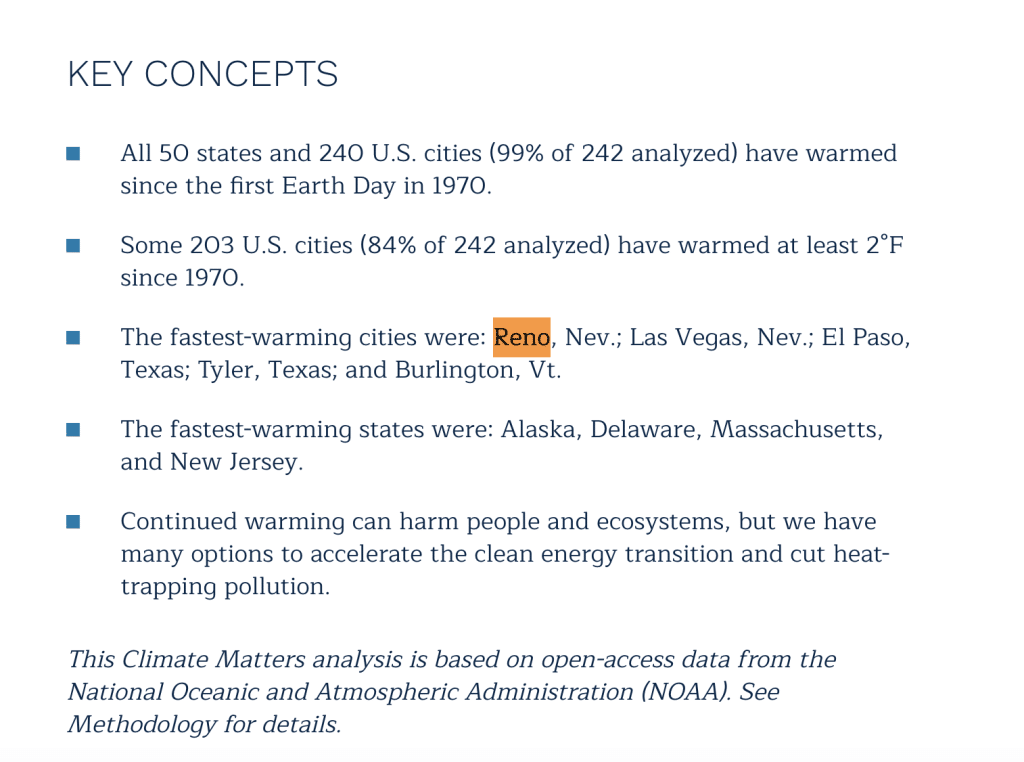
The unseasonably warm temperatures align with a new, hotter reality for the Sierra Nevada region. An analysis by the science communication organization Climate Central found that Reno is the fastest warming city in the United States, with a 7.8 degree Fahrenheit rise in average annual temperature between 1970 and 2024. That’s nearly two degrees warmer than the second-fastest warming city in the U.S. — Las Vegas — which has warmed by 5.9 degrees Fahrenheit since 1970.
“There’s a very strong urban heat island [in Reno],” McEvoy said.
The urban heat island effect occurs when natural landscapes are paved over by unshaded roads, parking lots, and buildings, which radiate heat as they warm up throughout the day. That, in combination with human-caused climate change, is a “double whammy” on the warming trend in Reno, according to McEvoy.

While not as severe as Reno, nearby towns like Carson City, Truckee, and communities around Lake Tahoe have also seen rising temperatures. For Johnson, the warming summers are just as much a concern to her as the warming winters.
“Yes, I’m sad about winter, but it’s the other stuff, like how hot summers have become,” Johnson said. Many potential customers to her gallery avoid shopping altogether on the hottest summer days, she said.
For now, at least, Truckee is beginning to resemble the winters Johnson remembers when she first moved to the area. As of December 27, the town had logged 46 inches of snow this season, edging it closer to its claim as the fifth-snowiest city in the United States. The jury is still out on what the rest of winter brings.

Republish our stories for free, under a Creative Commons license.
Author

Related Articles
Ally Audio: Where’s the Mountain Snow We All Love?
Check out the latest edition of Sierra Nevada Ally’s podcast
Can an Opponent of Public Lands Safeguard Them for Us?
If Bureau of Land Management Director Nominee Steve Pearce gets the job, it would be like a fox guarding the hen house

Lake Tahoe’s Red River Autumn
Spawning kokanee salmon bring waves of red to Taylor Creek and the Upper Truckee River.
Comments (0)
There are no comments on this article.