
Remembering Jenee Murray and Examining the System That Failed Her
How a life of warmth, joy and creativity was ended by a driver with two DUIs and no convictions.
When Lex McSweeney thinks about her cousin, Jenee Murray, she talks about all the creative things Jenee would do, like when she got really into making resin art and created something special for the office.
“She brought a tray with flowers set in it to my office,” McSweeney recalled. “She was so excited. She was making art and having fun again.”
McSweeney said her cousin was always doing things that would fill the world with color and life, from making resin art to baking beautiful, imaginative cakes. She describes Jenee as the kind of person who makes you feel seen, a quirky, kind and creative soul. She remembers a devoted mom who would drive her son to school every morning and play video games with him after, a fan of scary movies and heavy metal music, and a devoted friend who relentlessly shows support to those close to her.
“She was my biggest cheerleader,” McSweeney said. “She was always asking about my business, always showing up.”
But Jenee’s story didn’t end with the joy and warmth she brought into the world.
In 2023, 36-year-old Murray was killed when her boyfriend, Brian Fogel, drove drunk and crashed their car on Highway 49 in Nevada County. She left behind her young son—and a family struggling to understand how a system designed to protect people allowed this to happen.
A System that Looked Away
Fogel had already been arrested twice for driving under the influence—including once with Jenee’s son in the vehicle. But because neither arrest resulted in a conviction, his license was never revoked. In fact, just seven months after his second DUI arrest, the California Department of Motor Vehicles (DMV) issued him a new license.
A month later, he killed Jenee.
“The fact that Nevada County dragged their feet to convict Brian of the first two DUIs—that it was low on their totem pole of importance—is incredibly frustrating,” McSweeney said. “I wholeheartedly believe that had he been convicted, he would have been in jail and not driving Jenee that day.”
Fogel ultimately pleaded guilty to gross vehicular manslaughter while intoxicated—a lesser charge than what McSweeney had hoped for. Despite a documented history of substance abuse and domestic violence, he received a 10-year sentence. With credit for time served, he could be out in a mere five.
While devastating to Jenee’s family, this case reflects a broader, ongoing failure of the DMV system.
As part of its ongoing License to Kill investigation, CalMatters has been reporting on these systemic failures and have found that California’s fractured systems—between local courts and the DMV—routinely allow high-risk drivers to remain licensed, even after deadly crashes.
California’s fractured approach to DUI enforcement continues to leave dangerous drivers on the road. CalMatters reporters analyzed thousands of driving records and found that:
- Nearly 40% of drivers charged with vehicular manslaughter since 2019 still had a valid license.
- While DUIs are supposed to result in automatic suspensions, many drivers continue driving for months or even years—often until their convictions are finalized.
- And for some vehicular manslaughter convictions, license suspension isn’t even required by law.
Here in the Sierra Nevada region, DUI-related deaths have occurred with troubling frequency in Nevada, Placer, and El Dorado counties. (Placer remains No. 1 in DUI conviction rate in the state). But few lead to serious charges or meaningful license restrictions—even when drivers are repeat offenders. CalMatters conducted a statewide investigation finding that in November 2022, a driver in Placer County with at least 17 prior violations — including speeding tickets, reckless driving, racing, and multiple collisions — drove a Ram 2500 into the back of a disabled sedan and killed a toddler. He was later charged with felony vehicular manslaughter.
Despite those pending felony charges, in December 2022, the California DMV renewed his driver’s license while the case was still open.
The DMV denied our request to discuss our findings with Director Steve Gordon, but Gordon issued a brief statement:
“The modernization of our systems, including the launch of the Driver Safety Portal, reflects our ongoing commitment to enhancing accountability and transparency while continually refining our processes to ensure California’s roads are safer for everyone,” the statement read.
Chris Orrock, a DMV spokesperson, said the agency follows the law when issuing licenses.
“We use our authority as mandated and as necessary,” he said.
Living With the Loss
To help keep her cousin’s memory alive, Lex McSweeney keeps a photo of Jenee on an altar. She talks to her every night.
“She didn’t get taught self-love, but she was getting there,” McSweeney said. “She was trying.”
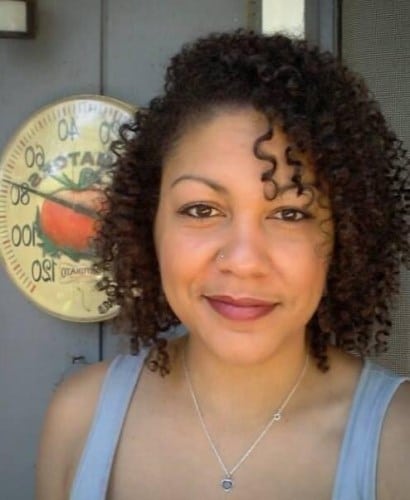
Since Jenee’s death, McSweeney has fought not just for justice—but for memory. She said Jenee deserved better–from the man she trusted and from the systems that were supposed to protect her.
Instead, she said, the system failed her at every turn.
McSweeney has since pulled her son out of the school he once attended with Jenee’s boy. It was too painful. Eventually, Jenee’s son moved to Alaska to live with extended family.
“He’s starting to heal,” McSweeney said.
But, that healing comes more slowly for herself as she’s constantly reminded of the tragic loss of the kind, quirky, creative soul she grew up with.
“I have to drive past the crash site every day. Memories of her, both happy and tragic, are everywhere.”
Editor’s Note: Jenee’s story is part of a partnership with CalMatters exploring the human cost of systemic failures around DUI enforcement and accountability. You can read more of their License to Kill series on CalMatters.org. If you or a loved one has been impacted by a similar case, reach out to editor@sierranevadaally.org.
Republish our stories for free, under a Creative Commons license.
Author

Related Articles
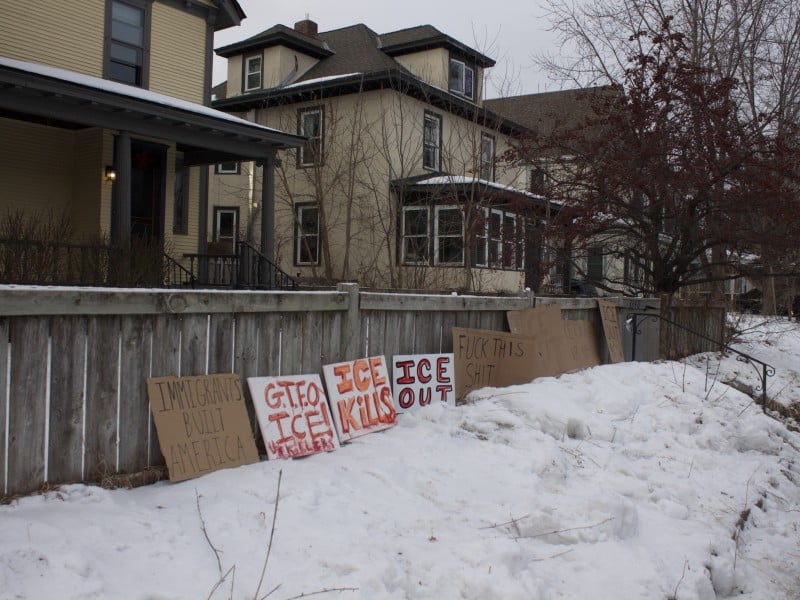
As ICE agents flood Minnesota, local reporters say national news misses the mark
Recent New York Times reporting on a Minnesota scandal may have cast unwelcome attention to the state’s Somali community, but it isn’t the first time national journalists haven’t captured the full scope of Minnesota’s local stories.
Public Space and Civic Identity in the Mountains: Truckee Debates Its New Library
Despite overwhelming public support, a funding measure for a new library has led to contentious arguments around its financing and place in the community.
Photos: Students Walk Out to Protest ICE
Students across Washoe County took part in a nationwide walkout to protest the actions of federal immigration officers.