
Students Stung by Truckee Turning Down Bee City Proposal
Despite impassioned presentation from a group of third graders, Truckee passes on becoming Bee City for now.
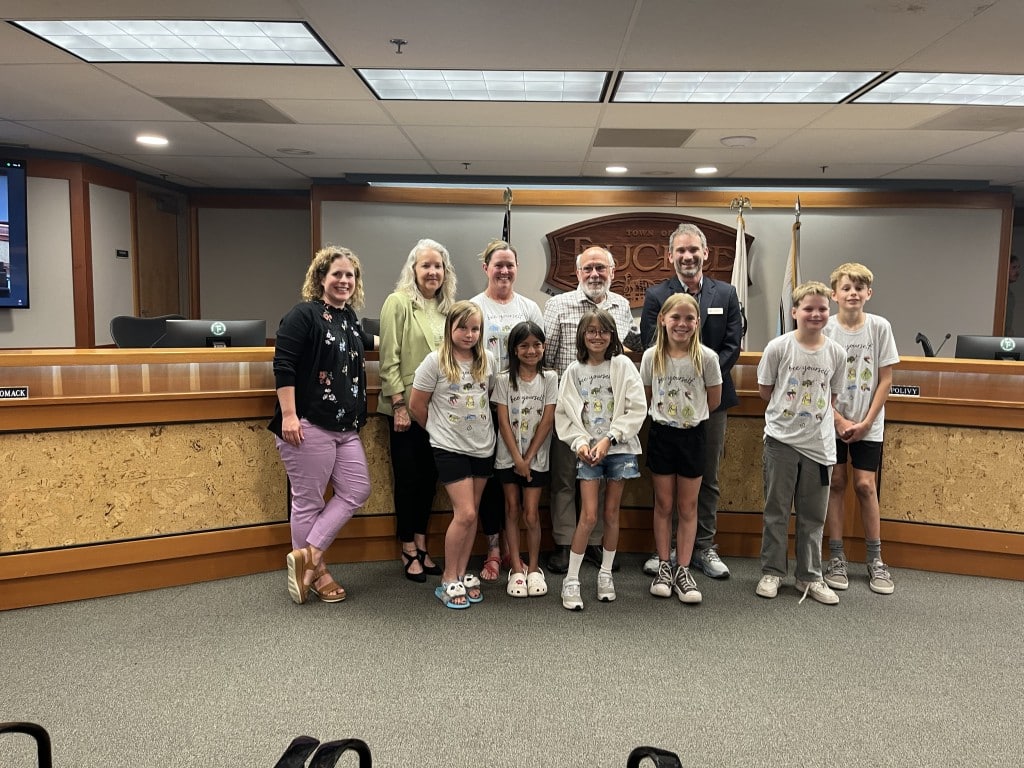
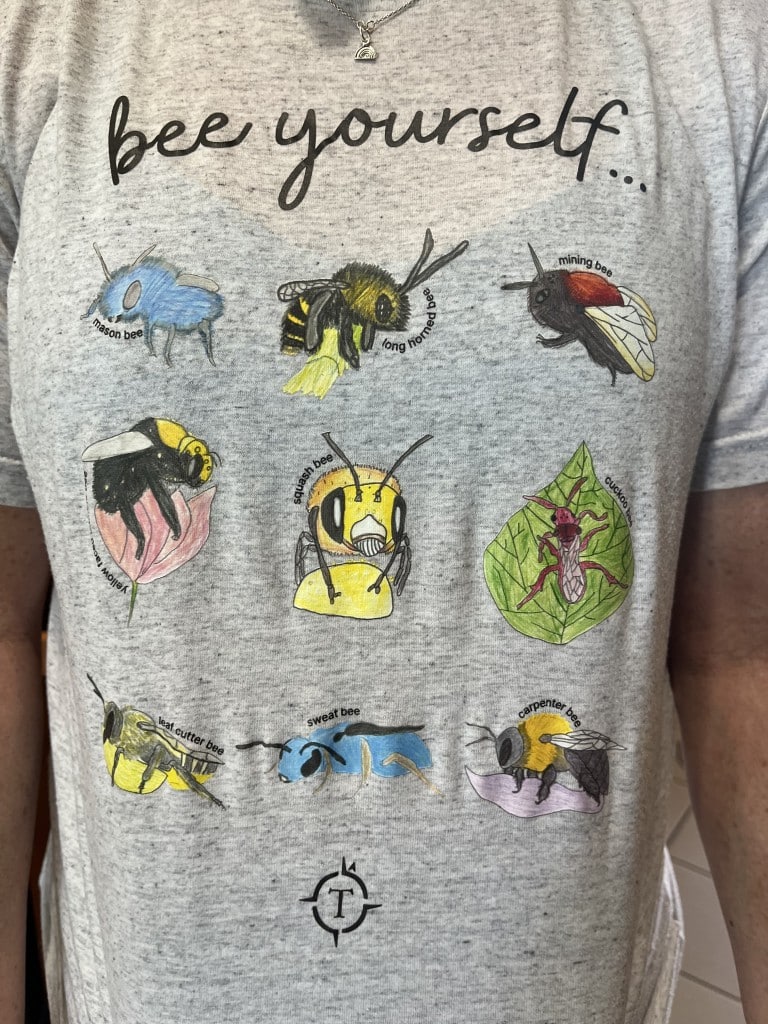
On a June evening during summer break for local schools, six third graders from the Tahoe Expedition Academy (TEA) donning “Bee Yourself” t-shirts and holding index cards took to the podium.
Their audience? The Truckee Town Council. Their goal? Get Truckee to agree to become an official Bee City.
“We would like to start by asking all of you on Town Council a question: What different types of bees can you name?” one girl asked.
One councilmember called out, “Yellowjacket.”
“That’s actually a type of wasp, and that is not a bee,” the girl corrected her. “But don’t worry, most adults can’t name very many native bees. Most often, when people think of the word bee, they think of honeybees or maybe bumblebees (and sometimes even wasps). But guess what, honeybees aren’t even native.”
The students explained that honeybee numbers are very stable while native bee numbers are decreasing. There are about 3,600 native bee species in the U.S. and 1,600 bees native to California. According to Bee City USA, up to 40% of invertebrate pollinator species globally are on the verge of extinction due to habitat loss, pesticides, diseases and climate change.
“That is not good statistics!” one student said.
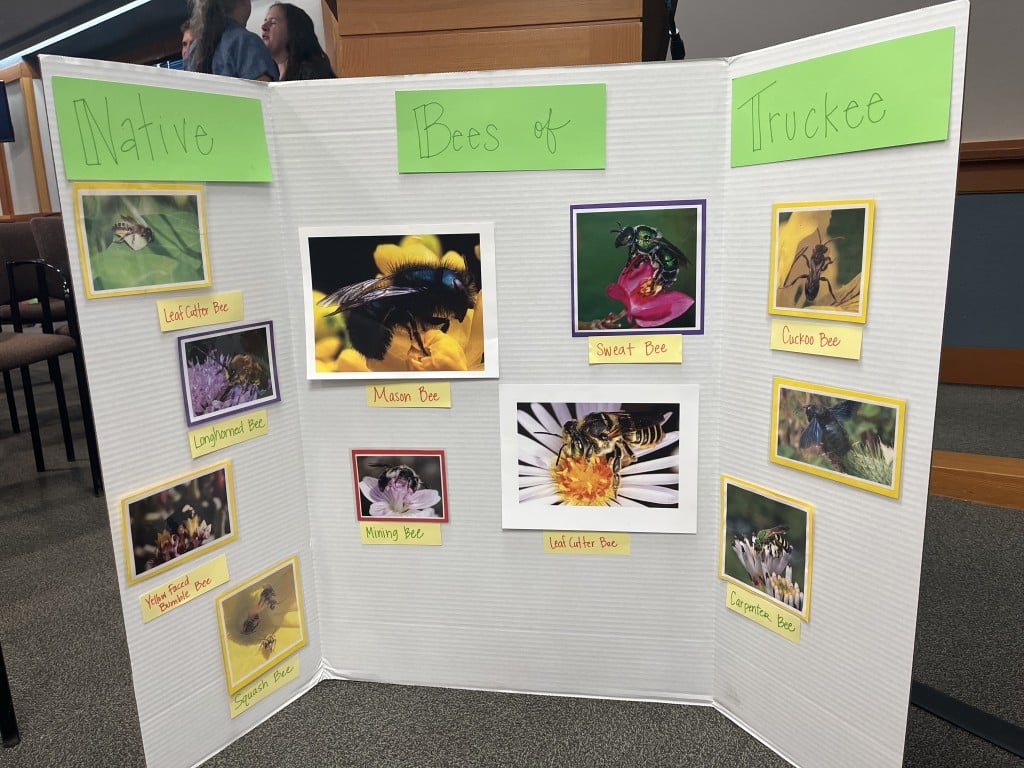
Students described the bees native to our area, such as Mason Bees, Bumblebees, Carpenter Bees, Mining Bees, Cuckoo Bees, Sweat Bees, Long-Horned Bees, and Leaf Cutter Bees.
“These unfamiliar bees are the ones that we should be worried about. Without these native bees, our ecosystem would become imbalanced, and it would also cause a huge disruption to our food chain and many of the food crops that we eat,” a student said.
Another asked, “Do you have any ideas as to why our native bees are declining right now?”
“Loss of habitat,” Town Councilmember Dave Polivy answered.
The student confirmed that was indeed the case.
“The two main reasons are native bees are losing their habitat because people are building more houses or disturbing overwintering nests, and bees are getting sick and dying from people using chemical pesticides to kill weeds and other bugs,” the student said.
After a few minutes of persuasion, the students then issued a call to action to the town of Truckee: make the necessary requirements to become a Bee City USA affiliate.
“As a Bee City, Truckee would make a commitment to save native pollinators,” they said.
Bee City USA is an initiative of the Xerces Society, a conservation advocacy organization. To become an affiliate “Bee City,” the town of Truckee would need to establish a standing Bee City USA committee, create and enhance pollinator habitat on public and private lands, reduce the use of pesticides, incorporate more pollinator-friendly policies into city plans, and host pollinator awareness events, in addition to some administrative requirements.
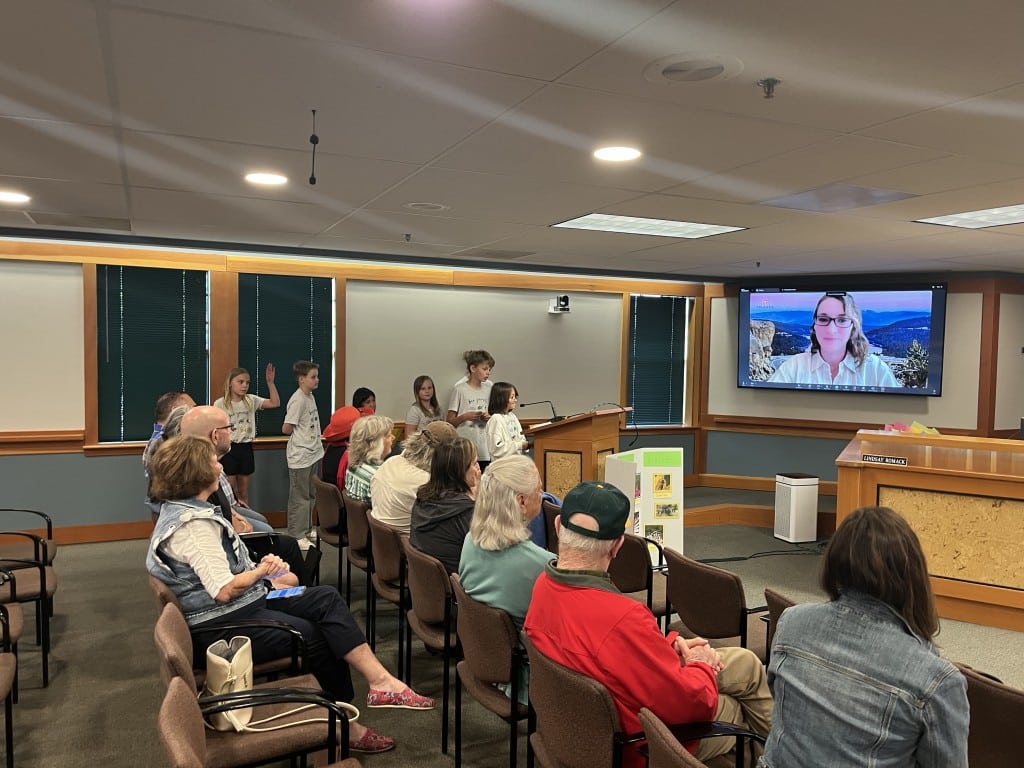
To help, the students offered to have their school help support the required committee, put together a native pollinator friendly plant list that could be distributed to individuals and at nurseries, host events at the school, and even help with funding.
“Our school is committed to helping pay the application fee from funds we raised selling our bee t-shirts and sweatshirts,” one student said.
The students said to become a Bee City, the town would create a pest management plan to reduce the use of chemical pesticides and expand the use of non-chemical pest management.
“Did you know that you can make sprays to prevent animals, insects and fungi from destroying your garden? You can make a spicy spray, a milk spray, and even a soap spray! Our school could also help put a list together for the public with suggestions to reduce pesticide use,” a student said.
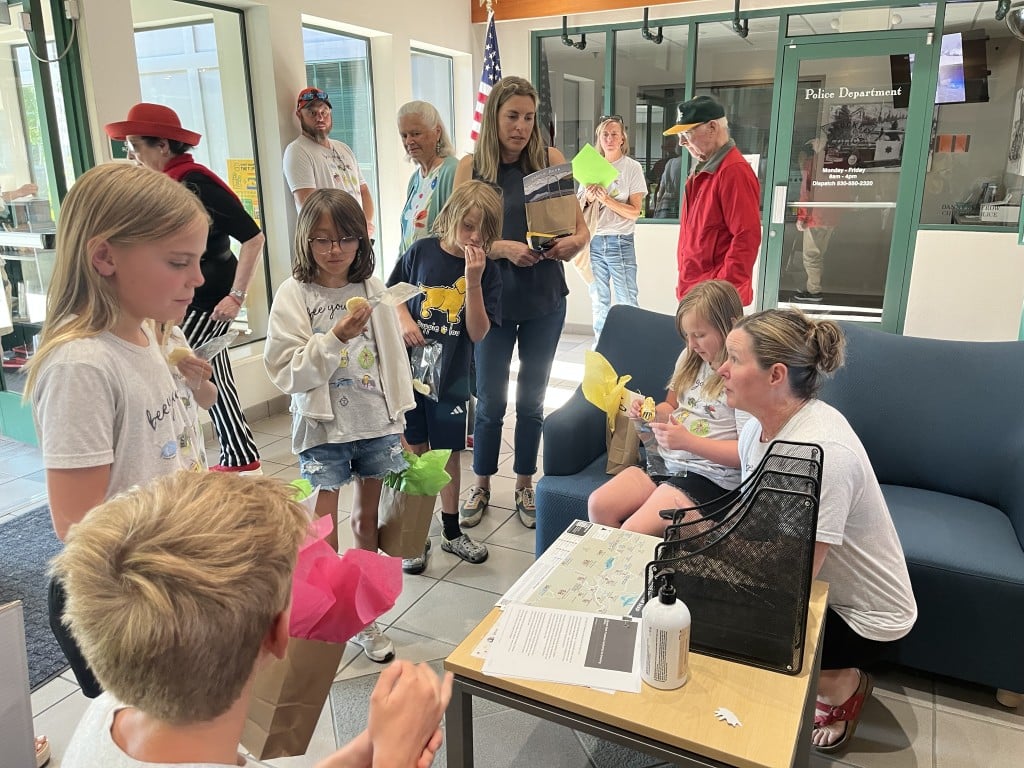
Following the impassioned presentation, the town council thanked them and gave the kids a swag bag filled with a coloring book, a pair of socks, Chapstick, a pen, a sticker, and a bee-shaped cookie.
But, they ultimately said no to the proposal.
“That was a great job on the annual bee presentation. It is not in our work plan this year, but we will look into it for future years,” Polivy said.
All the other councilmembers remarked it was a great presentation, congratulating the students on their initiative, research, and becoming knowledgeable and informed on the topic. One councilmember suggested partnering with the Truckee-Tahoe Unified School District regarding its pest management plan it has in place and another councilmember offered to reach out to SWEP (Sierra Watershed Education Partnership) as it promotes environmental stewardship with students in the Truckee/Tahoe region.
“I looked into the Bee City and listened to the presentation. I realized that is a big project to become a Bee City and the Town Council [has] put the project on a waitlist, if you will. But I don’t think you should wait for the town on this and there are nonprofits we could work with,” Mayor Jan Zabriske said to the students.
Despite the recommendations and suggestions, the council’s response was disappointing to teacher Colleen Carr.
“They own this,” Carr said about the kids’ obsession with the bees. “Every class that’s been involved with this project has been so passionate about it.”
Carr shares that passion. Wearing a blue t-shirt with a Mason bee on it–which she said people confuse for a fly–she also showed off the Mason bee tattoo she has above her ankle. That love is reflected in the passion of her third-grade class, which goes in the field every week to meet with environmental/biology experts.
“I’m now known as The Bee Lady,” Carr said. “I was that person who couldn’t name anything besides the bumblebee and the honeybee and now I absolutely love them.”
Carr has been working on this Bee City USA proposal for three years. In 2023, her class sent a series of persuasive letters to the town council, and her 2024 class spoke with Dave Polivy in the council chambers.
“This was a huge step in coming here on your summer vacation, and this is the first time in front of the entire city council,” Carr said.
When asked what the primary roadblock was to Truckee becoming a Bee City, Carr said it was the forming of a committee.
“There is a Help Save the Bees nonprofit in Reno, and maybe that helped them get their designation [of Reno being the Biggest Little Bee City],” she said.
Truckee Mayor Jan Zabriskie confirmed that there is a difference between endorsing a program and implementing it, while balancing the other issues that have taken precedence in Truckee’s town master plan, such as solving the housing crisis.
He believes that developing a plan is a project best spearheaded by a nonprofit.
“We do have in our [2040] General Plan protections for sensitive habitats, wildlife corridors, and wetlands, and the bees would be part of that. The resources are here with the Native Plant Society, SWEP, and others, just not within the town government,” Zabriskie said.
He also affirmed that becoming a Bee City is competing with other priorities such as building infrastructure and fixing housing needs–while managing town staff that is feeling pinched by all these projects.
“The town just went through an organizational assessment and one criticism is the town council is asking too much of staff,” Zabriskie said.
Zabriskie adds that the town council is happy to take more suggestions on the need for establishing a Bee City, how to approach it, and how to improve its current bee populations.
“There are two things going on here: 1) form a Bee City or not; and 2) how can we improve the bee habitat. Following the second one will help accomplish the first one.”
Ultimately for now, town leaders said they are interested in the idea, and are encouraging students in Carr’s class to connect with local nonprofits to help alleviate some of the burden on town staff.
“We can look at becoming a Bee City, but someone else needs to take that on and then we can endorse it,” Zabriskie said. “There’s much appreciation from the town council for TEA looking into this, but we need someone to spearhead, organize this, and bring in other groups. That’s the rub.”
Unfortunately for the third-graders in Colleen Carr’s class, the competing town priorities mean it’s unlikely that Truckee will BEEcome a Bee City anytime soon.
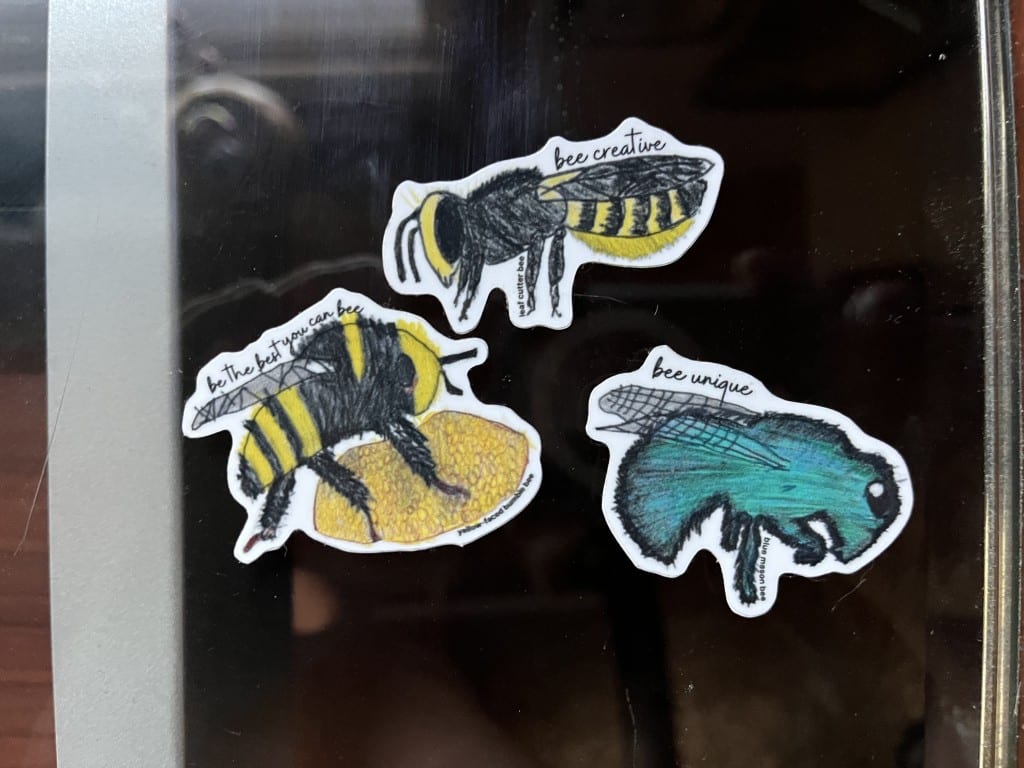
To purchase a Tahoe Expedition Academy bee-focused T-shirt or sweatshirt, visit tahoeexpeditionacademy.org.
Recommended Reading:
Am I Even a Bee? By Felicity Muth and Alexa Lindhauer (Illustrator)
The State of Fire: Why California Burns by Obi Kaufmann
Bee Behavior in Tahoe Basin Part of UC Davis Research by Kathryn Reed
Wild Sierra Nevada by Joanna Howes and Alex Bailey (Illustrator)
Republish our stories for free, under a Creative Commons license.
Author

Related Articles

Tracking Food and Gas Prices in the Trump Era (Updated for November)
President Donald Trump campaigned on the promise of lowering grocery prices for everyday Americans. We’re tracking how that’s going.
The Realities of Our Rapidly Changing Immigration Landscape
While most immigrants come to the United States legally, one Reno-based immigration attorney says doing things “the right way,” is complicated, expensive and full of roadblocks.

How does a special session in Nevada work?
The recent special session of the Nevada Legislature is behind us. How are they called?