
Democracy needs systems, not saviors
What the military, community, and working on Question 3 taught me about incentives and freedom
In 1975, on the eve of our nation’s bicentennial, Nobel Prize-winning economist Milton Friedman made a statement that still rings true today.
“I do not believe that the solution to our problem is simply to elect the right people. The important thing is to establish a political climate of opinion which will make it politically profitable for the wrong people to do the right thing. Unless it is politically profitable for the wrong people to do the right thing, the right people will not do the right thing either, or if they try, they will shortly be out of office.”
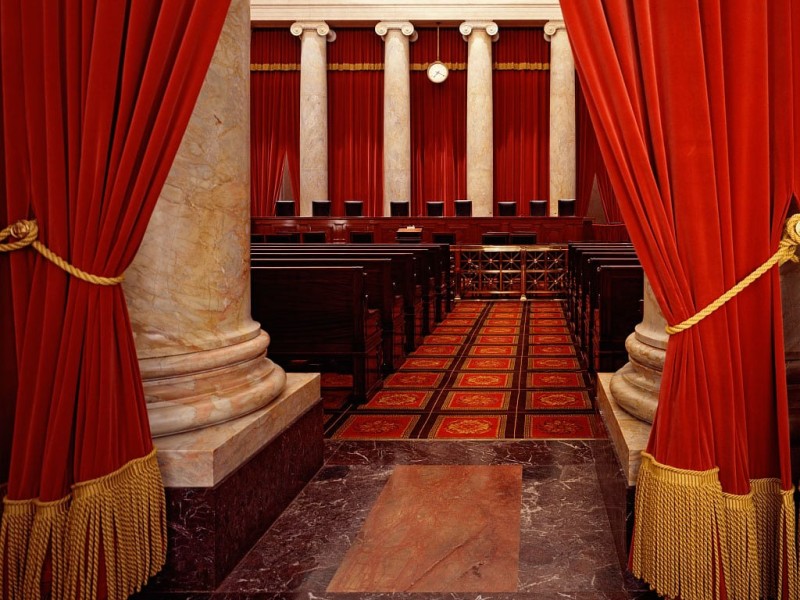
In the time since that was uttered, incentives have gone the opposite of what Friedman suggested. The Citizens United ruling in 2010 made it so that corporations can have outsized influence on elections, and the Supreme Court recently ruled that presidents are immune from prosecution from criminal acts while in office.
These decisions veer drastically from my experience and the American ideals I believe in. I’ve become a believer in systems, and that most things that happen are because of the incentives and the intended (or unintended) consequences of previous decisions.
The Beginning of Independent Ideals
I wasn’t supposed to go into the military after high school. I came from a family who emphasized academics over almost everything else, and I grew up knowing that college was what was expected of me post-graduation.
All of that changed on September 11, 2001.
I remember being a senior in high school watching the day’s attacks unfold on live television. I remember watching part of it at home before school, and then continuing alongside my silent classmates during our first period government class. The world seemed to pause. I felt disoriented, shocked, angry. One month later, I enlisted into the U.S. Marine Corps at age 17.
I’d told my reluctant mother that if she wouldn’t sign my enlistment papers while I was still underage, I’d go back to the recruiting office when I turned 18 and do it myself, but I wouldn’t stand by and do nothing while terrorists attacked my homeland.
During my four years of active duty, I worked as a military photojournalist, or “combat correspondent,” as we were known back then. My job was to tell the story of the Marine Corps and its operations. Through that experience, I met people of all political leanings and backgrounds, and I traveled to places even the most adventurous of folks were unlikely to see in their life (see: Haiti and Iraq).
I served under a Republican commander in chief. I spoke with Marines who leaned both conservative and liberal, young men and women who came from every state in the union and even several nations outside of it. I participated in the early years of the Global War on Terror, and I saw firsthand how the promises of ridding Afghanistan and Iraq of either dictators or alleged weapons of mass destruction were either false or otherwise went ultimately unfulfilled. The complexities of what I experienced and the multiplicity of perspectives I interacted with would forge my early independent political beliefs.
I finished my military service and transitioned to civilian life, where I did ultimately go to college to become a middle and high school social studies teacher. Deepening my learning of history, geography, comparative world politics, and economics–and then later teaching these subjects for several years–reinforced my independent beliefs.
If there’s one thing studying history teaches you, it’s that life and people are complex.
Fast forward to 2020, and another presidential election was upon us. I found myself desperate to have better options, to participate in a more meaningful way. I disagreed with major policy points on both Democratic and Republican platforms, and I hadn’t registered with a major political party for the last 12 years or so. I even posted on social media a well-intentioned-but-ultimately-always-futile plea to my followers, who then as now un-impressively numbered in the triple digits. Vote your conscience! If enough of us endorse who we want and NOT for the lesser of the two evils, we WILL get a different sort of candidate in office!
The storming of the Capitol on January 6, 2021, was the final straw for me. A few years earlier, I’d reenlisted in the armed forces, this time as a part-time reservist in the Nevada Army National Guard. By 2021, I was in my last year of service. You can therefore imagine how heartbroken and enraged I felt that cold January morning in 2021 as I sat in my car on my way to work and listened to the radio broadcast of the day’s news. Homegrown terrorists had desecrated my country’s symbols, calling for the murder of government officials over an election they claimed had been stolen.
If the ballot box no longer served as a way for our voices to be heard, or even more fundamentally, if the ballot box itself was no longer seen as a legitimate and secure tool, our nation’s democracy did not stand a chance. Something needed to change.
Getting Involved
My anger and despair ultimately found a more constructive home. I was introduced to Katherine Gehl and Michael Porter’s book, “The Politics Industry.” In conversational terms, these authors laid out thoughts I’d never heard phrased quite this way before: that the problems in our national politics do not lie so much in the leaders we elect, but in the rules governing how our elections work and how our laws are made.
It was time to stop looking for good people and political saviors. It was time to start thinking about why our existing incentives and systems routinely gave us these unsatisfactory results.
With the help of podcasts, articles, friends, and loved ones, I started getting educated. I got connected to a national nonprofit organization, Veterans for All Voters (V4V). Their website mentioned a noble purpose for the organization: “inspiring and educating one of America’s most-trusted institutions – veterans – to mobilize and advocate for election innovations that will help repair some of America’s least-trusted institutions (the political system and Congress).”
Almost on a whim, I signed up around early 2022 as a volunteer for V4V and agreed to receive their email newsletter. I’d almost forgotten about them when, months later, I got a call from Eric Bronner, co-founder of V4V. “Things are really heating up in Nevada,” he said.
With the insurrection attempt still fresh in my mind, I had renewed focus to do all I could to influence things toward what I felt the promise of America could be.
We had a long conversation about one of Nevada’s upcoming ballot initiatives, Question 3. It proposed one of the most radical overhauls of my state’s election system, exactly the kind of reforms that “The Politics Industry” book advocated for.
First, Question 3 would open Nevada’s primary elections so that registered voters of any or no political party affiliation could fully participate in their state’s taxpayer-funded primary elections, rather than only those who registered as Republicans or Democrats. Second, the top five candidates in the primaries as determined by the number of votes they received would then advance to the November general election, regardless of their party affiliation. There, voters could rank these candidates in order of preference, allowing people a chance to vote for their favorite and compromise with backup rankings if they wished.
To me, I felt that both the open primaries and ranked-choice voting approaches would help guarantee stronger voter representation, since candidates need to appeal to a broader number of the electorate in order to build coalitions and win more people’s vote. This is especially relevant today, and in fact, the national pro-democracy organization, Unite America, states that in the 2024 primaries, 87% of the U.S. House of Representatives was elected by just 7% of Americans.
The Question 3 campaign asked me to be one of the “faces” of Nevada’s reform initiative, since nationwide, approximately half of all veterans self-identify as politically independent. We are thus unable to vote in a closed primary system like Nevada’s unless we first register as either Democrat or Republican, regardless of whether we feel Libertarian, Constitution, Green, or “none of the above.”
I had never done any method acting before, nor had I ever volunteered for a political campaign of any sort. This was an unexpected opportunity to support a cause I firmly believed in. It was an easy “yes.”
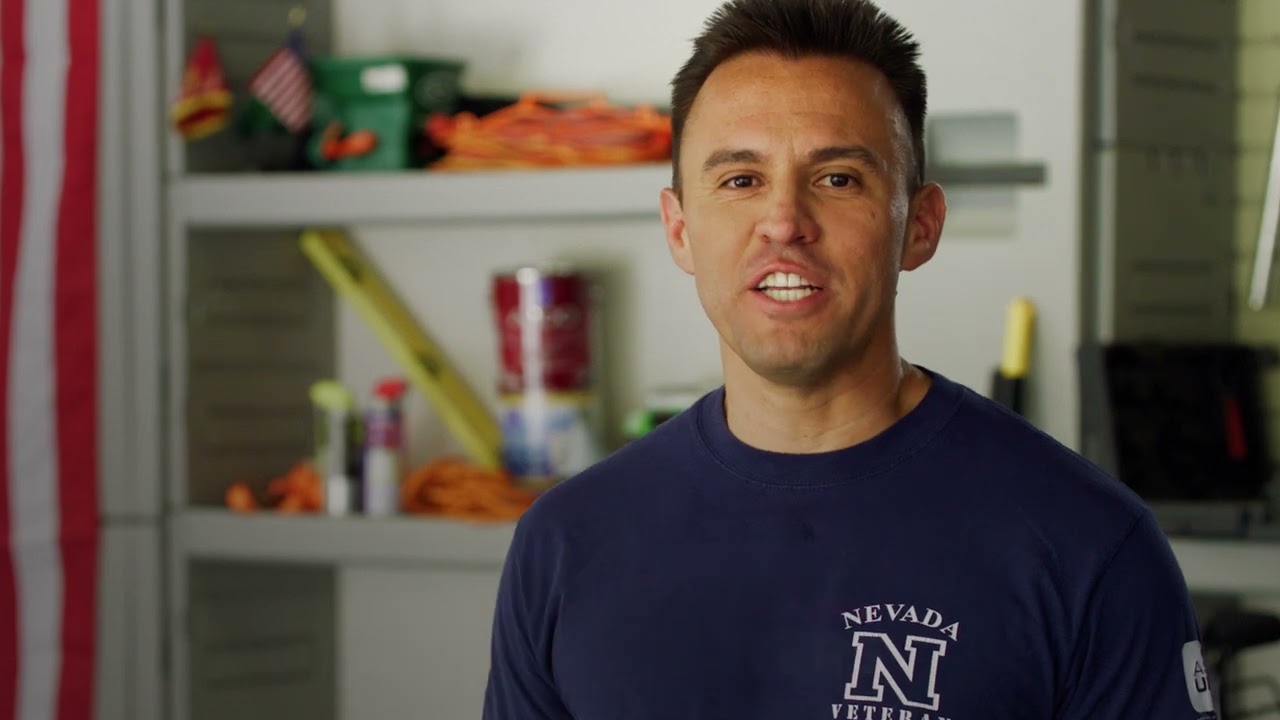
Getting involved in Question 3 was fascinating. Having had experience on the other side of the camera as a photojournalist in the military, I now found myself the face for politically independent military veterans in Nevada. Since Question 3 proposed an amendment to the Nevada constitution, it had to be passed by voters in two consecutive elections (2022 and 2024). During both of these years, I appeared in fliers, starred in TV commercials, and even participated in a statewide televised debate. I heard from friends I hadn’t seen in years after “I” (AKA the campaign, using my voice and image) texted them or after “I” interrupted their show on Hulu. It was a surreal experience and a profound honor.
The Road Ahead
Question 3 passed in 2022, but it failed in 2024. I remain disappointed about this outcome, because I believe the reforms it advocated for would have massively increased voter engagement and voter representation. As I look ahead, I unfortunately predict continued partisanship and division on the national stage. In some cases, we changed who we elected, but we haven’t changed how they were elected. What any electoral system reform looks like in the future for Nevada or even on the national stage, I don’t yet know, but I remain committed to these ideas.
As we enter 2025, I reflect upon the new year’s resolutions many of us set around this time. The success of these goals does not depend on whether someone is a “good” or “bad” person, or as Milton Friedman said, “right” or “wrong” person, but is instead the result of having strong systems and structures in place. We lose weight not because we’re good people, but because we change how we operate by putting in place routines and incentives that get us to the gym and keep junk food out of the house.
Similarly, successful political outcomes and strong representation by government office holders are the result of functional electoral systems and correctly aligned incentives. We should stop hoping for civility and accountability in our candidates and instead advocate for systems and structures that encourage good behavior. Friedman’s thoughts on this matter remain as true then as now, and they should serve as a philosophical North Star for everyone interested in the health of our American democracy.
Republish our stories for free, under a Creative Commons license.
Related Articles

It Could’ve Been Me
The tragedy in the backcountry outside of Truckee is a reminder to not judge too quickly and reach out to those close to you

Wild Christmas Pinyon
While you might imagine that artificial Christmas trees may be traced back only as far as the glory days of plastic in the 1950s, people actually began making fake holiday trees in the mid-nineteenth century.

Freebirds
A Thanksgiving lesson in forgiveness