
South Lake Tahoe’s Measure N represents a crossroads for mountain towns
This November, South Lake Tahoe residents will have the chance to vote on what is shaping up to be one of the region’s most controversial issues.
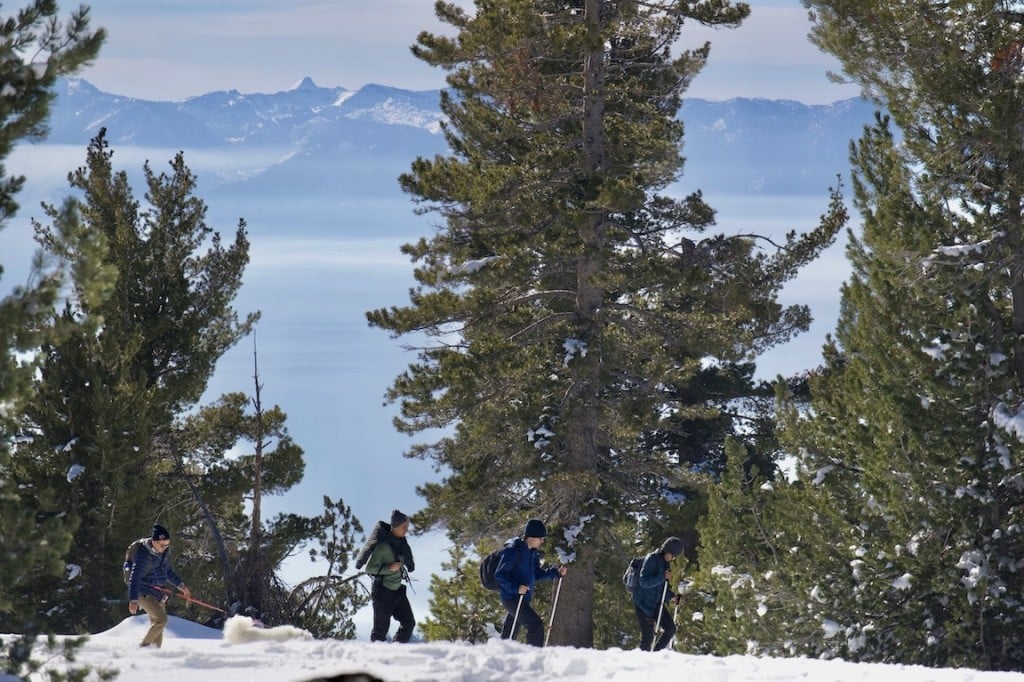
This election season, South Lake Tahoe residents will vote on a new ballot measure that would introduce a vacancy tax for homes left unoccupied for more than half the year.
By encouraging homeowners to rent out their infrequently used properties, namely vacation homes, Measure N seeks to tackle the region’s housing crisis, with the revenue used to fund affordable housing projects – and it has the community divided.
As regions in high-demand, the socio-economic dynamics of mountain towns like South Lake Tahoe are undergoing significant shifts, where the disparate visions of long-time locals and wealthy vacation homeowners compete.
The controversy surrounding Measure N is a reflection of the growing tensions emerging in mountain communities across the nation. Can a vacancy tax fix it?
Why a Vacancy Tax

Currently, South Lake Tahoe has a vacancy rate of 44%. According to U.S. Census Data in the Tahoe Prosperity Center’s 2022 report, the number of vacant homes is up 33% since 2000. The report also notes that the abundance of second homes and vacation properties has largely exacerbated Tahoe’s housing crisis.
The increasing vacancy rate is paired with rising home prices, which have nearly tripled over the last nine years in the South Lake Tahoe region (from a median price of $345,000 in 2012 to $950,000 in 2021), while the number of housing units has increased by only 1%. In response, Tahoe locals are finding themselves priced out of the housing market, often having to commute from surrounding areas, with approximately half of Tahoe’s workers now living outside the region.
In response, Measure N was petitioned back in May by Locals for Affordable Housing, a grassroots coalition of residents, small businesses, and taxpayers. Inspired by Berkeley’s vacancy tax, Measure N would tax owners of houses left unoccupied for more than six months out of the year $3,000 for the first year, and $6,000 every year thereafter. The generated funds would be used exclusively for affordable housing, such as redeveloping old units into new workforce housing and offering financial incentives to developers to build for the “missing middle.” It would also, according to the campaign, encourage local homeownership and long-term rentals.
Amelia Richmond, co-founder of Locals for Affordable Housing, said that Measure N works to shift incentives toward full-time occupancy “to protect South Lake Tahoe from becoming another vacationland for the super wealthy, like Aspen or Vail.”
“The vacancy tax encourages homeowners to occupy homes for at least half the year, or rent to someone who will, putting more money into our local economy,” Richmond said. “And for those who are unwilling or unable to do so, they can pay an economic offset, so we can build more affordable housing and fund our community’s most critical needs.”
An analysis from the Yes on N campaign projected that the measure would bring in $20 million dollars annually. Richmond said those funds could then only legally be spent on local housing, roads, transit, and administration of the policy.
It’s an issue that’s galvanized the campaigns for those seeking office, including Nick Speal. He’s running for a seat on the South Lake Tahoe City Council and has made housing affordability a major tenant of his campaign.
“As a growing fraction of our limited housing supply sits vacant for occasional vacation use, more and more of the workforce commutes into the basin from off the hill,” Speal said. “To preserve our community as a place where locals can build a career and raise a family here in town, we must shift the incentives and protect the affordability of our neighborhoods.”
Big Guns for the Opposition
Detractors of the measure (Stop Measure N) are just as impassioned as its spearheaders, and their campaign is admittedly much better funded.
The current total for the opposition’s campaign is around $1.6 million, largely due to the support of major political groups like the national and California Realtors associations, which together have contributed more than $900,000. Richmond said this is the most money ever spent by outside interests on an election in South Lake Tahoe.
For reference, the “Locals for Affordable Housing for Measure N” committee received $37,645 in total this calendar year, made by nonprofit administrators, ski patrollers, industrial ecologists, photographers, software engineers, and teachers, among others.
To the opposition, Measure N is, first and foremost, an infringement on privacy and property rights. Steve Teshara is the Tahoe Chamber’s Director of Government Relations and Co-Chair of the Stop the South Tahoe Vacancy Tax, and he said the opposition largely represents the voice of the property owner.
“What Measure N purports to do is to tell people how they should live in their homes and what they should do,” Teshara said. “That’s one of the reasons why we see a lot of funding coming from realtors and realtor organizations, because they support private property. It’s an attack on property rights, no question.”
The opposition also feels adamant that whatever funds Measure N manages to generate would do little to solve the problem at hand.
Teshara wrote in the Tahoe Daily Tribune, “We have little doubt that the size and cost to the City for tax program administration, including enforcement will be significant, and may in fact consume the lion’s share of any revenue raised by Measure N.”
A Mountain Town Divided
The controversy isn’t as black-and-white as ‘outsiders vs. locals’, and while Measure N may not be a partisan issue, some say it is one of equity.
Homeowners in particular have issues with the measure, claiming that it proposes taxation without representation. Because the tax would only be placed on those who stay in South Lake Tahoe less than half the year, the majority of people who it would affect are likely registered to vote elsewhere, so they wouldn’t get to vote on the measure.
In response to those arguments, South Lake Tahoe Councilmember Scott Robbins said during a City Council meeting, “It is the height of unbelievable privilege to say that second homeowners should get extra votes based on how many houses they own.”
As protests and town hall meetings occur with increasing frequency and fervor, the two sides remain in a contentious discourse. While supporters acknowledge that the measure isn’t a perfect fix to the problem at hand, they do view it as progress, an important step. Others believe it to be an unfair targeting of homeowners, who argue that their property taxes and local spending are justification enough for their contribution to the local economy.
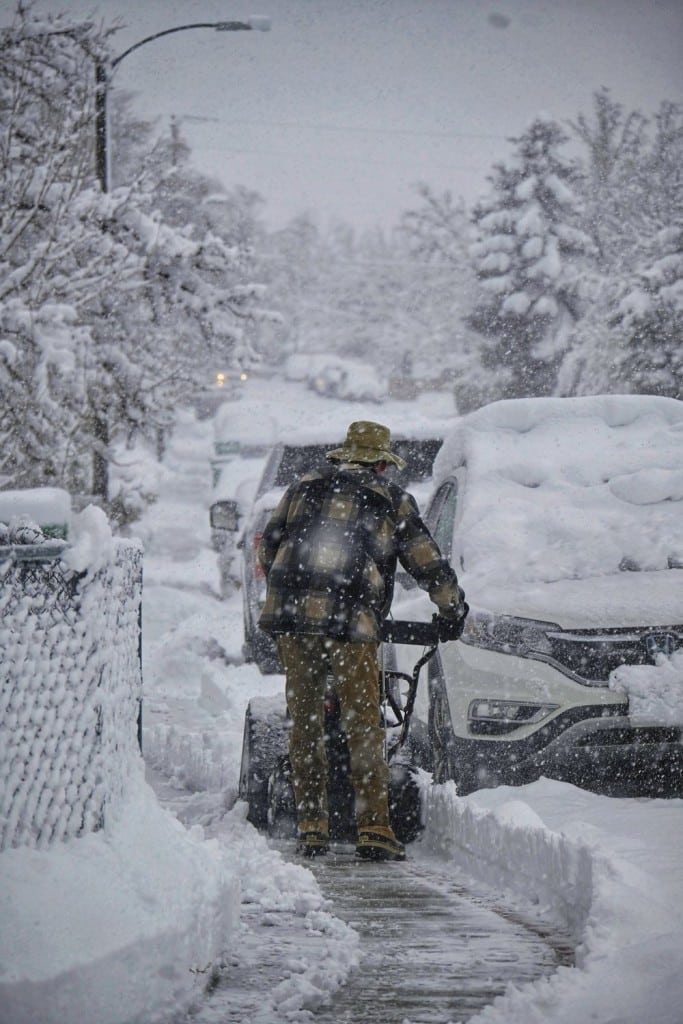
Megan Lawson studies community development in the American West. She’s an economist with the Headwaters Institute based in Bozeman, Mont., and said resort towns have become flashpoints for broader disparities.
“I think there are unique challenges for mountain towns that make the housing crisis that much more pressing,” Lawson said.
In her research Lawson found that families moving to these recreational regions are wealthier on average and wealthier than current residents. These obstacles to affordable housing mirror the broader barriers to equity: unequal distribution of wealth, imbalanced decision-making, and insufficient investment in community resources. However, Lawson is careful to note that, while a vacancy tax could prove effective, its divisiveness could be a hurdle and slow down progress.
“When I think about effective policies for communities, I try to bring in as many different kinds of policies and programs to the table,” Lawson said. “Because some will appeal to different people, some will be quicker to get passed politically, and some might take longer but be more likely to move the needle. So I think it’s important that communities are kind of throwing spaghetti at the wall and seeing what sticks.”
What Direction the Domino May Fall
It’s true that real estate prices in mountain towns are soaring, largely due to the prevalence of expansive second homes. However, the widening gap between wages and wealth is part of a broader national trend. What’s happening to locals in ski towns mirrors the erosion of the middle class across America: stagnant wages, concentrated wealth, government cutbacks, and rising living costs.
If passed, Measure N could very well set a precedent, paving the way for other struggling communities.
Amelia Richmond, co-founder of “Locals for Affordable Housing” and President of the Vacancy Tax Initiative, hopes it will “be the domino that falls and makes this possible for other small communities.”
South Lake Tahoe residents are currently at a crossroads where local communities are forced to ask, Who are mountain towns for? Can the interests of long-term residents, workers, and families coexist with the economic demands of tourism and the wealth of absentee homeowners?
More than the housing affordability crisis alone, Measure N taps into something larger. Where the wealth gap is felt most acutely in desirable, high-demand regions like mountain towns, there are increasingly disparate visions of a community’s future, each competing with one another over how to best preserve the soul of a place.
“No matter what the voters decide at the polls in November, we must work together to find solutions to the critical funding needs in our community for affordable housing, fixing the roads, and public transit,” said South Lake Tahoe City Council candidate Nick Speal. “There’s widespread agreement that these problems need solving.”
“So let’s come together and solve them.”
Republish our stories for free, under a Creative Commons license.
Author

Comments (2)
Comments are closed.
Related Articles

Tracking Food and Gas Prices in the Trump Era (Updated for November)
President Donald Trump campaigned on the promise of lowering grocery prices for everyday Americans. We’re tracking how that’s going.
The Realities of Our Rapidly Changing Immigration Landscape
While most immigrants come to the United States legally, one Reno-based immigration attorney says doing things “the right way,” is complicated, expensive and full of roadblocks.

How does a special session in Nevada work?
The recent special session of the Nevada Legislature is behind us. How are they called?
“…with the revenue used to fund affordable housing projects…” Not necessarily true- please read the text as part of your research. https://drive.google.com/file/d/1iL3cF1m8klYsDL-vZcurQBiQGuIkxCdn/view There is no guarantee that any tax would actually be used for affordable housing, and there is, in fact, no specific use or exclusion indicated in the text; it could be used for anything.
Amelia Richmond rents her South Lake Tahoe home to vacationers at a hefty profit. If she wants affordable housing for workers, she would rent to them at an affordable rate. She is so hypocritical.