
A Witness Account of the January 10th Palisades Tahoe Avalanche

On the morning of January 10, 2024, Palisades Tahoe season passholders Britt Bickert and her husband Sam Campbell got up early and drove from Reno to the resort to catch the first tracks at KT-22. Bickert and Campbell love riding powder- which usually comes during a snowstorm- and this was the first day of the season that the world-class expert terrain was open.
Bickert was surprised there was no line, despite all the publicity that went out about KT’s opening. However, every chairlift was full. It was a Wednesday. Bickert and Campbell knew that Tahoe didn’t get any snow the night before, but that it was coming. Winter Storm Warning has been issued a few days before, with the National Weather Service calling for up to a foot of snow. By the time Bickert and Campbell got to Olympic Valley, parked, put their snow gear on, and boarded the lift at 9:15 am, it was full-on windy, snowing, with low visibility.
“It didn’t even cross my mind that there would be any avalanche danger,” Bickert says. This isn’t uncommon- there is a feeling amongst many advanced Tahoe skiers and snowboarders that one is safe skiing or riding inbounds at a ski resort.
Bickert and Campbell were on the chairlift and made it a little way past the Fingers run when they heard people yelling, “Avalanche!” Their chairlift made it over the crest, seconds after the avalanche’s snow had settled. Bickert saw a woman’s arms sticking out of the snow, the rest of her buried.
When they unloaded at KT-22, they stood around at the top with about twenty other people, wondering what to do. Campbell had a beacon on him and put it in Search Mode (Bickert left her beacon at her car and said she felt naked without it). They decided to go down GS Bowl, where the avalanche occurred amongst the debris. They took it slow, and ski patrollers were behind them with a search and rescue dog. They headed towards the GS Cliffs when they saw ten-plus people in a particular spot. They were unburying avalanche survivor Jason Parker. He would later say that it felt like he was stuck in concrete, and he felt a probe hit his back and people yelling above him. Bickert says that when Parker’s head was uncovered, he was yelling. “He was okay,” she says in a relieved tone. She remembers seeing terrain markers and ski poles sectioning off the search area.
When they got to the bottom of the lift, Bickert overheard a lift operator say that another man got swept over the cliffs and broke his leg.
While Palisades representatives said that they had done avalanche mitigation in the days leading up to KT-22’s opening, they did not specify what tactics they used. The snow covering is close to a third of what it was in the 2022-23 season this time of the year, so perhaps they didn’t want to throw explosives that could potentially hit dirt or rocks. In areas of uncertainty, Patrol will tend to “ski out” terrain before letting guests on the mountain, to try to trigger avalanches before the guests do.
“I heard they did ski cuts at the top of GS that morning, but it was so weird…maybe weather conditions changed too quickly with the snow?” Bickert wonders as to why the avalanche happened the way it did.
Even though she forgot her beacon down at the car, Bickert has RECCO patches weaved into her snow gear. This gives her a little comfort, but after she heard about the man who died in an avalanche on a run underneath the Alpine Meadows’ Scott Chair back in January 2020, it shook her up. Now she usually always carries at least her beacon.
“We got freaked out about that- it showed that anything can happen inbounds,” she says. A few people have said that they have gotten caught in small “fluff slides” in other areas of the resort, and it always gives them a bit of a wake-up call.
The entire mountain was closed by 10:30 am that morning. Rattled about what just happened, Bickert and her husband went to their car, sat for a minute, and drove home. Later it would come out that 66-year-old Point Reyes/Truckee resident Kenneth Kidd died in the avalanche.
“The ironic thing is that Sam wanted to go to the Peter Grubb Hut that day [a backcountry ski hut outside of Truckee] but I didn’t feel comfortable going in the backcountry. When in reality, the resort was just as dangerous.”
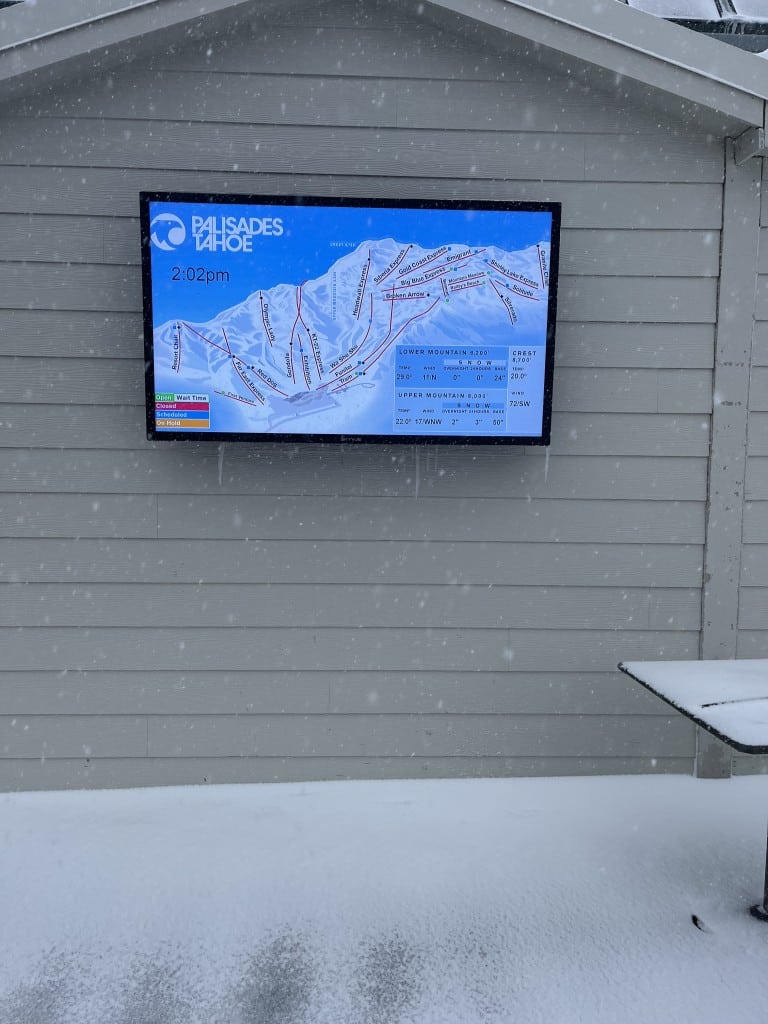
That afternoon’s press conference
Palisades held a press conference that afternoon in the Village at 2:45 pm, an hour and 15 minutes from when it was originally scheduled. The press conference lasted only five minutes and it basically just confirmed that one person died, the search was concluded, and that the ski patrol had done an adequate job in deeming it safe to open. No one from the sheriff’s office or Palisades would answer any more questions afterward.
Here were my most pressing questions:
Why did KT-22 open that day with a Winter Storm Warning in place?
Palisades Tahoe VP of Mountain Operations Michael Gross said in the press conference that it was typical to open KT-22 on a storm day. Witness and season passholder Britt Bickert confirmed that it’s no secret that many powderhounds like to go on storm days for the best chance of fresh snow. Palisades announced KT’s opening day a few days before, and Gross said that they started avalanche mitigation efforts four days before KT’s opening and continued their preparation through opening morning.
Knowing that there was a storm coming in on Wednesday, some have wondered why Palisades chose that day to open. While Palisades spokespeople haven’t really addressed this question head-on, Bickert suggests, “People were pushing them to open Headwall, which I think just opened today [January 24th]. There was a lot of pressure from the public and comments from Instagram to open KT, and maybe they needed to boost their visit numbers, so they made it a big deal to open the chair. They decided a week before to do it, and KT is usually open during a storm.”
How did they know when or if everyone was safely unburied or off the mountain?
At 1:30 pm that day, no lifts were running and no one was on the mountain. In the press conference, Palisades spokespeople said that the search had been concluded, and no further missing person reports had come forward.
“We all talked, and it seemed like everyone was accounted for,” Bickert recalls when she got back down to the base of the mountain. “In my head, I just thought everyone was found but that was probably naïve of me. I don’t know if Ken [Kidd-who died in the avalanche] was riding by himself or not. The avalanche covered a big area, but I didn’t realize that there could still be people out there. That was the creepy part that I thought about later…what if someone called the resort that night and said their husband didn’t come home?”
Later a ski patroller at another resort would say that after incidents like these, they check for cars in the parking lot just as law enforcement checks cars left at a parking pullout next to backcountry terrain on public roads. Fortunately, no other bodies were recovered in the avalanche after “the search had been concluded”.

Should skiers and snowboarders carry avalanche gear when riding advanced/expert terrain within a ski resort on storm days?
There is an underlying feeling amongst many Tahoe locals that one is safe when riding inbounds of a ski resort. Being Avy 1 certified, Bickert makes a good point when she says, “Going into the backcountry, you’re choosing terrain that you know isn’t mitigated.” Skiers and riders may expect additional protection when they buy a season pass or a $259 lift ticket (the price of a Palisades daily pass that day) but there’s only so much signage, boundary lines, and avalanche mitigation that ski patrol can do to keep their mountain safe. And yes, that Your Responsibility Code on the back of every lift ticket and season pass warns people of the inherent risk caused by participating in skiing and snowboarding, which some ski resorts would say covers avalanche danger as well.
At a place like Mt. Baker Ski Area in Washington, there are out-of-bounds Backcountry Areas to the right, to the left, and in the middle of the ski resort. Because of this, the resort has signage all around the ski area boundaries advising of the danger and a dedicated Avalanche Advisory page. Mt. Baker doesn’t care if you go into the backcountry zones, but on days of high avalanche danger, it makes it clear that its ski patrol will not respond to rescue calls. It is not recommended to go into those zones, and you are very much at your own risk. For this reason, many locals carry avalanche gear and likely have a heightened awareness of what they are getting into.
Following the Jan. 10th Palisades avalanche, Brighton Resort’s ski patrol in Utah required people who rode Milly Express (the lift that accesses its most extreme terrain) on the first day it opened to carry a beacon, probe, and shovel. A lot of people applauded the decision, one guest saying that wearing a beacon is akin to wearing a helmet.
Ultimately, it’s up to the resort to set its policy.
What could’ve been done to prevent this from happening?
There are so many inherent risks involved with skiing and snowboarding that are out of one’s control that the responsibility shouldn’t be solely on the ski resort to mitigate risks on the mountain caused by themselves, other people, or Mother Nature. A ski area could argue that they are simply selling you access to their resort.
Maybe ski resorts can do a better job of signage and avalanche danger warnings around certain terrain on days with variable weather conditions.
“I think there needs to be more warning signs. It [the Jan. 10th avalanche] jolts you back to the reality that there is this danger,” Bickert says, but isn’t the inherent danger of the sport why a lot of people are drawn to it?
Ski resorts could consider quieter lift openings despite pent-up demand or not opening the lift at all. Or maybe ski resorts could offer a beacon rental program (although many backcountry skiers and snowboarders buy that equipment in town at an REI or another sporting goods store ahead of time). Only the ski resorts can determine their policy based on their type of terrain.
Anyone who chases those Tahoe powder days could do a better job of becoming better educated on avalanche danger, too. Watch Jason Parker’s video of how he survived the Jan. 10th Palisades avalanche, and you’ll notice he had some training and what tactics he used to help save his own life when caught in the slide. There are a lot of resources and avalanche training events available, especially this time of year during National Ski Safety Month.
My feeling is that ski resorts do the best they can to mitigate risk, but ultimately, it’s up to the skier/snowboarder to choose what kind of situation they are most comfortable in and understand that anything can happen.
January 27, 2024, was National Ski Safety Day
January is Safety Awareness Month, and the Tahoe resorts all rally around the Ski California initiative to promote this universal cause. For a list of upcoming events and safety initiatives, visit https://skicalifornia.org/ski-safety/.
The Sierra Avalanche Center reports daily on avalanche danger in the backcountry on a risk meter of 1 “low” to 5 “extreme.” On the morning of January 10th, the SAC reported that avalanche risk was a 3- “considerable.” They do not report on incidents that happen at ski resorts. It is still a good resource for people skiing or riding on storm days. https://www.sierraavalanchecenter.org/
Read more about the NSAA (National Ski Areas Association) and Your Responsibility Code at www.nsaa.org.
Republish our stories for free, under a Creative Commons license.
Author

Related Articles
Photos: Rally for Renee Good in Carson City
Community members gathered to protest ICE, federal immigration policy, and the human cost of enforcement.
From Barista to Union Delegate: The Beginning of Reno’s Red Cup Rebellion
How one Reno resident helped lead a local strike against the coffee giant
When Winter Comes as Rain in the Sierra Nevada
A warm, wet start to the season is reshaping snowpack — and what it means for local businesses in Truckee and beyond.