
As ICE agents flood Minnesota, local reporters say national news misses the mark
Recent New York Times reporting on a Minnesota scandal may have cast unwelcome attention to the state’s Somali community, but it isn’t the first time national journalists haven’t captured the full scope of Minnesota’s local stories.
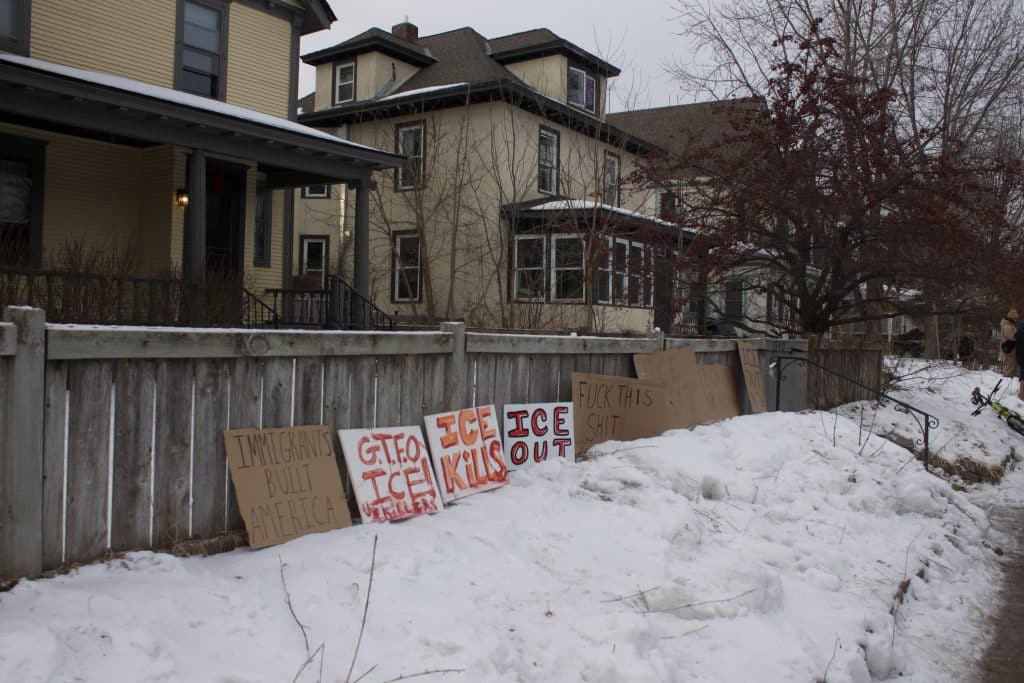
This story by Claire Carlson originally appeared in The Objective and is republished here with permission.
Since early December, Minnesota has been the target of the largest Immigration and Customs Enforcement (ICE) operation in the U.S., called Operation Metro Surge. The state is home to the country’s largest Somali and Hmong communities, and a growing number of Hispanic and Latino residents.
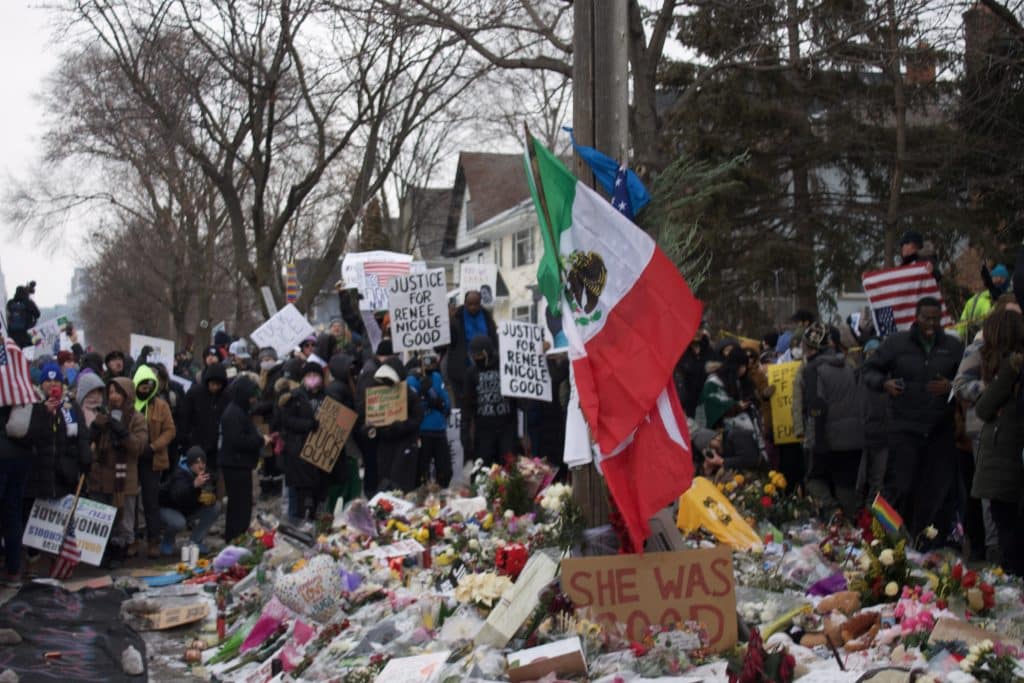
Thousands of people have been arrested and hundreds detained in the roughly two months since more than 3,000 ICE agents were deployed to the state. Nicaraguan immigrant Victor Manuel Díaz died in ICE custody after being detained in Minnesota earlier in January. In the past three weeks, ICE agents have shot and killed two observers, Renee Good and Alex Pretti (both white U.S. citizens), in the Powderhorn community of south Minneapolis — a densely populated, diverse area made up of eight distinct neighborhoods. Powderhorn is also where George Floyd was murdered by a Minneapolis police officer in 2020.
Reporting from the New York Times on a scandal implicating members of Minnesota’s Somali community may have played an integral role in shaping perceptions of the state. Local reporters say it’s not the first time national journalists haven’t captured the full scope of Minnesota’s migrant communities and landscape.
The New York Times reports on old news
On November 29, 2025, the New York Times published an article spotlighting a fraud scandal that Minnesota has been investigating since 2019. At the epicenter of the fraud was the organization Feeding Our Future, which claimed to use state funding from 2019 to 2022 to provide free meals to children, while instead funneling money to more than 200 individuals.
Many of the people involved were part of Minnesota’s Somali community, the largest in the country at about 80,000 people. The article included some sources finger-pointing at Minnesota Governor Tim Walz, including governor-hopeful Republican Lisa Demuth, saying he allowed the fraud to fester.
Walz said his office erred on the side of generosity around COVID-19 relief funding to social service agencies and nonprofits, but was not worried about being called racist.
For some Minnesota journalists, the article’s timing — after five years of local reporting on the Feeding Our Future fraud case — made little sense.
“It kind of was perplexing and confusing why this was coming up because Feeding Our Future has been in the [Minnesota] news for a really long time,” Melody Hoffmann, founding editor of Southwest Voices, a local newspaper serving the southwest corner of Minneapolis, said. “There’s no timely hook to the story.”
Instead, the reporting drew fresh and unwelcome national attention to Minnesota’s Somali community. On Dec. 1, Operation Metro Surge was launched, ostensibly in response to the fraud scandal. On Dec. 2, President Donald Trump said Somali Americans should “go back to where they came from” and called them “garbage.” And on Dec. 26, conservative content creator Nick Shirley published a video of him visiting different Somali-led childcare centers in Minnesota, alleging those centers were committing fraud. The video garnered millions of views on Youtube and X, and received support from high-ranking Republicans.
President Trump paused federal funds to Minnesota in late December, and by early January, the number of ICE agents in the state ramped up from what was initially a few hundred to at least 2,000 agents, now over 3,000 agents. Governor Tim Walz announced on Jan. 5 he would not be running for a third term.
Two days later, on Jan. 7, an ICE agent shot and killed Renée Good in south Minneapolis. Less than three weeks after Good’s killing, a different ICE agent shot and killed Alex Pretti, also in south Minneapolis. Just hours after Pretti was killed, White House officials released a false narrative about what happened at the scene, claiming ICE agents thought Pretti was “an assassin” brandishing a gun at them. Authenticated video footage of the shooting tells a different story.
The Nov. 29 New York Times article was published during a sequence of events that made the White House consider Somali immigration to Minnesota a “front-burner issue,” the article’s author and Times Midwest correspondent Ernesto Londoño said in a Dec. 4 interview for The Daily.
“The first [event] was a report by Chris Rufo, the conservative activist, which created the inference that some of the money that had been stolen in these schemes in Minnesota had wound up in the hands of terrorists in Africa,” he said. “At the same time … people in the nation’s capital were reeling from that horrific shooting of two members of the National Guard.”
While the shooter was allegedly from Afghanistan, Londoño added, the event could have fueled President Trump’s disdain for immigrants from countries in conflict like Somalia.
He did not respond to requests for comment for this article.
According to one media and law expert, the close timing between the New York Times article and ICE’s deployment to Minnesota is likely correlative, not causative.
“The government just doesn’t work that fast, even this government,” Jane Kirtley, a professor of media ethics and law at the Hubbard School of Journalism and Mass Communication at the University of Minnesota, said. She is the former executive director of The Reporters Committee for Freedom of the Press.
“I’m not saying [the timing] is not significant,” Kirtley said. “I’m just saying there’s a phrase in Latin, ‘post hoc ergo propter ho’, the idea that if something follows something else, the first thing must have caused it. And I would push back against that.”
She said the New York Times article followed the Society of Professional Journalists’ Code of Ethics to minimize harm. To her, that principle — one of four tenets laid out in the Code of Ethics — means ensuring the reporter has spoken to those directly affected, has a variety of viewpoints, and is factually accurate. Londoño’s reporting meets that criteria, according to Kirtley.
Kirtley also believes Operation Metro Surge was never about the fraud scandal in the first place.
“This whole ‘Metro Surge’ thing is really not about the scandal, which has already been prosecuted both by federal and state authorities,” she said. “It’s really just a pretext to engage in a massive deportation exercised by ICE.”
Kirtley pointed out that many communities of color, not just Minnesota’s Somali community, have been targeted by ICE agents.
Local reporters fight for accurate coverage of their community
For local journalists, the national coverage of both the fraud and Operation Metro Surge has been a mixed bag in its portrayal of Minnesota.
In a December 2025 interview with the Columbia Journalism Review, Vanan Murugesan, editor-in-chief of the Sahan Journal, a nonprofit newsroom reporting for Minnesota’s immigrants and communities of color, said he’s observed the quick in-and-out of newspapers when covering these stories.
“One of the things that immigrant communities and communities of color commonly face is that when there’s a crisis or tragedy that’s impacting them, the first few days or weeks, there’s a lot of attention paid to it by either local or national outlets, and then they are gone,” Murugesan said. “It feels a bit like you’re being used and then you’re no longer part of the news cycle.”
Because Sahan Journal’s primary focus is immigration, Murugesan told Columbia Journalism Review they’ve been able to build stronger trust in the communities they serve: “Because of that, we are able to provide the type of coverage that legacy media may have a slightly harder time doing because they don’t have that infrastructure.”
Other journalists have witnessed that issue from outside newspapers as well, especially during the ongoing reporting of Operation Metro Surge.

“Local journalists have been really annoyed with all the outsider journalists coming in,” said Hoffmann of Southwest Voices. “I just think they’re getting the vibe wrong, especially if they weren’t here for 2020.”
She said she’s seeing a lot of overlap between the protests against the murder of George Floyd in 2020 in Minneapolis and the 2026 killings of Good and Pretti, especially in community organizing tactics. Many local organizers, for example, have asked people not to let national reporters join them while they tail ICE agents in personal vehicles — one of the common organizing tactics Minnesotans are using to mobilize against ICE.
“Community members are like, ‘Please don’t let outside news do that because we don’t know what they’re doing with our organizing tools,’” Hoffmann said.
Even so, the national media has gotten those stories: the New York Times published an article on January 17 where the reporters participated in ride-alongs in organizers’ cars.
Hoffmann said Southwest Voices is being more protective than the national media around sourcing, mainly because they belong to the community they’re reporting on.
“We are trying to be as transparent about what’s going on here as possible, and also show people that real life is happening,” Hoffmann said. “We are at a coffee shop, we are functioning, people are living their day-to-day lives — and also, you can get caught up in an ICE convoy.”
This is a republished article with permission from The Objective. Read the original story here.
Republish our stories for free, under a Creative Commons license.
Author

Related Articles

SNAP Benefits Pause: How Northern Nevada and Tahoe Communities Can Help
SNAP benefits may be paused starting November 1, leaving families in need. Here’s how you can help.
Doing The Work When Being Targeted: The Role of Latino Journalists on Immigration
For Latino journalists, the act of covering immigration enforcement means standing up for their community, while being targeted for doing so.

Sierra Nevada Ally chosen by Press Forward to close coverage gaps in local news
A note from our executive editor about what this new funding from national coalition means for you
Comments (0)
There are no comments on this article.