
Hard Work, Low Pay, High Risk: Who Wants a Job in Forestry?
How local efforts are helping to better opportunities in forestry for people and the profession.
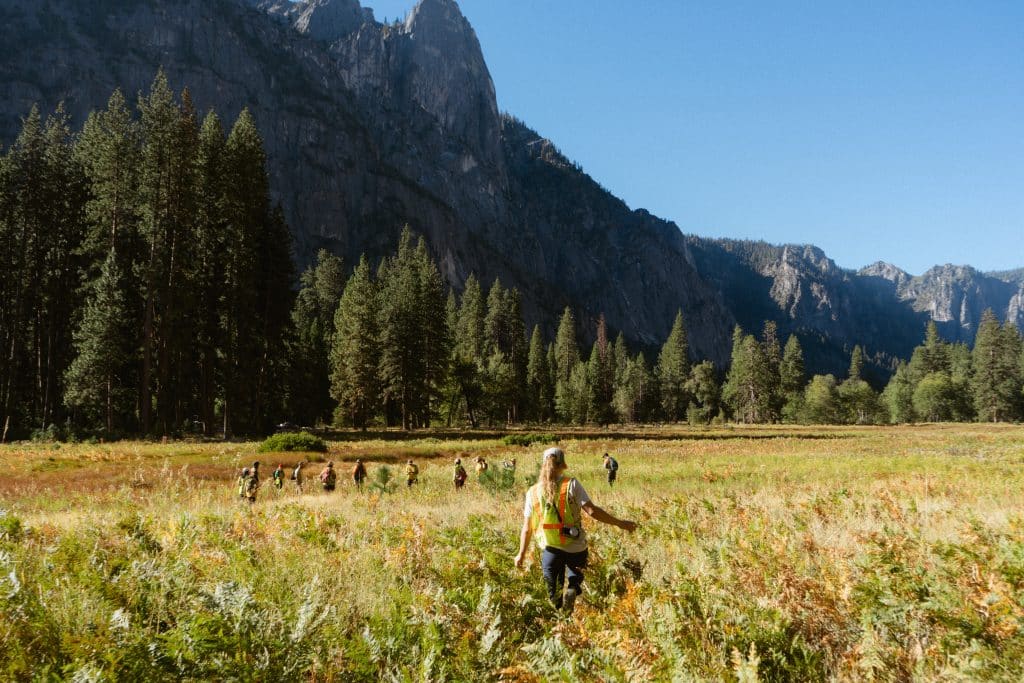
Allison Jolley, along with numerous other forestry professionals, directly connect our ability to fight wildfire to the resilience of our workforce. Right now, however, our workforce is not as resilient as it should be. Instead, it is plagued by confusing career paths and a lack of funding. Jolley, however, is part of a movement to change this.
“This sector is somewhat of a choose-your-own-adventure,” Jolley said. “When I started working on this, I googled how to become a doctor versus how to become a forester. I realized the doctor’s career path is actually simpler. Some of our core partners now want to implement cross-sector training in-house because they’ve seen that it works.”
Jolley is now the Regional Forest and Fire Capacity Program Director at The Watershed Research and Training Center, a group that advocates for conservation and conservation jobs. She’s also the co-author of a recent paper “Advancing Wildfire Resilience Workforce & Career Development in California” that outlines seven recommendations for building and retaining workforces.
“People don’t want to stay in the sector oftentimes because the forestry sector is characterized as underpaid, dangerous, with opaque career opportunities, and is physically challenging. It’s like, well, what’s the carrot?” said Jolley.
I met Jolley at the American Forests Reforestation Pipeline Partnership’s “Understory” conference in December. I sat at a table with six forestry professionals, from cone collectors to program managers, to discuss possible solutions for workforce development. This is not an activity I imagined would be featured during a conference billed as a way “to bring reforestation into the 21st century” via discussions of post-fire reforestation. But I quickly learned that our ability to combat large-scale wildfires is tied to a resilient workforce.
It turns out, forestry has a people problem.
One person at the conference explained how entry-level jobs don’t provide enough mentoring. One woman shared an anecdote about ending the summer at her corps job and almost no one on her team realized that their tasks throughout the summer were related to forestry at all. Others spoke to an image problem forestry has, one of loggers clear-cutting forests. Then, of course, is the issue of money—or lack of it.
“We see people leaving their summer jobs and making more at McDonald’s,” one participant said. “They don’t come back—why would they?”
Jolley said forests are critical ecosystems for people and the economy, so making sure there is a viable workforce is something she thinks about a lot.
“We, as a society, have to decide: Do we want healthy, productive forests that are generating clean air, clean water, good jobs, strong economies?” she said. “Or, do we want forests to be a liability that no one actually wants to own and will be fuel for the next fire?”
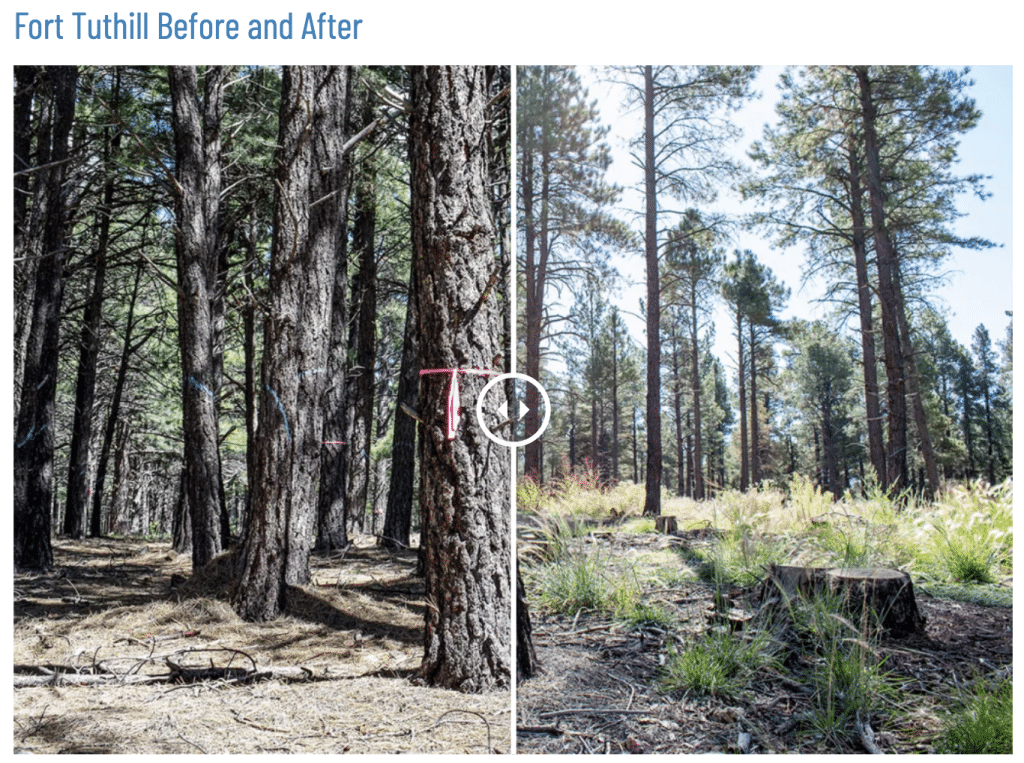
According to the Bureau of Labor Statistics, there were 10,800 forest and conservation jobs in 2024 and there’s about 2,000 annual job openings due to workers who leave the job category—about 18% of turnover year over year.
The challenge to building a forestry workforce is multi-pronged: the work is hard and low-paying, and it’s often seasonal. But, it’s also critically important work.
A 2021 paper jointly published by the National Wildlife Federation, The Nature Conservancy, and American Forests states that 80 million acres of national forests need restoration work, like thinning and prescribed burns.
On Forest Service land in the Lake Tahoe Basin alone, it was estimated that there were 250,000 burn piles in 2021—conditions that can elevate wildfire risk. In an article published by UC Davis, forest ecologist Hugh Safford argued that the high number of burn piles was due to major capacity and funding issues within the Forest Service.
“The presence of thousands of fuel piles in the Caldor Fire caused higher fire severity than we expected to see,” Safford said in the article.
Managing burn piles—piles of forest debris and wood burned to mitigate wildfires—is more than just a natural resources issue. It’s also a human resources issue. Who will manage those areas?
“The answer to that question hinges on whether or not there are people who can afford to do the work, can afford to take the physical risk, can afford to economically thrive doing these jobs,” Jolley said.
One group who does typically handle burn piles is the California Conservation Corps (CCC), a service group akin to the Peace Corps that helps maintain California’s backcountry. The official motto of the CCC—which employs over 1,500 seasonal workers each year—is “hard work, low pay, miserable conditions… and more!” The average corpsmember makes $2,815 a month before taxes, not including housing costs. According to the MIT Living Wage Calculator, the average adult Californian with no dependents needs about $59,740 a year—or around $4,978 a month—to cover basic expenses.
Another part of the problem is that most entry- to mid-level jobs in forestry are seasonal, which reduces guaranteed work from late May through early October. The industry isn’t just losing workers who can’t afford to stay during the season, but also those who can’t afford to remain afterward.
“But then the question is, well, where’s the money going to come from?” Jolley asked. “A lot of this stewardship work we need to be doing doesn’t pencil out,” she said. “That’s a very hard truth. If it’s not penciling out, how are we going to pay people more money?”
Jolley emphasized that economic realities often outweigh well-intentioned programs. Even though leveraging grant programs is one recommendation in her recent paper, she admits that grants and subsidies alone are not enough to sustain the necessary conservation work in our forests.
“The whole forest economy is largely centered around lumber,” Jolley said.
According to the Forest Service’s Research and Development site, the timber industry generates $288 billion annually in the United States. Jolley believes that lumber revenue could help fund stewardship work, but there are broader economic forces at play. For one, the market for lumber is in decline as its largest use—residential housing production—has slowed.
“You might not expect me to talk about housing codes and ordinances,” she said, “but that’s actually where lumber prices start—and that’s the segue into all of these other jobs.”
She emphasized that operational costs, like electricity for mills, are another hidden factor.
“You get a bunch of people in the room talking about forest workforce development, and nobody’s really going to talk about electricity. But that’s a major cost for operating a mill,” she said.
Jolley also pointed to recent mill closures as evidence of how interconnected the system is.
“We had a mill close in Siskiyou County, and a huge mill in Georgia, which has a strong lumber economy. That’s the player buying the logs—the economy that directly affects workers in the woods. If we want to pay people more and create meaningful employment, we need to consider this much bigger web of economic drivers. Grants alone won’t solve it.”

But Jolley warns that the path forward is long—she estimates it could take about 30 years, starting with the elimination of partisan stances on policy. In forestry, this means building coalitions that prevent issues from swinging too far in any one direction. Since 2001, The Watershed has led this effort through the Rural Voices for Conservation Coalition, which has supported projects like the Collaborative Forest Landscape Restoration Program (CFLRP). The CFLRP brings together tribes, conservation groups, counties, and agencies to accelerate litigation and NEPA permitting by fostering trust and strong working relationships among stakeholders.
“That particular coalition is so important because the director is always saying they white-knuckle this non-partisan approach to problems like this,” Jolley said. “It’s really hard to keep that steering wheel in the middle.”
Another solution is utilizing forest biomass and wood. The Sierra Business Council has been pushing to thin forests and put the biomass to industrial use instead of creating burn piles, generating income for both the workforce and local economies.
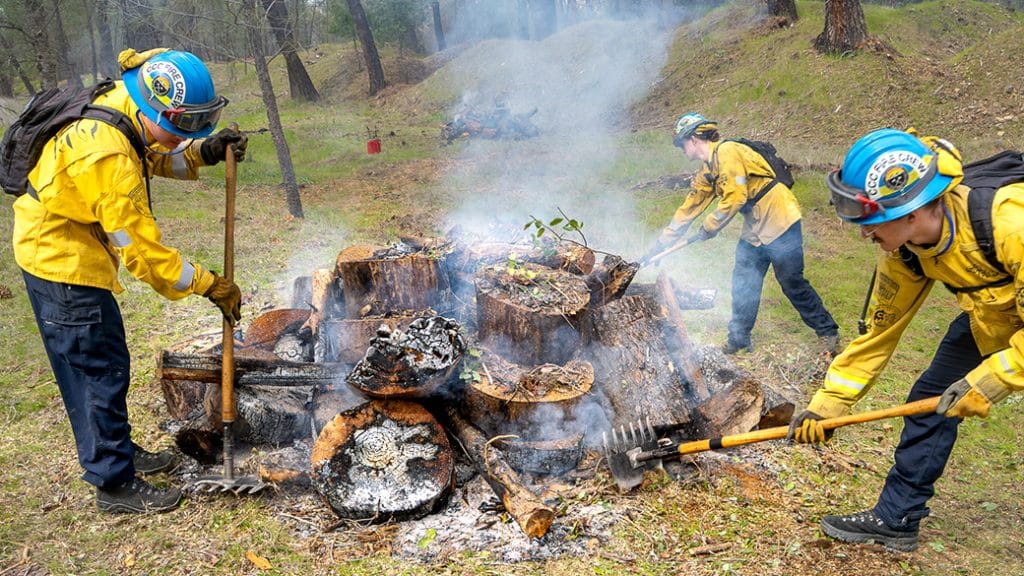
Aligning the economy and interests can feel like wrangling a beast, but some of the report’s other recommendations outline steps organizations can take right now to retain their workforce. For one, Jolley said to normalize training, mentoring and job shadowing.
For example, the Watershed offers training that includes a series of courses called Careers in Wildfire Resilience and Navigating Barriers to Employment. This program provides career development through resume building, helping employees see how their tasks fit into the larger sector, filling out job applications, and exploring opportunities in the field.
“One of the best outcomes we get from that class is when students write in their evaluations, ‘I’m more qualified than I realized,’ and they don’t need to spin their wheels for two more years at the corps,” Jolley said.
She reports that 20% of participants in this training advance in their careers in wildfire resilience. Furthermore, those who have gone through the training can attend the Career Navigation Foundation Fellowship, which gives employees paid days to network and shadow various roles within the sector as well as one-on-one assistance with job applications.
“They’ve gone out to different agencies and organizations, learned a new skill, and met new people,” Jolley said. “They’ve learned everything from tree girdling to pile burning. What’s fascinating is that participants in that program double their likelihood of advancing in the sector—from 20% to 38%.”
While these solutions won’t fix workforce retention challenges overnight, partners like the Watershed Research and Training Center and the Sierra Business Council are deploying creative programs. However, Jolley emphasized that this issue extends beyond the forestry industry.
“Human beings are needed to steward our forests, and they will only do it if these are good jobs. Right now, for the most part, they’re not,” she said. “That’s why we need to dig into all these solutions.”
The challenge is immense, but the stakes are clear: forests and the communities that depend on them will thrive only if the workforce is stable, trained, and fairly compensated. From cross-sector training programs to innovative uses of forest biomass, the solutions Jolley and her partners are championing show that building a resilient forestry workforce is possible—but it will take long-term commitment, collaboration, and a willingness to address the economic realities behind every tree planted and every pile burned.
Getting there will require the industry to acknowledge a truth it cannot ignore: investing in people is just as critical as investing in forests.
Republish our stories for free, under a Creative Commons license.
Author

Related Articles
How Are Water Managers Adapting to a Smaller Sierra Snowpack?
Warming winters are reshaping runoff. With less snow to rely on, water managers are navigating a future defined by rain, risk, and uncertainty.

Ally Audio: Where’s the Mountain Snow We All Love?
Check out the latest edition of Sierra Nevada Ally’s podcast
When Winter Comes as Rain in the Sierra Nevada
A warm, wet start to the season is reshaping snowpack — and what it means for local businesses in Truckee and beyond.