
Lake Tahoe’s Red River Autumn
Spawning kokanee salmon bring waves of red to Taylor Creek and the Upper Truckee River.
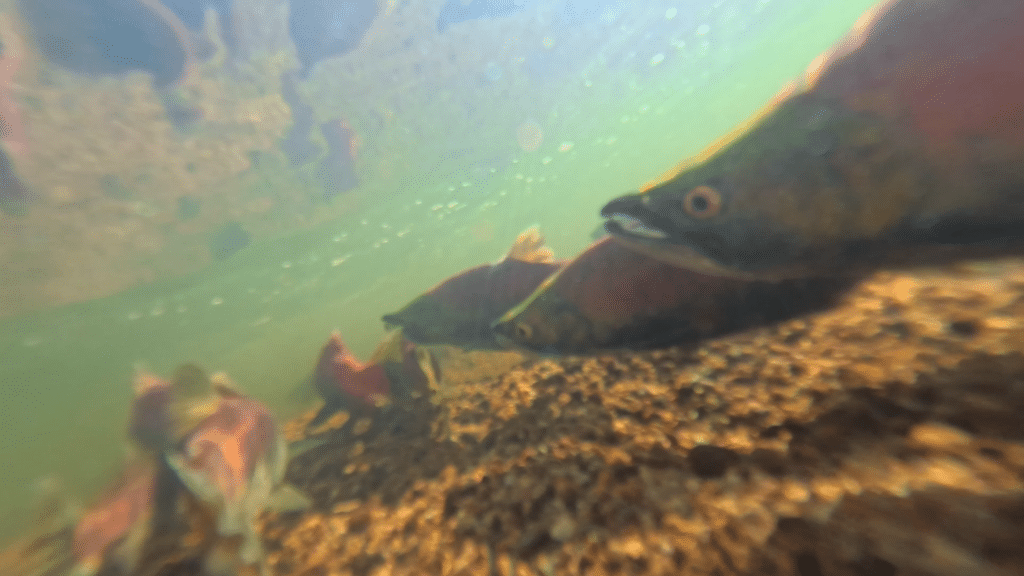
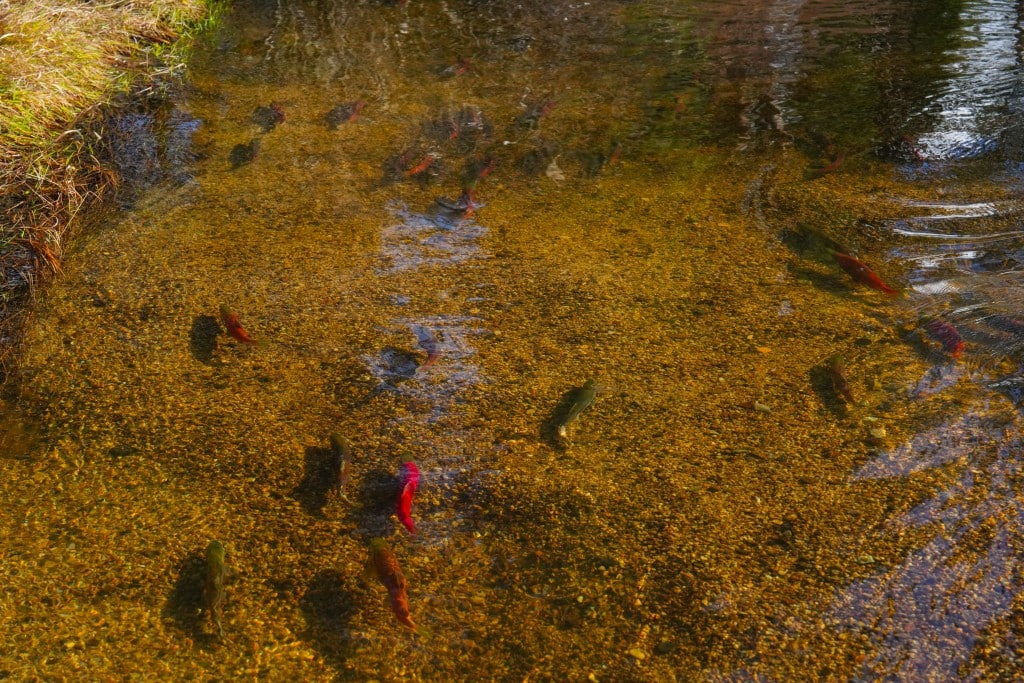
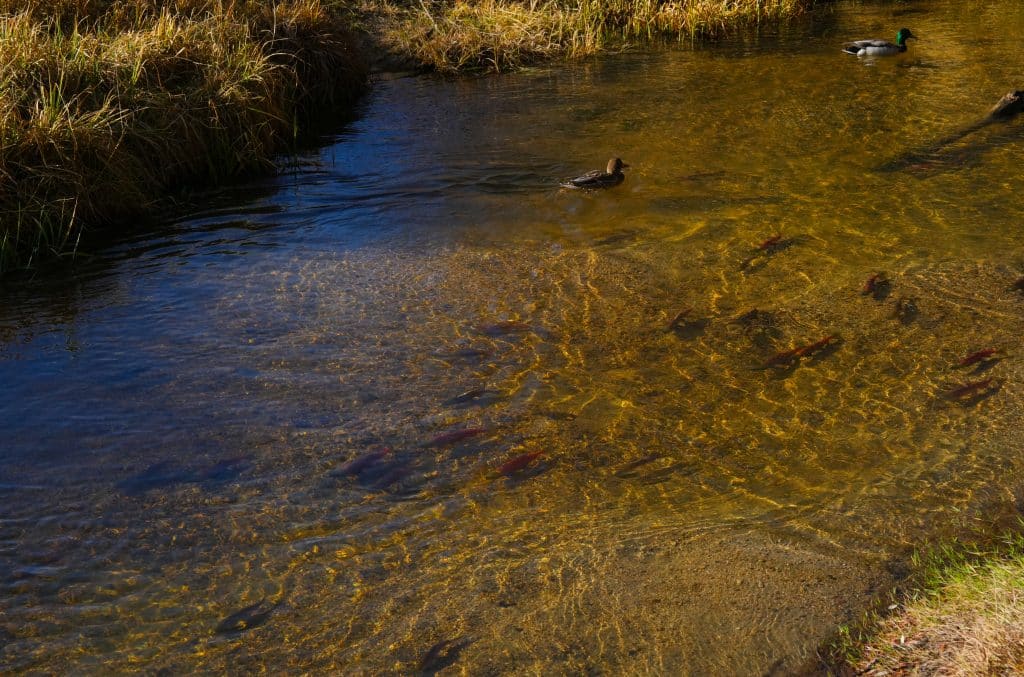
Every fall, the side creeks of Lake Tahoe swell with waves of red, overrun with spawning kokanee salmon who have traveled to these small waterways to lay eggs. As they travel upstream in these creeks from mid to late October or early November, they attract both bears and tourists to witness the spectacle. Recently, the kokanee salmon of Lake Tahoe have been doing just that. Taylor Creek and the Upper Truckee River, both on Lake Tahoe’s South Shore, have been teeming with the fish.
Kokanee salmon are the landlocked version of the sockeye salmon, an iconic species of the Pacific Northwest and Alaska. They are silver in color until they are ready to spawn (reproduce), when their bodies turn bright red. Both kokanee and sockeye hatch in freshwater creeks, streams and rivers. Both fish then migrate downstream toward larger bodies of water where they will spend the majority of their lives.
When their life cycle is nearly over, the fish will migrate back upstream to the same location that they hatched, to spawn, and then die. The difference is that sockeye salmon are anadromous, meaning they can live in both fresh and salt water. Sockeye migrate from their spawning grounds to the ocean, where they spend 3-5 years, before migrating back into freshwater and up to their spawning grounds. Kokanee are landlocked, so in the case of Lake Tahoe Kokanee, the lake acts as their ocean, meaning these salmon spend their entire lives in freshwater.
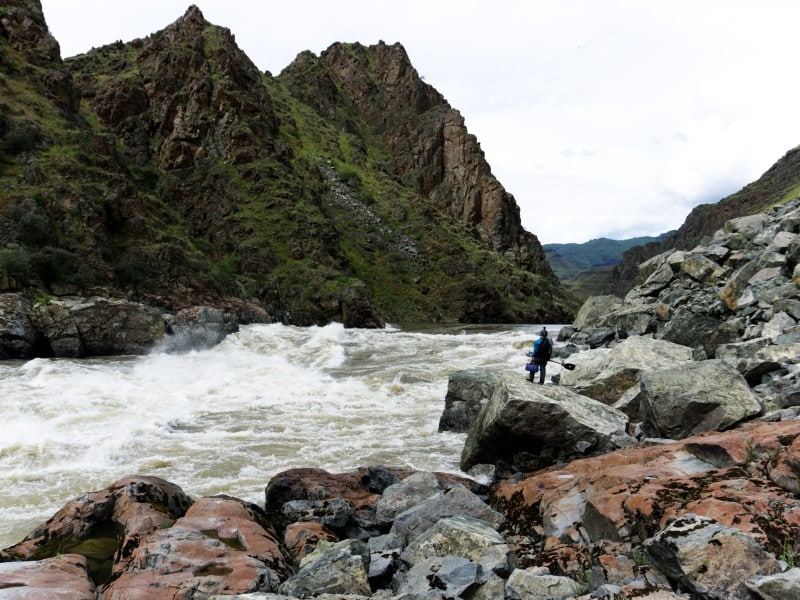
Many populations of sockeye salmon are endangered. The Snake River Basin Sockeye Salmon population, which migrate more than 1,000 miles from the headwaters of the Salmon River in central Idaho to the Pacific Ocean, are on the brink of extinction. Scientists point to four dams on the Lower Snake River, which block their migration path to the ocean, as being the culprit causing the fish populations to decline.
Kokanee look like the younger sibling of the sockeye salmon – the only difference being their size. Because they never migrate to the ocean, where there is a larger abundance of food, kokanee are quite a bit smaller than sockeye, but in all other aspects, including their genetics, they are the same species. Scientists believe the divergence of kokanee and sockeye salmon happened around 15,000 years ago, toward the end of the last ice age. As glaciers melted and morphed the landscapes around them, some of the fish became landlocked due to geologic features blocking their path to the ocean.
Native to the Pacific Northwest, kokanee were introduced to Lake Tahoe in the 1940’s for sport fishing reasons. They were also introduced to other alpine lakes, such as Crater Lake in Oregon and Flathead Lake in Montana.
Salmon are considered a keystone species, which means they play an essential role in supporting other species in the ecosystem. Sockeye salmon, which spend the majority of their lives in the ocean, act as a transport mechanism, bringing nutrients such as nitrogen and phosphorus from the ocean, deep into the mountain streams of Idaho and the Pacific Northwest.
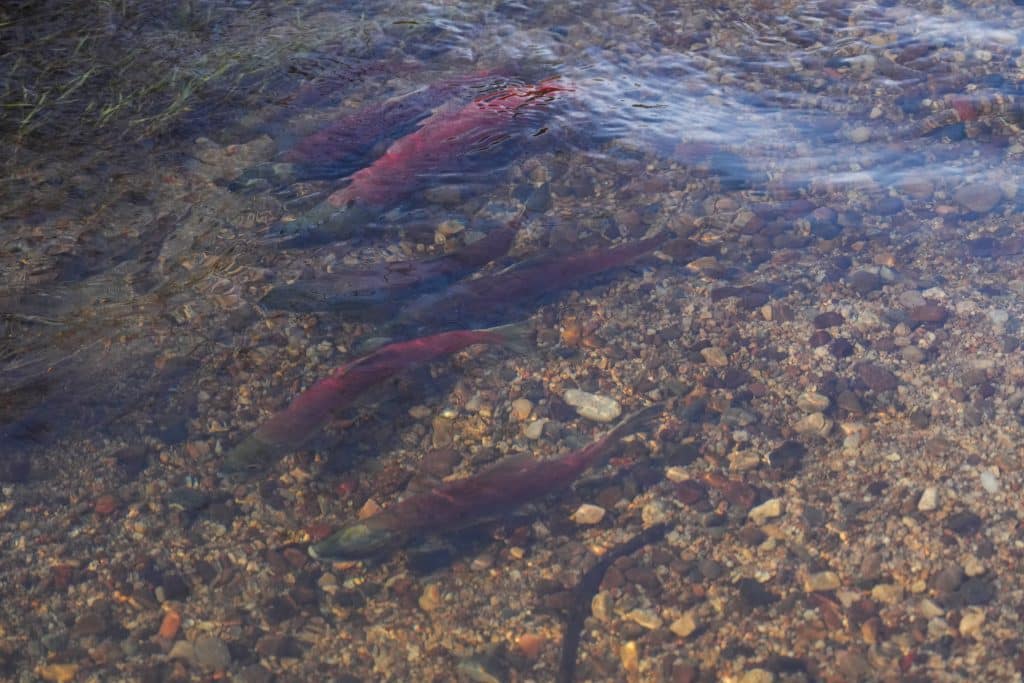
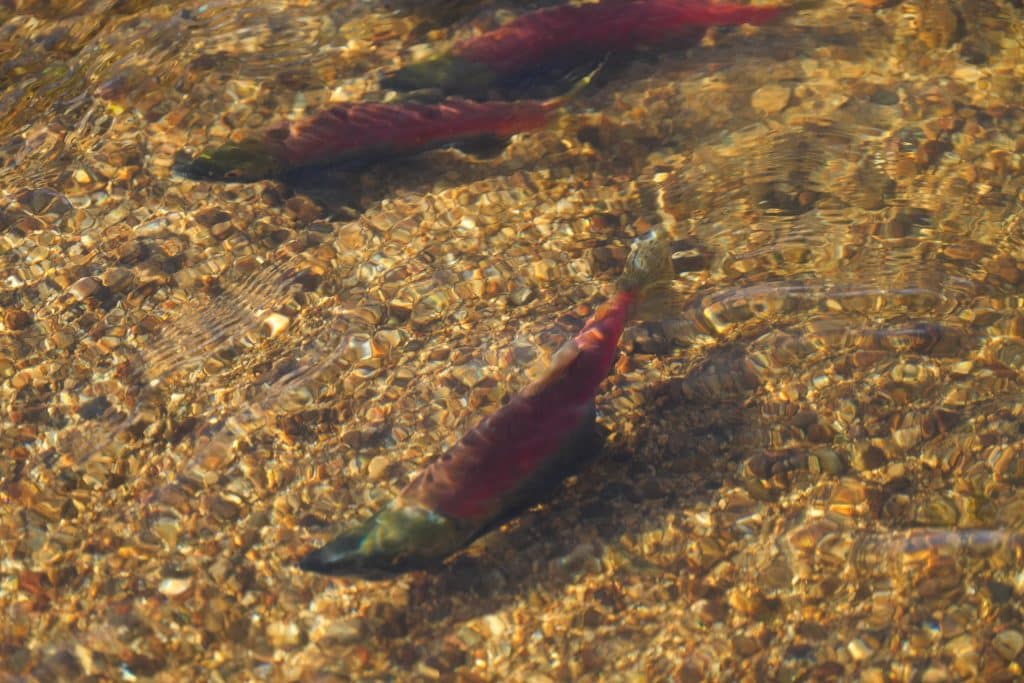
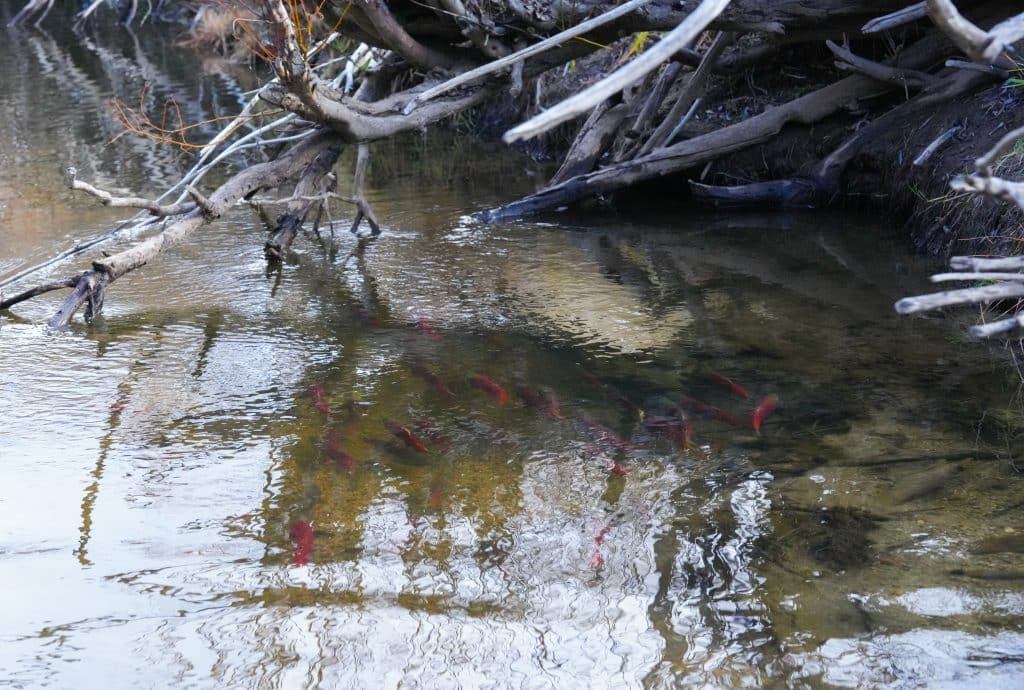
Throughout the salmon run, bears, eagles, and other predators line the banks of these streams, feeding on the spawning salmon. They then scatter salmon carcasses all over the forest floor, distributing these ocean nutrients throughout the riparian ecosystem. As these carcasses break down, the nitrogen, phosphorus, and other ocean nutrients in the salmon become available to the vegetation surrounding these rivers. Scientists have studied the trees surrounding these mountain streams, and have found salmon DNA, as well as ocean-derived nitrogen in trees that are hundreds of miles away from the ocean. According to the U.S. Fish and Wildlife Service, more than 100 different species rely on salmon and the nutrients they deliver.
In addition to Taylor Creek and the Upper Truckee River, Lake Tahoe Kokanee are known to spawn in Meeks Creek, Trout Creek, and Third Creek. Nearby lakes, Donner Lake and Boca Reservoir, also have stocks of kokanee salmon.
The Sierra Nevada Ally is a nonprofit organization that relies on community support to operate. It’s why we’re asking you to give now during our year-end fundraising campaign, where your donations (up to $1,000) are matched by our partners at NewsMatch.
Republish our stories for free, under a Creative Commons license.
Author

Related Articles
How Are Water Managers Adapting to a Smaller Sierra Snowpack?
Warming winters are reshaping runoff. With less snow to rely on, water managers are navigating a future defined by rain, risk, and uncertainty.
Hard Work, Low Pay, High Risk: Who Wants a Job in Forestry?
How local efforts are helping to better opportunities in forestry for people and the profession.
Ally Audio: Where’s the Mountain Snow We All Love?
Check out the latest edition of Sierra Nevada Ally’s podcast