
A Huge Anchor in Lake Tahoe (or Why You Should Meditate)
Reno-based retired professional, author, and meditation teacher on the simplicity of meditation and why, yes, you can do it too.
Editor’s Note: The following is part of a series from the Sierra Nevada Ally, called Vet Voices, where military veterans in our region share their diverse perspectives, experiences, and ideas–in their own words. If you’re a veteran who would like to share your perspectives, email editor@sierranevadaally.org with your contact information and more about your story.
Decades ago, a man uttered the following words as he gazed out onto the surface of the Sierra Nevada mountain range’s crown jewel, Lake Tahoe:
“If a strong western wind comes, it could blow an unanchored boat clear across the lake. If you had a small anchor, it would still blow the boat, but not so far. If you had a larger anchor, it would hardly move the boat. If you had a huge anchor, the same wind could still come, but the boat wouldn’t go anywhere.”
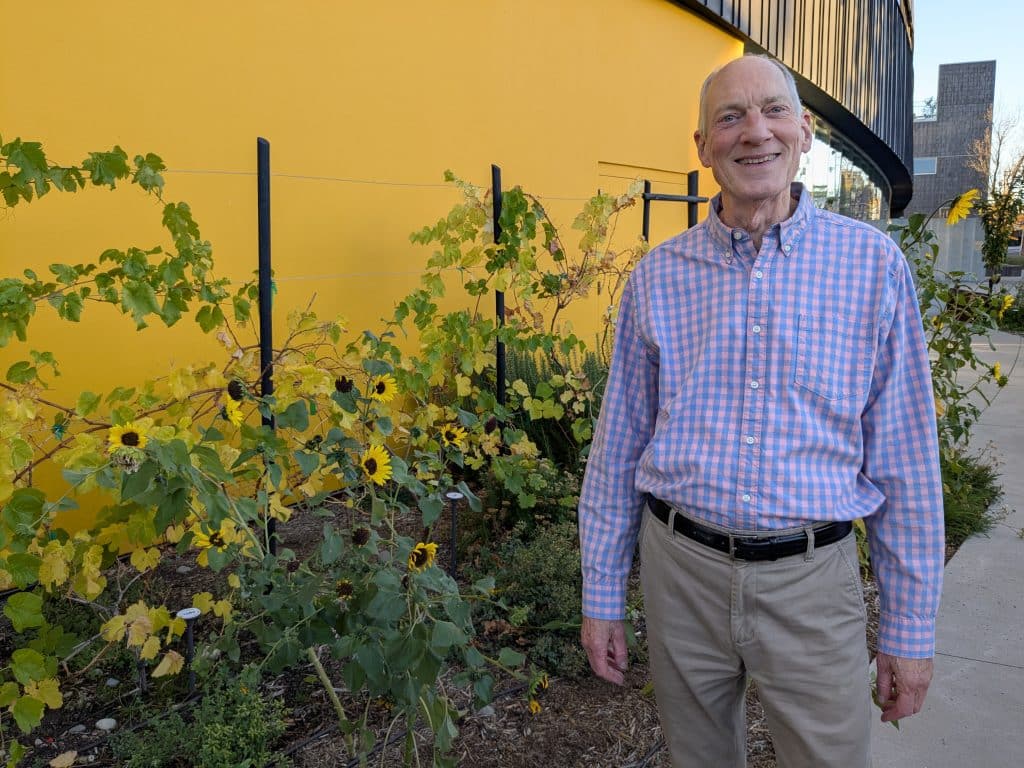
Today, Reno resident Stephen Jacobs recalls the words of his former meditation instructor. This time, he reflected on this profound story not from the woods surrounding the alpine lake, but from the comfort of his own home, a place where he himself has now introduced hundreds of students to the benefits of meditation over the past four decades. Here, he shared his story and what brought him into the life-changing practice of creating an “internal anchor” within himself.
“If everything we value is in the outer, perceived area of life, it’s not enough when all of that looks like it’s turning upside down,” Jacobs said. “It [the outside world] is not enough anyway. Even people who are highly successful and wealthy and would seem to have everything, they’re not always happy. If the outer world could provide all of that, it would. Yet, those people may have substance abuse issues, they may have domestic violence issues, they may be highly dissatisfied with the so-called perfect life that their neighbors envy. They have the same series of issues everyone else does.”
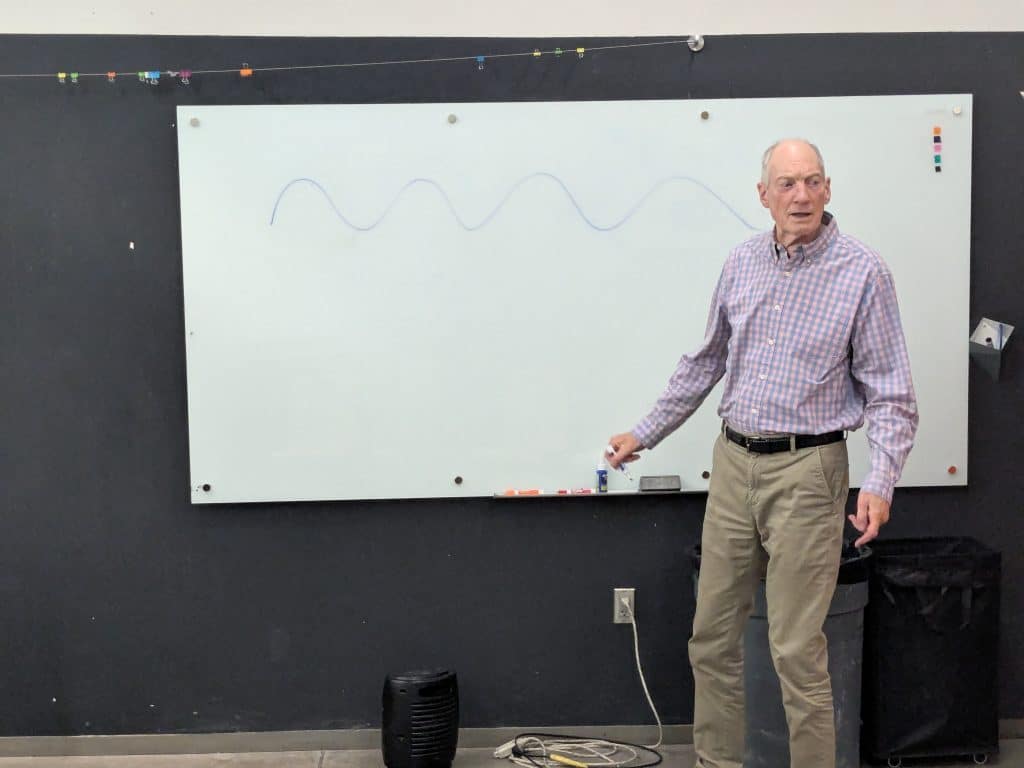
Jacobs, now a retired professional and experienced meditation instructor, teaches many different meditation techniques at the Nevada Museum of Art in downtown Reno several times per year. However, his life was anything but the picture of balance and serenity his present-day demeanor might suggest.
In the mid-1970’s, 27-year-old Jacobs was unhappy with his job, dissatisfied with his marriage, and generally stressed out. This was the Vietnam War era, and he enlisted in the Army National Guard by way of fulfilling his service obligations. The military physicians gave him a concerning hypertension diagnosis, since his high blood pressure read 150/90. By comparison, the American Heart Association states that a healthy blood pressure is anything slightly lower than 120/80.
Particularly for someone his age, Jacobs’ reading was alarmingly high. Knowing that heart disease ran in his family but not wishing to take medication, Jacobs sought out alternative therapy.
It was then that he found meditation.
Turning the Corner
It would only take a few months of meditating for Jacobs to lower his blood pressure to normal levels. At the same time, he said he started sleeping better and generally feeling more relaxed. Jacobs would ultimately spend another (more harmonious) eight years in his marriage and an additional six years with his employer, where he would get promoted and take over management of additional offices. This success – physical, emotional, and professional – is something he credits to his meditation practice.
Now in his 70s, his current blood pressure reads 120/56.
“I have the blood pressure of a person in their 20s,” Jacobs said. “I can pretty much eat anything I want. I exercise, but I did then too.”
“[Meditation] put my life on a better path,” Jacobs reflected. “What’s interesting about meditation is the benefits come as a package. You may begin a practice desiring a health benefit, but you will also find that you feel calmer. You will quite possibly sleep more deeply and get on better with your employer and family members. Your mind will become sharper and more focussed. And most importantly, you will experience more joy and satisfaction with your life. Because the mind and body are connected, you are doing one simple thing that allows the mind-body system to balance itself out.”
This ability to keep a healthy mind-body connection is in jeopardy in the modern world, given the overwhelming amounts of data most human minds are exposed to daily. According to psychological research conducted in 2005 by the National Science Foundation, the average person has between 12,000 and 60,000 thoughts per day.
In the modern world, many of these thoughts are the result of “an endless storm of content engineered to feel urgent, delicious, or enraging,” as a Cross Labs article states. The article concludes that this stream of information can keep us unproductively engaged and even addicted to thoughts and behaviors “long past the point of nourishment.”
From social media feeds and sensational TV news to busy family schedules and the demands of the workplace, Jacobs said the stress and stimulation available nowadays can be as addictive as they are destructive. According to Jacobs, the problem is often not that we think too little, but that we have too many thoughts and distractions plaguing our minds. A simple meditation practice can serve as the antidote.
Most everyone has heard physicians routinely advise ample sleep and relaxation to help the body recover from both acute and chronic illnesses. Similarly, Jacobs said that when we meditate, both the mind and body reach a deep state of restfulness that allows healing to be accelerated.
“Nature knows what to do when you’re resting at night,” he said.
Jacobs said the body’s various hormones and other chemicals balance out when the mind and body are still. This restoration sometimes manifests as literal healing of physiological symptoms.
Studies indicate that meditation can improve grade point averages, and one study from the U.S. Department of Veterans Affairs indicated that it could also improve symptoms of post-traumatic stress disorder.
Healing an Injured World
Beyond individual health, Jacobs said that meditation might help us heal on a social/collective level as well.
“As individuals become more patient, harmonious and balanced in their own lives, this influence will often expand to their family, their workplace, and their community,” he said.
“This gives us hope for the future where increased cooperation and respect might assist the world in solving the many challenges we face today.”
Jacobs believes such collective growth indicates the existence of “something that connects everything together.” He said spiritual traditions throughout the ages have called this connective field everything from the “kingdom of Heaven” to “nirvana” to “Ātman” to “the Great Spirit,” and that some physicists nowadays might instead refer to it as the “quantum field.”
As David Tong, a theoretical physicist at the University of Cambridge describes it, a “field” is something “which exists everywhere in space all at once.”
These ideas aren’t only touted in scientific circles; they are also echoed in religion. According to the International Religious Foundation’s text, “World Scripture: A Comparative Anthology of Sacred Texts,” the authors compile a series of scriptures from Jewish, Buddhist, Islamic, Christian, and even Indigenous African beliefs that all indicate how one person’s well-being (or lack thereof) is “inseparable from the peace and prosperity of the society, the nation, and ultimately, the world.”
“We’re never going to be able to solve all the world’s problems just with the competitive, adversarial model that the world has been in for so long,” Jacobs said. “But [engaging with] something larger that joins people together, that everyone can do and that uplifts everyone, now we have the capacity to be hopeful about the future.”
Regardless of how spiritual one may or may not be, the physiological and emotionally regulating benefits of meditation are well researched and validated by studies and anecdotes throughout the ages. One article found in the National Library of Medicine cites many of these benefits, including meditation bringing down a person’s blood cholesterol, improving immune system function, helping address social anxiety issues, and promoting healthier aging, among others.
However, as powerful as a meditation practice is, Jacobs cautioned that it is not a silver bullet or a cure-all for life’s ailments. He said that people have sometimes come to him to learn meditation to see if it can cure their cancer or other late-stage terminal condition.
“I always tell them the same thing. It may help, but if you have something like stage 4 cancer, this isn’t going to be six weeks [of meditation] and you’re done with cancer,” he said. “But what I can guarantee is that they will feel better about their situation. They will go through their treatment with more ease, with more grace, with more understanding. A lot of the suffering in life is not only the circumstances; it’s how we perceive them, it’s how we understand them. And that determines how we go through something.”
“Someone who has a more expanded sense of themselves and has a way to calm down is in a much better position to go through anything than someone who feels [life is] unfair or who is simply angry about their circumstance,” Jacobs said.
So what can someone do to get started meditating, even if they are a person who has no experience, does not have a lot of time, and is anxious or easily distractible?
Jacobs teaches many different meditation techniques at the Nevada Museum of Art in downtown Reno several times per year. However, a person does not need to attend a formal class or learn any particular meditation technique to get started. Instead, they might try one of these simple exercises:
- Close your eyes and follow your own breath. The key to mindfulness is to bring oneself into the present moment. Observing something that’s already happening is an accessible and powerful way to do that. The breath is already occurring and is always with you. You can focus on the feeling of expansion of your chest or abdomen, or perhaps the feeling of the breath entering and leaving your nostrils. The mind will get distracted, and you will find yourself thinking about things both in the past or in the future. When that happens, know that it is normal, and gently bring your attention back to the breath.
Do this for a few minutes each day to start, working up to 15-20 minutes per day.
- Notice something in your environment for just 10 seconds. Stop and softly gaze at anything … a bird outside your window, the tip of the pen you are holding, a mug on top of the dining room table. Try and take in the details of the object, appreciating its shape, texture, color, symmetry, etc. You may find, inadvertently, that you have become drawn into the experience and that several minutes have passed.
“If you are doing this easily, you will feel a bit of relaxation, a sense of peacefulness, and maybe even some happiness from within. This is meditation!” Jacobs said.
Jacobs added that anyone can do these basic exercises wherever they are. He said that contrary to popular belief, a successful meditation practice is not one that is free of distraction, but one that is practiced consistently.

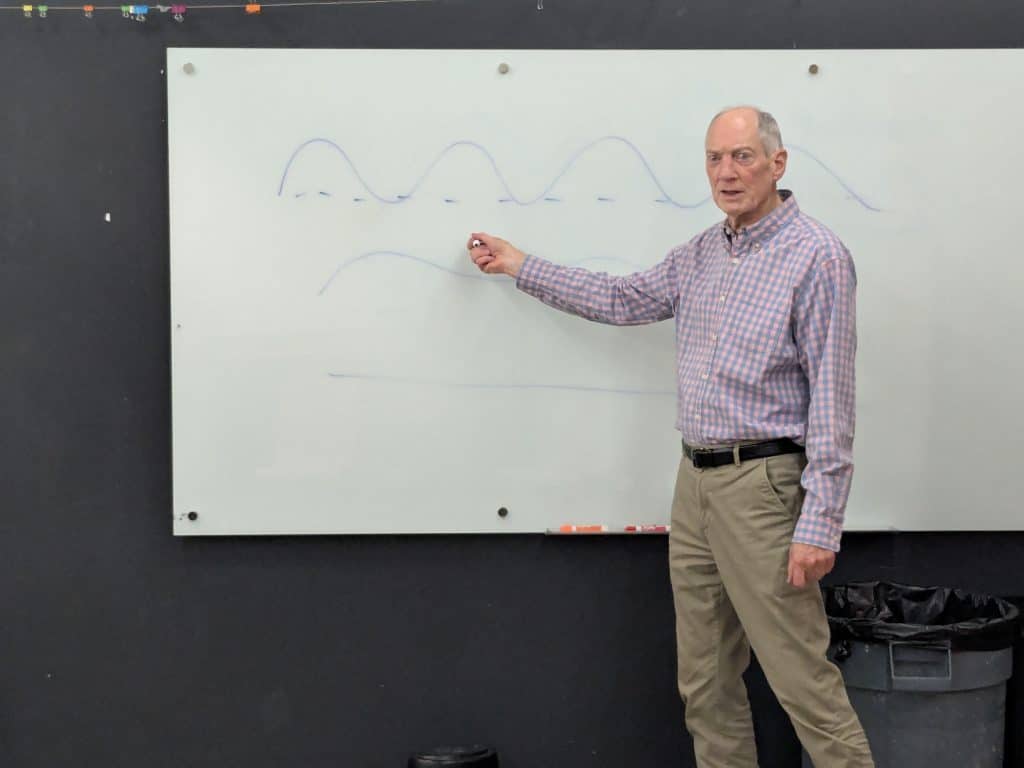
“The discipline with meditation really doesn’t come with our technique,” he said. “The discipline comes with putting it in our routine. When we sit to meditate we don’t try very hard. The mind already wants this inner quiet experience, and so effort is not required. Relax and enjoy!”
Jacobs said in his view, the world is more beautiful when people add a meditation practice that helps the mind become a little quieter.
“If we have a connection with that inner dimension, we have some stability that the majority of people just don’t have,” he said. This allows us to ride the waves of life more gracefully, with more stability than an average person, particularly now, because the world is so precarious.”
Author’s note: Readers interested in learning more specific meditation methods may contact the Nevada Museum of Art for information on upcoming classes, or they may contact Jacobs directly at sjacobs333@yahoo.com.
This work is made possible by Press Forward, a national coalition investing more than $500 million to strengthen local newsrooms and close longstanding gaps in journalism coverage. Donate to join the movement and support coverage on civics, climate and community in the Sierra Nevada region.
Republish our stories for free, under a Creative Commons license.
Related Articles

“A Conflicting Feeling:” A Local Venezuelan’s Perspective on the U.S. Capture of Nicolás Maduro
What does the seizing of the Venezuelan leader mean to the millions who have fled the country? We ask one.

It Could’ve Been Me
The tragedy in the backcountry outside of Truckee is a reminder to not judge too quickly and reach out to those close to you

As ICE agents flood Minnesota, local reporters say national news misses the mark
Recent New York Times reporting on a Minnesota scandal may have cast unwelcome attention to the state’s Somali community, but it isn’t the first time national journalists haven’t captured the full scope of Minnesota’s local stories.