
To Rewild the Truckee River: The Rock-McCarran Flood Project
The Truckee River is the spine of the greater Reno community, threading through neighborhoods, open spaces, and industrial areas alike. While there are a few pockets of underdeveloped land along its bank, one project hopes to restore a natural flood plain.
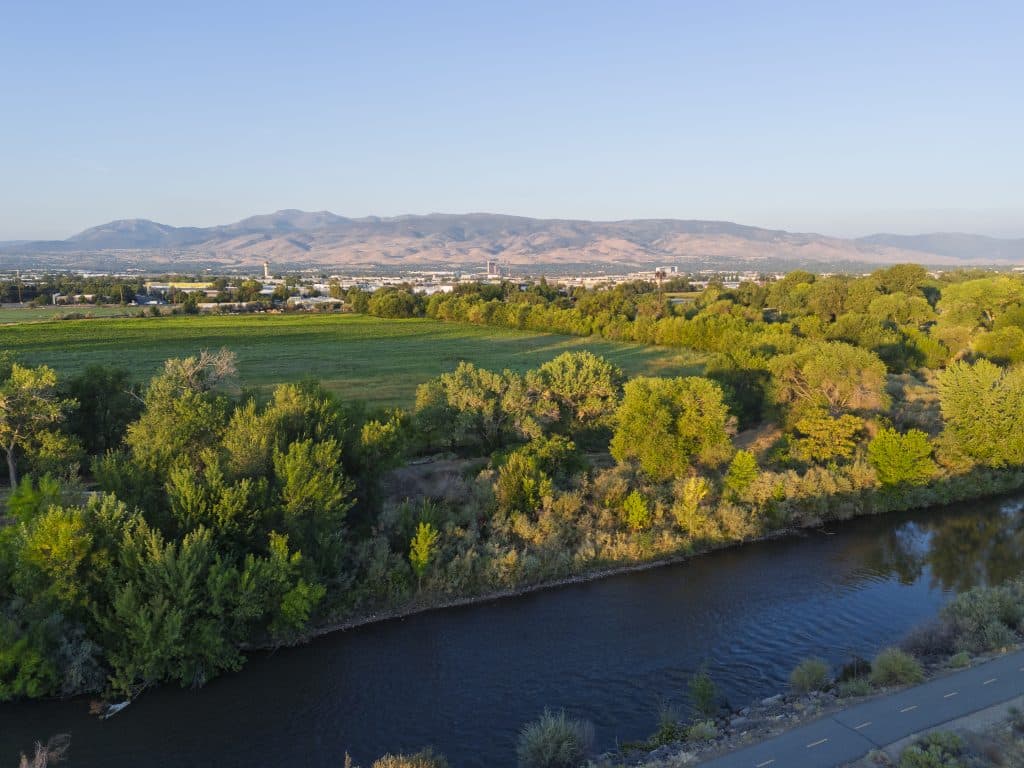
Danielle Henderson laughs when friends call her a water nerd, but for her, the Truckee River is more than just a job–it’s a living system she’s spent 18 years learning to protect.
Henderson is the Natural Resources Manager for the Truckee River Flood Management Authority (TRFMA). For years, she has pondered a particular part of the river corridor, an area now being considered for a major flood mitigation project: The Rock-McCarran Flood Project.
“The Rock-McCarran project is like the showpiece of our flood project,” said Henderson.
According to the TRFMA, “the Rock-McCarran Design Project is part of a larger inter-agency plan called the Meadows Flood Project which will create a community park located along the Truckee River in the reach between the Rock blvd. and McCarran blvd. Bridges.” As it stands now, the area between Rock and McCarran Boulevards, the river is bound to the north by the river path and warehouses, but to the south lies mostly undeveloped land.
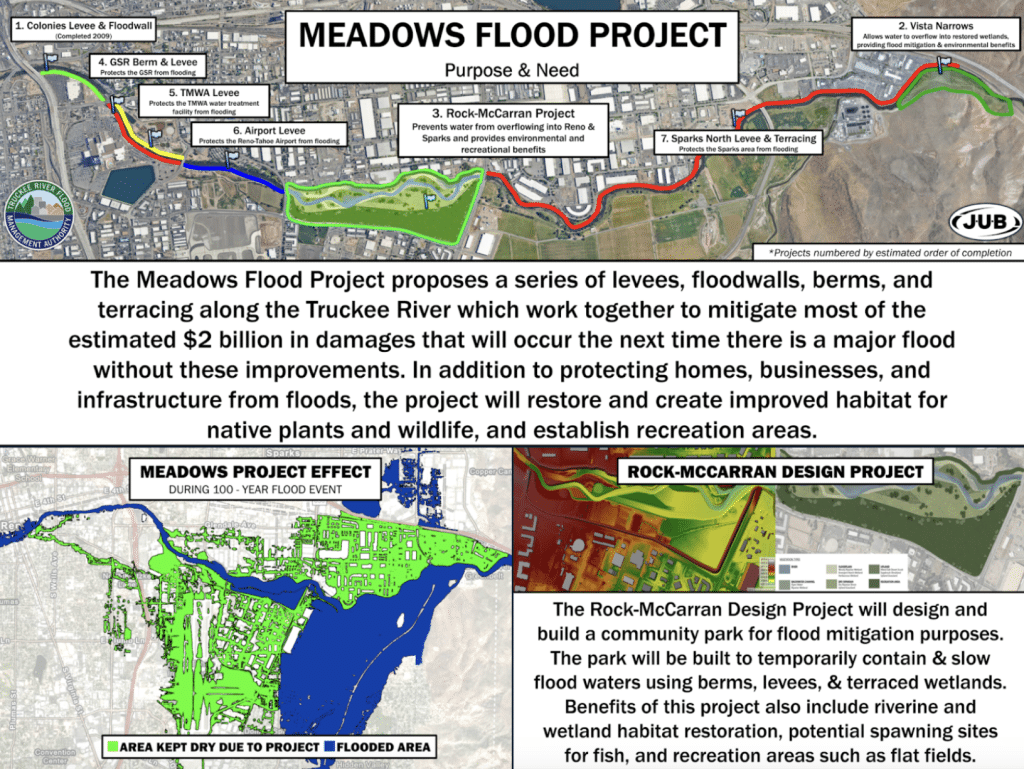
In her role with TRFMA, Henderson is eager to see this project break ground, which will encompass nearly 170 acres of open space that will be revitalized, with river health and flood mitigation at the forefront.
And floods can be a serious issue for Northern Nevada.
Since 1950, when there were two major floods, the Truckee River has caused major flooding in Reno seven times, roughly once every 11 years. The 2017 flood covered the Rock-McCarran Project area with one to two feet of water, affecting Hidden Valley, though it was not the region’s worst flood.
The 1997 “flood of record” occurred after a massive warm winter storm triggered a swift melting of mountain snowpack and severe runoff, submerging downtown Reno, the airport, and much of the southern valley.
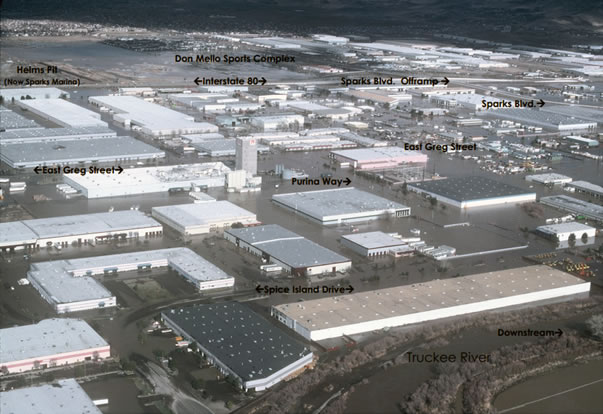
This event now serves as the baseline for what is considered a 100-year flood: a flood with a one percent chance of happening every year.
“The Rock-McCarran Project is designed to protect the community from flooding, and we are modeling our flood protection on the 1997 event,” said Henderson, adding that the project will restore and preserve open and green spaces.
This section of the river has undergone numerous changes: heavily constrained and incised river banks, extensive hardscaping, and flood walls that channel high river flows with increased energy. Biodiversity is limited, with no natural pools or riffles that slow water flow.
Shane Dyer, an engineer from J-U-B Engineers, the company partnering with TRFMA on the project, said the river’s unnatural flow requires regular maintenance. He also noted surrounding farmland contributes to biodiversity loss, calling this section, “really just a man-made stretch.”
One early challenge of the project was the varied ownership of the land. Since 2011, TRFMA has worked with private owners, acquiring all but two lots needed for the project. Businesses have been relocated, and many existing buildings demolished. Remaining concrete pads and parking lots help mitigate potential erosion, weed infestation, and dust during construction.
Climate change is increasing the risk of major flooding as well. A 2023 study published by the American Geophysical Union found that, even with moderate emissions, regions worldwide could experience 100-year floods every 9-15 years by 2050. And a story published by Yale Climate Connections found that climate change is increasing the frequency of this major flood event.
Henderson said that if the river remains unchanged, damages from the next 100-year flood could reach $2 billion.
“We’re talking about creating meanders, backwater areas, pools, and riffles and spawning gravels to support fish, floodplain terraces,” Henderson said.”
Project Details
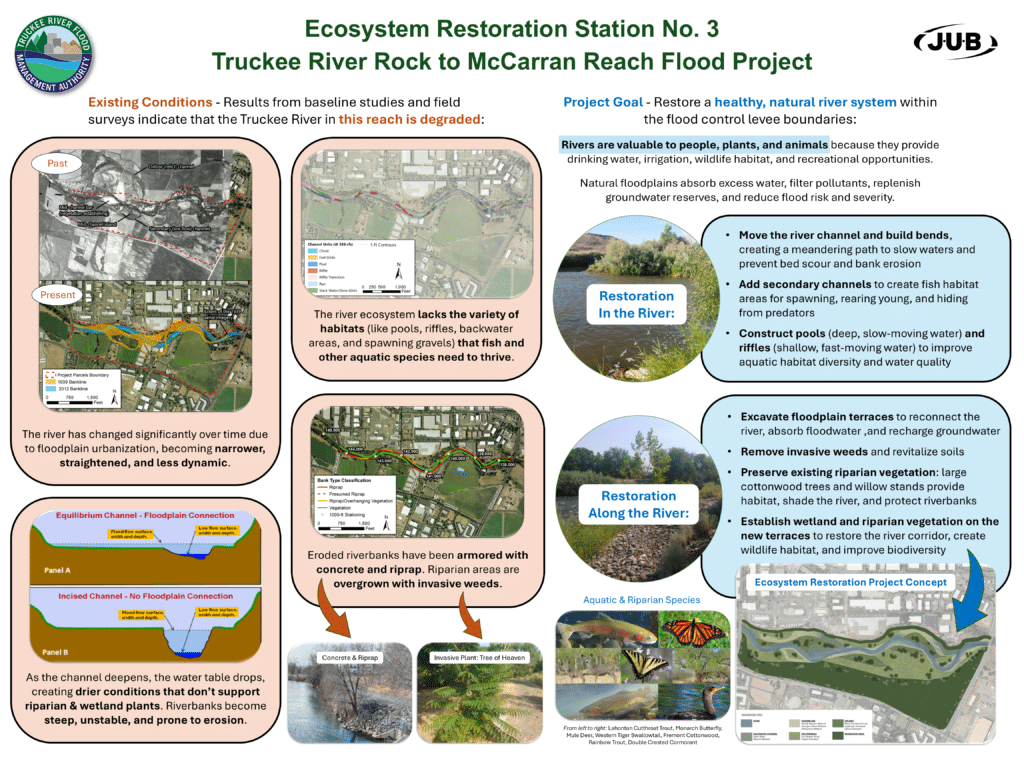
To address the risk, TRFMA anticipates breaking ground within a few years. J-U-B Engineering has identified natural techniques to restore more natural river activity, including:
- Reestablishing back channels and floodplains
- Eliminating deep incising
- Creating riparian corridors and habitat for fish and wildlife
The project requires an extensive permitting process but aims to return a natural flow to this corridor.
“First and foremost, the community should care about the Rock-McCarran Project because it will avoid damages, keep people safe and healthy, and improve the region’s economic vitality,” Henderson said.
Henderson is particularly excited about plans for the 70 acres south of the river, where two concepts are being considered:
Concept One: Nature-Based Recreation Area
- Flood-resilient landscape
- Picnic areas, gathering spaces, outdoor classrooms, pollinator gardens
- Trails, interpretive signage, pedestrian bridge, and bird blind
- Passive recreation and ecological restoration
Concept Two: Traditional Sports Complex
- Ten athletic fields
- Extensive parking, lighting, and asphalt
- Same river restoration as the nature park concept, but more infrastructure and maintenance
- Addresses immediate demand for youth sports
There is community support and benefits to both approaches. According to the City of Reno’s 2023 Parks, Recreation, and Open Space Master Plan, there is a shortfall of 45 flat fields needed for athletic competition and recreation.
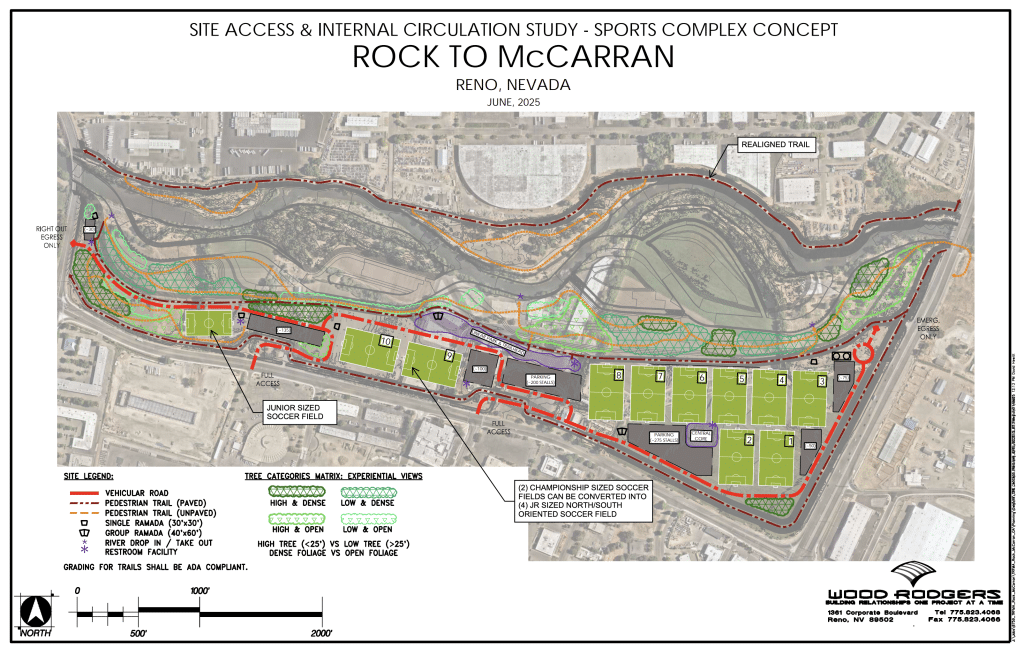
“There’s quite a few programs and youth sports that can’t provide the programming they would like due to limited fields,” said Ian Anderson, board member of the High Sierra Lacrosse League. “Families have to travel further, and kids miss out on opportunities to play.”
Anderson emphasized the benefits of the Rock-McCarran location for athletics: central, accessible by bus, and near hotels for tournaments.
The nature park concept, by contrast, emphasizes open space and flood resilience while restoring natural river flows.
“It’s kind of an extension of the restored river corridor,” said Henderson. “It would include different types of native vegetation, some meadow areas, mixed in with some more traditional park landscaping.”
TRFMA has held public meetings to gauge interest. In March, feedback strongly favored the nature park, while August sentiment shifted slightly toward favoring the sports complex. Written comments, however, still favor the nature park. Concerns for a sports park include noise, light pollution, runoff, and impacts on wildlife, such as the Brazilian Free-tailed bats living beneath the nearby McCarran Bridge.
The project also considers downstream communities and tribal stakeholders. Representatives from the Pyramid Lake Paiute Tribe serve on the technical advisory committee. Through negotiations, TRFMA has allocated $17 million to the tribe for restoration and bank stabilization. Coordination is ongoing with Lockwood, Wadsworth, and other downstream communities.
While still early in development, the TRFMA board will review public comments before deciding between the two concepts. Henderson emphasized that community feedback remains important even as plans progress from 15 to 30 percent design.
“People should care about the river,” Henderson said. “It’s our chance to protect the community, restore open space, and ensure a clean, healthy river for generations to come.”
Additional Reading: A Primer on TRFMA
TRFMA is a coalition representing the cities of Reno, Sparks, Washoe County, and other stakeholders. The agency’s ultimate goal is to reduce the negative impact of severe floods that can affect the overall health, economic, and social well-being of the community.
“We are funded entirely by local government funds,” said Daneille Henderson, Natural Resources Manager for the agency.
TRFMA gets some of its funding from a portion of sales taxes from Reno, Sparks, and Washoe County, which helps insulate the agency from broad-sweeping cuts from state and federal governments.
“We were not impacted by the recent funding cuts from the federal government,” said Henderson.
However, she mentioned the federal funding cuts have impacted several grant opportunities the agency had hoped to pursue.
According to the agency’s website, the “TRFMA is responsible for implementing the Truckee River Flood Management Project (Flood Project), which involves planning, designing, and constructing flood impact reduction projects and ecosystem restoration projects along the Truckee River. In addition, TRFMA works with the jurisdictions to maintain existing flood protection infrastructure along the river.”
Republish our stories for free, under a Creative Commons license.
Author

Related Articles
Hard Work, Low Pay, High Risk: Who Wants a Job in Forestry?
How local efforts are helping to better opportunities in forestry for people and the profession.
Ally Audio: Where’s the Mountain Snow We All Love?
Check out the latest edition of Sierra Nevada Ally’s podcast
When Winter Comes as Rain in the Sierra Nevada
A warm, wet start to the season is reshaping snowpack — and what it means for local businesses in Truckee and beyond.