
Togugunde: Reclaiming the Heavens Through Eco-Cultural Tourism
A traditional indigenous tale that finds new life with tribal observatory.
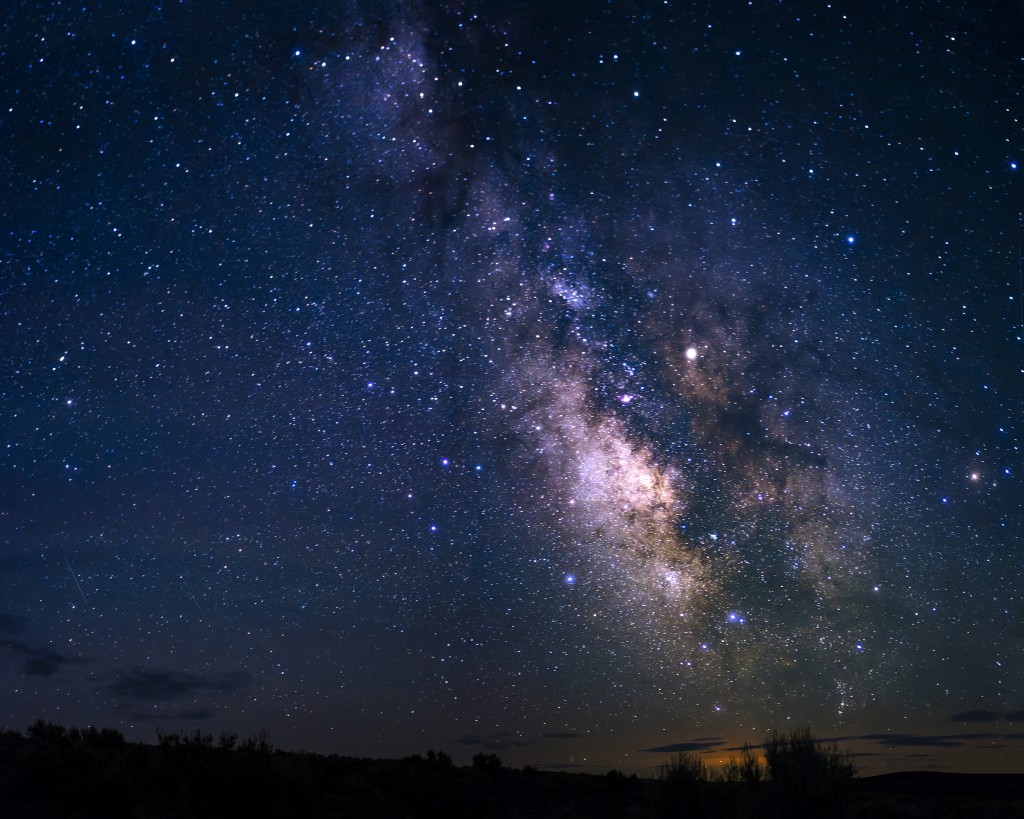
Long, long ago, when the world was young, the people of the sky were so restless and traveled so much that they made trails in the heavens. Now, if we watch the sky all through the night, we can see which way they go.
But one star does not travel. That is the North Star. He cannot travel nor move. When he was on earth long ago, he was known as Na-gah, the mountain sheep, the son of Shinoh. He was brave, daring, sure-footed, and courageous. His father was so proud of him and loved him so much, he honored him with royal command.
Every day, Na-gah would climb and climb, hunting for the roughest and highest mountains; he was happy living among them. Once long ago, he found a very high peak with sides so steep and smooth, and its sharp peak reached up into the clouds. Na-gah looked up and said, “I wonder what is up there. I will climb to the very highest point.”
Around and around the mountain he traveled, looking for a trail. With sheer cliffs all around, Na-gah was unable to find any trails. This was the first mountain Na-gah could not climb.
He wondered what he should do, felt sure that his father would feel ashamed of him if he knew that there was a mountain that his son could not climb. Na-gah was determined that he would find a way up to its top. His father would be proud to see him standing on the top of such a peak.
He continued to walk around the mountain, stopping now and then to peer up the steep cliff, hoping to see a crevice for his footing. He went up as far as he could but always had to turn around and come back down. Finally, he was able to find a big crack in a rock that went down, not up. Down he went and soon found another hole that turned upward. He was finally happy, and up and up he climbed.
It started to become dark, and he could not see. The cave was full of loose rocks that slipped under his feet and rolled down. He began to hear a big, fearsome noise coming through the shaft. Rocks were rolling and dashed into pieces at the bottom. In the darkness, Na-gah started to slip and skinned his knees, and his courage and determination began to fail. He had never seen a place so dark and dangerous. He was afraid, and he was also exhausted.
“I will go back and look again for a better place to climb,” he said to himself. “I am not afraid out on these open cliffs, but this dark hole fills me with fear. I’m scared! I want to get out of here!”
When Na-gah turned to go down, he found that some of the rolling rocks had closed the cave below him. The only thing for him now was continuing to climb until he was able to come out somewhere.
After climbing for so long, he saw a little light, and he knew it was a way out. “I am happy,” he said aloud. “I am glad that I really came up through that dark hole.” Looking around, Na-gah had become breathless, for he found that he was finally at the top of the high peak! But, with little room for him to turn around, he began to get dizzy. Seeing the great cliffs below him, he realized he couldn’t get down, since the cave had closed behind him. Until he was able to see a small place in which he could move.
“Here I must stay until I die,” he said. “But I have at last climbed my mountain!”
Finding grass and water, Na-gah was able to keep himself nourished. He was higher than any mountains and could see the earth.
Na-gah’s father was out walking over the sky, looking everywhere for his son. He called loudly for his son, “Na-gah! Na-gah!” His son answered him from the top of the highest cliffs. When Shinoh saw him there, he felt sorrowful. “My brave son can never come down. He must stay on top of the highest mountain. He won’t be able to travel or climb anymore.” Shinoh wept.
“I will not let my brave son die. I will turn him into a star, where he will stand and shine where everyone can see. He will be a guide for all the living things on the earth and in the sky.”
Na-gah became a star for every living thing to see. This star will always be found in the same place and always standing still. Directions are set by him; travelers will look up at him to find their way home. Na-gah will not move around as the other stars. He is called “the Fixed Star” and is always in the true north.
Our people–the Paiute–call him Qui-am-i Wintook Poot-see, “The North Star.” Other mountain sheep who saw Na-gah wanted to join him and climb their own challenging mountains. Today, you can still see them traveling around their mountain seeking a trail to Na-gah, the North Star. These mountain sheep are known as the Big Dipper and Little Dipper.
– A Paiute Legend
From Legend to Observation on the Duck Valley Indian Reservation
The Shoshone-Paiute Tribes of the Duck Valley Indian Reservation are undertaking a groundbreaking “Dark Skies Observatory” initiative that combines astronomy, cultural preservation, and sustainable tourism. The proposed Togugunde Observatory named for the Sho-Pai word meaning “Heavens” will rise near Mountain View Reservoir as a “Dark Skies” cultural tourism site offering far more than stargazing.
“It will touch on a lot of cultural aspects,” said Jade Roubideaux, Duck Valley Cultural Preservation Director. “Living here since time immemorial, we have stories about the stars, but not many people seem to know them anymore. Unfortunately, I only remember a couple. We’re hoping to compile those stories and bring them back.”
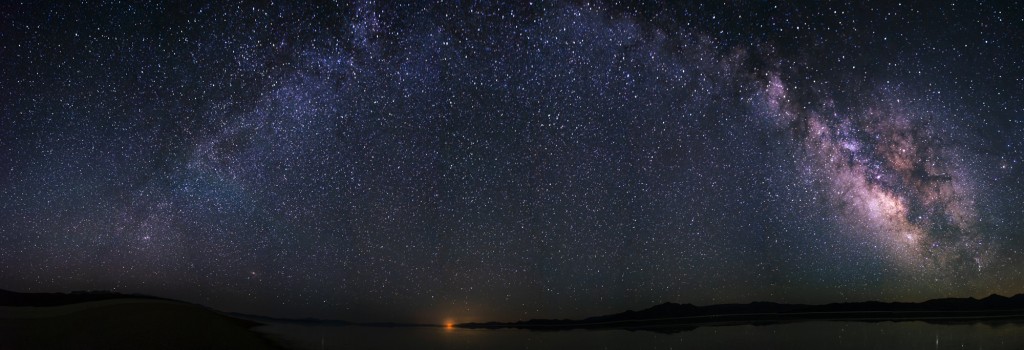
The project, submitted under the federal Native Act grant program, requests $249,562 to build a fully equipped observatory designed to serve the tribal community, nearby towns like Elko, Nev. and Mountain Home, Ida., and visiting travelers. Its goals include empowering the Sho-Pai Tribe through storytelling, language revitalization, education, and eco-cultural tourism that honors both land and people.
“This is going to open a whole new world for our community and younger generations,” said Tribal Councilwoman Yvonne Powers. “There is so much to learn about our skies and stars. I wish I had something like this when I was growing up.”
The proposal describes Togugunde as “not just an observatory, but a cultural sanctuary.” Guided by the NEWE Pledge, a Sho-Pai framework for responsible, Indigenous-led tourism, the project emphasizes authenticity, environmental stewardship, and community well-being. The pledge connects economic development with cultural revitalization, aiming to strengthen identity while promoting sustainable growth.
For a small nation with limited revenue–much of it from fishing, camping fees, and grants–the observatory represents a step toward long-term sustainability.
“We are very small, and most of our income comes from fishing and camping. But we also see people building businesses,” said Powers, who also runs a local rental business called Seven Stars.
At the heart of the effort is a dual mission: cultural preservation and environmental conservation. Programming will include public stargazing, astronomy education, and storytelling that reframes Western science through an Indigenous worldview. For Owyhee Combined School students and other youth, the observatory will offer opportunities to learn science alongside Sho-Pai language, tradition, and ecological ethics.
From custom-designed telescopes to sustainability-minded infrastructure, Togugunde promises to merge advanced technology with ancestral wisdom. Organizers estimate the project could reach over 20,000 people across Duck Valley and neighboring communities, positioning it as a model for Native-led tourism initiatives nationwide.
“I think this will really help us reach people and invite them to see what the valley has to offer,” said Powers. “They can visit the observatory, attend a powwow, go fishing, or buy artwork from our local artists.”
Nevada Indian Territory and fire service veteran Ben Rupert (Shoshone-Paiute, Washoe descent), helped Powers start the proposal.
“The development of the Togugunde Observatory Project is a unique opportunity to use mapping of Indigenous place names, language preservation, storytelling, authentic cultural interpretation, and most importantly, educational opportunities for both the community and Owyhee Combined School to improve the overall quality of life, health of the land, and health of the Sho-Pai People,” Rupert said.
Groundbreaking for the Togugunde Observatory is scheduled for early spring 2026.
Republish our stories for free, under a Creative Commons license.
Author

Related Articles

“A Conflicting Feeling:” A Local Venezuelan’s Perspective on the U.S. Capture of Nicolás Maduro
What does the seizing of the Venezuelan leader mean to the millions who have fled the country? We ask one.

It Could’ve Been Me
The tragedy in the backcountry outside of Truckee is a reminder to not judge too quickly and reach out to those close to you
As ICE agents flood Minnesota, local reporters say national news misses the mark
Recent New York Times reporting on a Minnesota scandal may have cast unwelcome attention to the state’s Somali community, but it isn’t the first time national journalists haven’t captured the full scope of Minnesota’s local stories.