
The Washoe Zephyr
A signature wind that Mark Twain called a “soaring dust-drift about the size of the United States set up edgewise”.
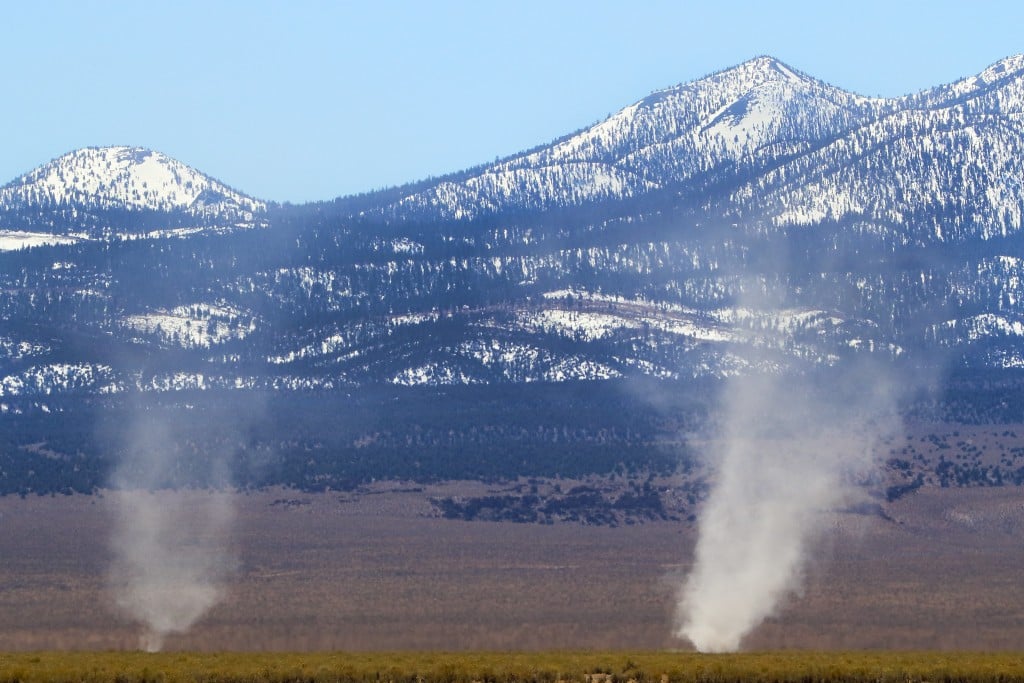
Those of us who live in the western Great Basin Desert, up in the foothills on the eastern slope of the Sierra Nevada, are all too familiar with a wind that is known locally as the Washoe Zephyr. During his time as a cub newspaper reporter in the mining camps of the western Nevada Territory (then nicknamed “Washoe,” after the Native people who inhabit this region), Mark Twain was also familiar with this special wind, which was already the stuff of extravagant tall tales by the time he arrived on the Comstock in the early 1860s. Calling the Washoe Zephyr a “soaring dust-drift about the size of the United States set up edgewise” in Roughing It (1872), Twain described the layers of items he observed blowing by above him: “hats, chickens, and parasols sailing in the remote heavens; blankets, tin signs, sage-brush, and shingles a shade lower; door-mats and buffalo-robes lower still; shovels and coal-scuttles on the next grade; glass doors, cats, and little children on the next; disrupted lumber yards, light buggies, and wheelbarrows on the next; and down only thirty or forty feet above ground was a scurrying storm of emigrating roofs and vacant lots.” “A Washoe wind,” Twain concluded, “is by no means a trifling matter.”

Twain’s comic exaggeration is funny only if you don’t actually live here. In my decade on Ranting Hill quite a few of the items on Twain’s list actually have blown away from here, along with plenty of things he didn’t think to mention. The Washoe Zephyr hauls off papers and magazines, hats and sweaters, tarps and blankets, but would you believe that it also blows away plastic coolers, bird netting, chicken wire, and five-gallon buckets, that it routinely rolls everything from soccer balls to trash cans off Ranting Hill, and that the only way to keep a half-full bottle of beer from being knocked over is to down it straightaway? Our heavy outdoor furniture routinely slides around the patio as if it were an ice rink, and the Zephyr has even toppled neatly-stacked cords of juniper and pine. Around here the tumbleweed (Russian thistle) does not tumble at all; it is instead dislodged by fierce dust devils, sucked up into the gyre, and transported aloft toward Utah. On one memorable occasion, a sudden blast knifed under my young daughters’ blue, plastic wading pool. I stood gripping my beer as I watched the blue disc simply sail off into the desert sky. It took me an hour of hiking around to even find the pool, which had eventually returned to earth and lodged in a juniper copse a half mile from the house.
Meteorologists call the Washoe Zephyr a seasonal diurnal wind: it occurs regularly during the summer and is driven by temperature and pressure gradients that are built up and broken down over the course of the day. Like everything and everybody around here, though, our wind is extremely strange. In the normal pattern, diurnal, mountain-slope winds move upslope during the day and downslope at night—just as you would expect, given that hot air rises and cool air sinks. But here in the western Great Basin the pattern is reversed: the wind howls down out of the canyons all afternoon at 20 to 30 miles per hour, finally shutting off or gently reversing itself an hour or so after dark. What causes this odd reversal of the normal wind pattern?
Weather geeks have been arguing about the mechanism of the Washoe Zephyr for a long time. While several theories have been proposed, the most persuasive is that this unfailing west-southwest afternoon wind is a “thermally driven flow phenomenon.” During the day, heated air rises from the desert floor, creating a conveyor or chimney effect that sucks the cooler air down from the Sierra Nevada. But the situation is more complicated than that, since the Zephyr is produced not only by this thermal differential but also by a giant, regional-scale pressure gradient: in summer, the low pressure system produced out in the high-elevation desert of central Nevada remains in an unstable relationship with the high pressure system produced on the west side of the Sierra. The great equalizer is the Zephyr, which relieves the pressure of this atmospheric asymmetry by pulling California air through the mountain passes and down into the Nevada desert.
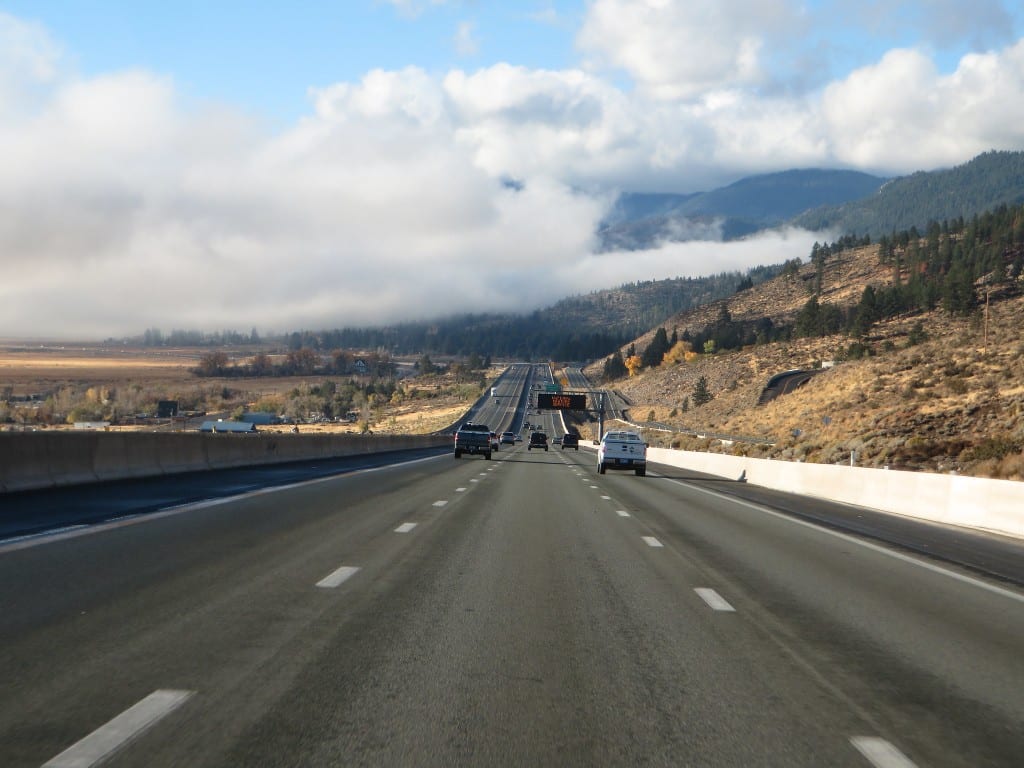
Scientific theories notwithstanding, the Zephyr remains an odd and poorly understood feature of life in the western Great Basin. Even Twain recognized the mystery of the wind’s origin. The Washoe Zephyr, he wrote, is “a peculiarly Scriptural wind, in that no man knoweth ‘whence it cometh.’ That is to say, where it originates. It comes right over the mountains from the West, but when one crosses the ridge he does not find any of it on the other side!” Like a local cloud that hovers atop a big volcano like Mt. Shasta even when skies surrounding the peak are clear, our home wind is produced by the mountains. While we tend to think of wind as something that blows in from somewhere else, the Washoe Zephyr is instead endemic, a signature phenomenon created by a vigorous daily conversation taking place between mountain and desert.
I’d have to be a soft-hearted tree hugger to have much good to say about the Washoe Zephyr, which is more akin to an existential trial than it is to a welcome breeze. A nature writer like Annie Dillard can emote lyrically about the “spiritual energy of wind” only because she is lolling in the gentle breeze that ripples the verdant banks of Virginia’s Tinker Creek. As Twain knew so well, the case is entirely different in the western desert. Here the wind is so desiccating as to make gardening virtually impossible. It is so hot that facing into it is like standing in front of the open door of a kiln being vented into your face by the world’s largest exhaust fan. When wildfires burn up in the Sierra, which they do much of each summer, the Zephyr funnels their choking smoke and ash directly into these desert basins and sometimes drives curtains of roaring flames toward our home.
Because the Washoe Zephyr shotguns so much desert sand, we must occasionally resort to wearing ski goggles while hiking. The amount of dirt that ends up in your eyes after a hike would be enough to pot a houseplant, if your eyeballs weren’t so dried out and stinging as to cause the debris to stick to them almost indefinitely. Inside your boots you’ll discover enough gravel to sandbag a levee. And don’t bother clenching your teeth in frustration while being blasted by the Zephyr, because you’ll be doubly exasperated when you feel the grit between your molars. Is it any wonder that the Buddhist and Hindu concept of nirvana—which signifies a liberation after a lengthy period of suffering—is understood by some etymologists of Sanskrit to mean a state of no wind? Each evening when the blast of the Washoe Zephyr subsides, it is as if the world has suddenly stopped clenching its jaws and squinting its eyes. Calm comes over the land in a form that can never be produced by an absence of wind, but only by a cessation of it.

What has somehow been lost in the story of the Washoe Zephyr is that the name of this big wind is in fact a joke—one that originated with Twain and the frontier storytellers he gulped red eye with up in Virginia City. Named for Zephyrus, the Greek god who was celebrated as the bringer of light summer breezes, the word zephyr specifically evokes the gentle stirring of a soft, western breeze. This is what Shakespeare intended, when in Cymbeline he wrote that two beautiful children “Are as gentle / as zephyrs blowing below the violet, / Not wagging his sweet head.” Calling our fierce, ripping Washoe wind a zephyr is a triumph of the sort of ironic understatement that is essential to the American tall-tale tradition. The droll implication of the Washoe Zephyr’s name is that out here in the desert West the landscape is so vast and unforgiving that our version of a gentle breeze is a blast that carries off lumberyards, wheelbarrows, and vacant lots.
We high desert rats don’t enjoy the Zephyr, but we have learned to endure it, and in enduring it we are made more thoroughly a part of this place. And the fact that the name of this grueling, incessant wind is a wry joke is very much to the point. We often endure the desert through laughter, which seems a fitting gesture of reciprocation with a landscape that so often seems to be laughing at us—that chuckles knowingly even at our pretention to inhabit it. But if the Washoe Zephyr were suddenly to cease forever, a fleeting moment of nirvana might be followed by a sense that something extraordinary had vanished from this land. Because our embrace of nature in this place is an expression of grinding struggle as well as deep affection, the Washoe Zephyr is something we can no longer live without.
An earlier version of this essay appeared as a chapter in Mike’s book Rants from the Hill: On Packrats, Bobcats, Wildfires, Curmudgeons, a Drunken Mary Kay Lady, and Other Encounters with the Wild in the High Desert (Roost Books, 2017).
Republish our stories for free, under a Creative Commons license.
Author

Related Articles

Photos: Students Walk Out to Protest ICE
Students across Washoe County took part in a nationwide walkout to protest the actions of federal immigration officers.

Photos: Rally for Renee Good in Carson City
Community members gathered to protest ICE, federal immigration policy, and the human cost of enforcement.
From Barista to Union Delegate: The Beginning of Reno’s Red Cup Rebellion
How one Reno resident helped lead a local strike against the coffee giant