
Cadralor #9, (dis)articulation,—for Patrick (Synkroniciti, Feb. 2021)
Read and listen to poet Lori Howe, co-creator of the poetic form Cadralor.

- The Lost City
In this photo of Friday Harbor, see here? The place with the red umbrellas, deck rails
dark-stained by storm: here is the place for halibut, for fries cut today, a proper shoe-string,
skins on, double-fried in fresh oil, a bang of salt and thyme. Sit at the rail—
a beer, why not?—and burn your mouth on their creamy insides, the silken fish, salted fries:
a fireworks of vinegar. From here, look out at the marina, boats glowing meringue in fall light,
a forest of masts clacking with the tide. In a thousand years, archeologists will unearth its
champagne bottles and dressmakers’ dummies, all the bracelets and thrown rings,
the coins of the world. They will see a new language in the sunken piles,
as though a whole city fell into the sea. It wouldn’t occur to them, really, that when gold
is ground fine, it becomes invisible; everything we drop and forget is still there, waiting to tell.
- Quantum Indeterminacy
Out at the far end of the string of zeros, my student tells me, you’ll open the dryer
to find the clothes already folded; a pencil dropped becomes the dusklit notes
of the violin. When you reach for a pear, your fingers will pearl into quanta
and pass right through it, into the cedar caress of electrons.
Every breath you draw is luminous. What would you give to know?
Would you belovedly untouch the tender walls of your one life,
forget the taste of a peach, unslick your fingers, your chin, of its ripe honey,
loose the spice market of your own sweet self,
to be both whale and krill, every drop of the sea?
What would you offer up for those tourmaline gills?
- Missives from the Periodic Table
What if I told you that the elements are sensate, that they long for us to unedge
the table? Let strontium stretch and Copernicium contemplate the sun.
Allow ytterbium to react with water, to oxidize into lustrous wings,
and bismuth to cool and crystalize, to dress itself in cobalt and levitate.
Save a moment of thanks for the six bodhisattvas, the angels of oxygen and carbon,
calcium and nitrogen; expose the glowing phonebooth of phosphorus to light; allow
it to sublime. Pray for hydrogen as you’d pray for yourself: it is your body, incarnate.
In all chemiluminescence, an excited state is created via a chemical reaction; it
translates as a staining of fluorophore. Small wonder, then, with the angels seething in our atoms,
the way I blossom and stain purple everywhere you touch.
- From my kitchen window
He is 8 and small for his age, the last child of the mustard-colored house,
of the mother who shouts, of the Trump signs fading malignant in the careful lawn.
He rides the Big Wheel, leftover, too small for him, legs an angry scissoring
against enforced silence. At my garden, he brakes to gaze into my roses, into
their heavy, wet hearts. Swift, without looking, he strips one from the greening,
palms its round head, a red planet. Carefully, he peels it open, dissecting;
petals fall like plucked wings. Hands stained with it, he rides away, the playing card
tick-tick-ticks against his wheel. My tide washes out to him; his mute rage, my own pebbled skin
I walk down to where the rose stirs, inarticulate, in the breeze; so filled with its own beginnings,
it does not know it is already dead. I sweep the petals into my hand, every garnet coin.
- Vatnajokull Glacier, Icelandic South Coast
Walk inside, send your heat out beneath the frozen sea, tendrils of saltwater falling
around you like peeling bells, look up into waves frozen in ness; unfurl inside
this Chesapeake blue dragon made of glass, ancient, viridescent, glacial.
Can you be small and quiet enough to press yourself against the under and into?
Humans and lobsters share an ancestor; in this arching below the Icelandic Sea, feel your way
back to the split; unbody into urbilaterian. Who are you without your carapace?
I know you want to burn your face against the oculus, see into heaven. Press yourself against it;
disarticulate. You were born of heat. There is only the tiny, fragrant skin we leave
behind, the miraculous whalesong of it, the abalone shell of our short and glorious lives, holy
and imperfect, pearled blue by desire: the salty and the sweet.
A poem must adhere to the rules of the form in order to be considered a cadralor, and to be considered for publication in Gleam. All cadralor must:
- Contain 5, numbered stanzas of up to 10 lines each;
- Maintain consistency in number of lines in all stanzas;
- Maintain approximate consistency in line lengths across all stanzas;
- Be non-narrative poems; the stanzas should be contextually unrelated. By this we mean that there should be no clear connection of any kind between stanzas. This is very important to this non-narrative poetic form. The reader should be surprised, even shocked, as they move from stanza to stanza. Poems containing narrative threads, such as a recurring image, are not cadralore. This contextual distance between stanzas is one of the most important rules of the form;
- Be imagist poems. The cadralor is a collection of word images, much like a set of five short clips from different films or five unrelated photographs—as any good imagist poem, they should show, rather than tell. Cadralore avoid explanation;
- Be vivid poems that avoid cliché;
- Be comprised of 5 stanzas, each of which can stand alone as a publication-quality poem, whether they are 2-line stanzas or 10-line stanzas;
- Have a fifth stanza that acts as the crucible, illuminating the gleaming thread that runs through the entire poem, much like an underground river that surfaces at the end of the poem. The fifth stanza acts to pull the poem into coherence as a kind of love poem; by this we mean that the fifth stanza answers the compelling question: “for what do you yearn?”
- Obviously, the fifth stanza rule does not mean the poem must be a traditional love poem. Yearning takes many forms. It is characteristic of a successful cadralor that it end on a note of hope, rather than hopelessness. Ultimately, the cadralor bends to the positive even while recognizing that sometimes, yearning is pain. The role of the fifth stanza is crucial. It is what determines if a cadralor “sticks the landing.” If it does not, it is unlikely to be accepted;
- Be a feast for the senses. Good cadralore take us places, whisper to us of other worlds, invite us to experience them, help us feel what it means to be human.
Republish our stories for free, under a Creative Commons license.
Author

Related Articles

“Autoethnography” and “Duet”
Two poems from Dani Putney, who is performing at the Nevada Humanities Literary Crawl

“It Should Be CDO” and “They/Them Half-Life”
Two poems by Dani Putney
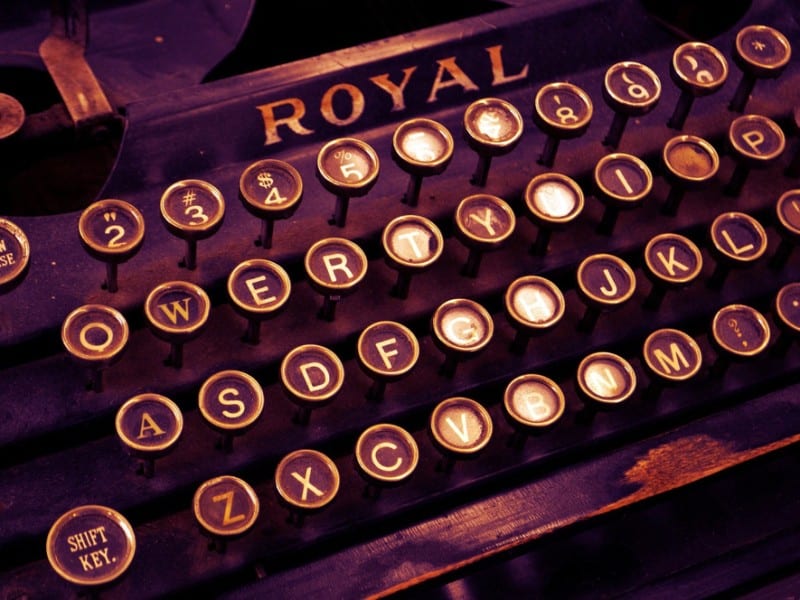
A new poetic form—the Cadralor
Dr. Lori Howe is the co-creator of the new poetic form, the Cadralor, and the founding Editor in Chief of its flagship publication, Gleam: Journal of the Cadralor. Since the inception of this non-narrative, imagist poetic form in 2020, the editors at Gleam have published 9 issues (Gleampoets.org), with Issue 10 forthcoming in June, 2025. Lori Howe’s cadralore appear in such journals as Synkroniciti, The Tampa Review, The Meadow, McQueen’s Quinterly, and Verse-Virtual, among others. She is a professor in the Honors College at the University of Wyoming.