
Learning to See
A Conversation with Landscape Photographer Scott Mortimore
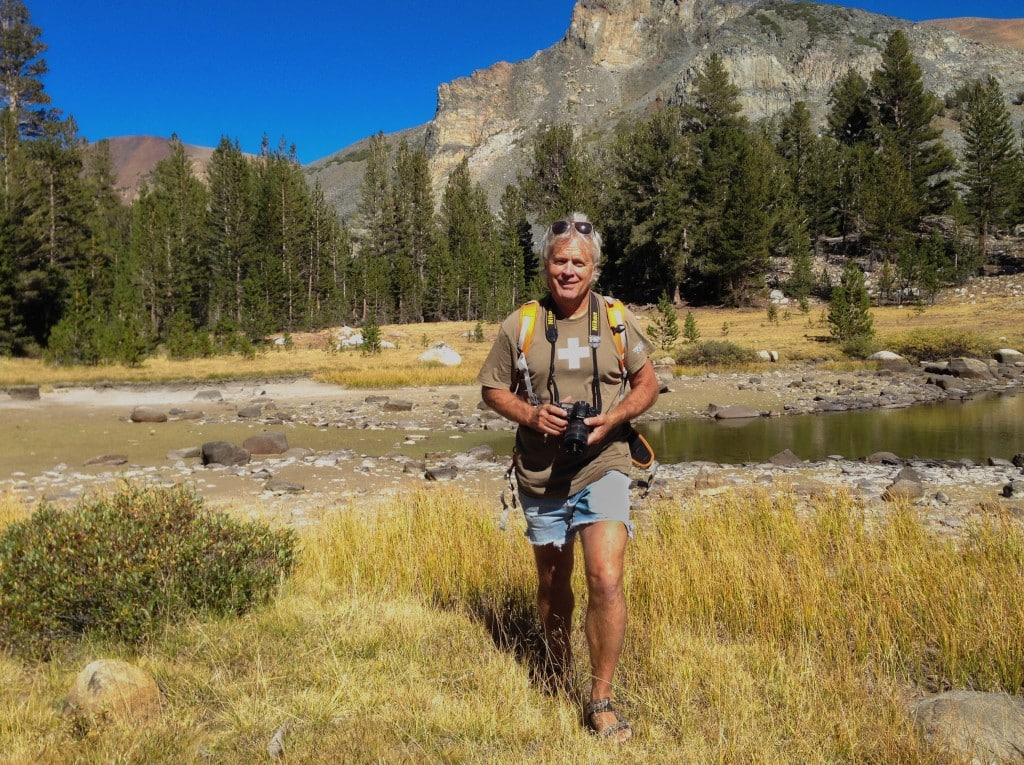
When I ask Scott Mortimore about his memories of being a kid, he says that he pictures himself with his Kodak Brownie box camera swinging from a leather strap around his neck. As I talk with Scott, I’m struck that so many of his earliest memories are inseparable from his love for landscape photography. At six years old, his family traveled to Yellowstone, where Scott woke early one morning, grabbed his camera, and walked out into an open meadow with his brother. “We saw some buffalo out there,” he tells me, “and we thought that was pretty cool! So, I got as close as I could and took a photograph of them. My mom found out about it later and wasn’t too happy.” Scott laughs and takes a sip of his beer. “I took so many horrible photos that I thought were going to be awesome,” he adds, laughing again. As a kid growing up in Reno, Scott often took a simple point-and-shoot camera out onto the Washoe Golf Course when it was closed in the wintertime. He had been studying migratory birds, and one day while standing alone on a frozen fairway he heard the distant but unmistakable cry of snow geese. “I could just make out this squeaky sound, like a loose fan belt, up there in the skies, probably a mile up. And I thought, there they are! So, I took a whole roll of pictures. I waited two weeks for those prints to come back, and when I looked at them, I could not find those geese! A few tiny little specks—that was all. I learned from that, and I said, I’ve got to get better at this. I knew I wanted to excel at photography.”
I get the sense that Scott, now age 66, hasn’t changed much since he wandered around with that Brownie. When he talks about photography or about wild places—and especially when he tells animated stories of photographing those places—his enthusiasm is palpable. I consider myself a confirmed high desert rat, but I’ve met very few people who know as much about the Great Basin as Scott Mortimore. He has spent so much of his life in the ranges, valleys, and playas of the Nevada outback that his familiarity with even the remotest corners of the high desert is astonishingly intimate and granular. Whether hiking or backpacking, hunting or fishing, or on camping trips alone or with friends and family, Scott is never without his camera. And while there’s much more to creating a stunning landscape photograph than simply being in the right place at the right time, it doesn’t hurt that Scott has been out in the wilderness at all seasons for the past sixty years. When I ask him if capturing incredible shots is his main motivation for spending so much of his time in the wild, he offers a warm smile. “I love to be out there in the desert because it’s just an absolute joy to watch the swing of shadows. I want to know what it looks like on the longest day of the year, and on the shortest day of the year, and how those changes in light make the landscape feel completely different. Besides” he says, “I’m more and more compelled to increase my odds of dying while doing what I love.”
For the past two years, Scott has received multiple awards in Focus on Nevada, a photography contest coordinated by Desert Companion magazine. While his images were selected over nearly 3,800 other submissions, even more impressive is the fact that Scott has received awards in multiple categories, including Landscapes, Black & White, Artistic & Abstract, and Town, Country, City Scenes, an eclectic category he won in the 2024 contest with his hauntingly gorgeous image of an abandoned farmhouse in central Nevada.
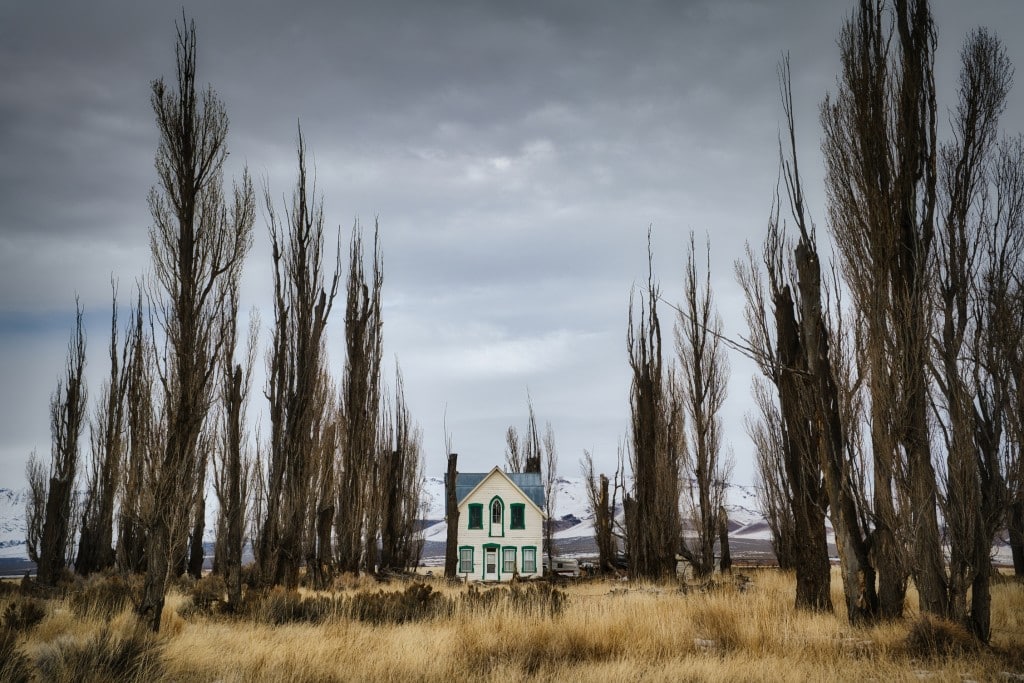
I ask Scott about the Focus on Nevada contest, and about how it feels to be celebrated for his work. “I hear you went down to Las Vegas for the awards ceremony,” I say. “What was that like?” Scott hears the question differently than I intend it and begins enthusiastically describing the amazing places he hiked and camped on the extended wilderness trip he took on his meandering way down to Vegas to receive his awards. When he pauses, I refocus the conversation, asking more pointedly about the awards ceremony, which was held at the Nevada State Museum.
“I saw some fantastic photos there, but I guess I’m kind of monastic,” Scott answers. “I just wanted to stay in the back and observe it all.” I try tacking around his humility by noting how unusual it is that he won awards in both the Landscapes and the Artistic & Abstract categories. Using that remarkable accomplishment as my new lead, I ask if he considers himself a landscape photographer despite his recognized prowess in other modes.
“I’m a landscape photographer, but within landscapes you’re going to find abstracts. We think of landscape photography as the grand shot,” he says, extending his arms wide. “But then you walk closer to the creek, and you get down underneath that stump, and maybe you discover some tiny mushrooms down there that you’ve never seen before. You’re still shooting landscapes, but all of a sudden its more intimate. But, yes, I’m a landscape photographer. That’s why I’m such a shitty driver.”
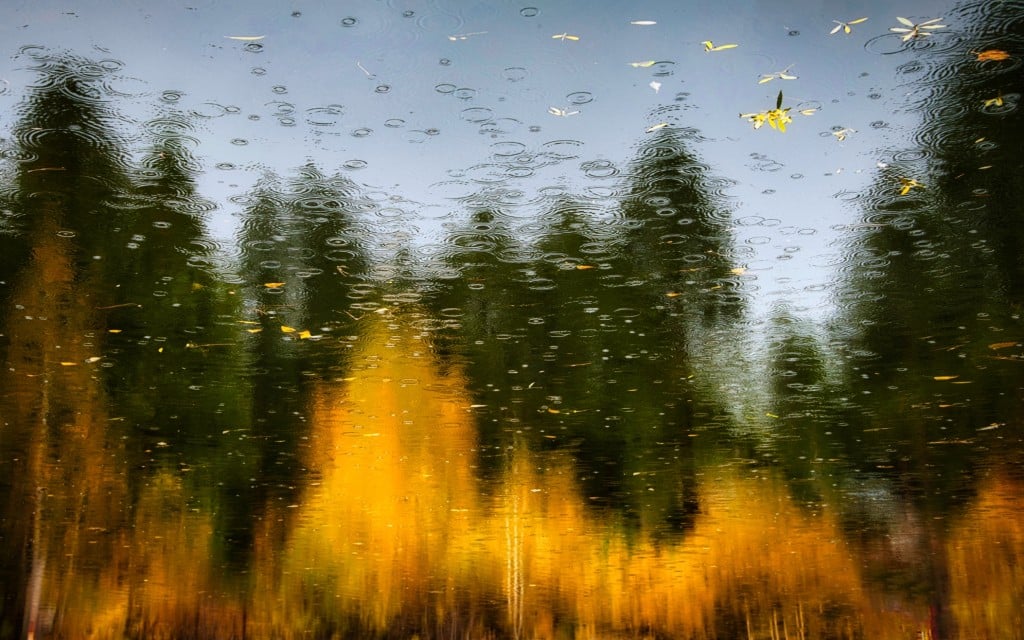
photography contest in the category Artistic & Abstract. Image courtesy of Scott Mortimore.
As a place-based writer I do much of my work in the field, so I’m endlessly fascinated by the creative processes used by other field-based artists. I’ve always wondered whether Scott’s spectacular landscape photographs were the product of meticulous planning, disciplined patience, or perhaps the alchemy of serendipity—the artistic equivalent of getting lucky just often enough to not give up until, after a few decades, you’ve amassed a body of work that would convince anyone that you had a plan all along.
“A lot of it is attempted preplanning,” Scott tells me, with a grinning emphasis on the word “attempted.” “So many photographers get upset when their plans don’t work out, but it shouldn’t be that way. It can be nice when they don’t! I always want to leave room for surprise.”
When I ask if he can give me an example, Scott tells a story about his return from a wilderness trip, when he stopped at Fort Churchill State Historic Park to attempt a photo he had been thinking through for weeks. “I was setting up for the shot I had planned, but then I just happened to take two steps to my right, and suddenly the shape of the state of Nevada emerged in light from one of the old adobe windows of the ruins. I learned from that experience the preciousness of just a little difference in perspective. I love those moments so much, but no amount of preplanning can get you to them.”
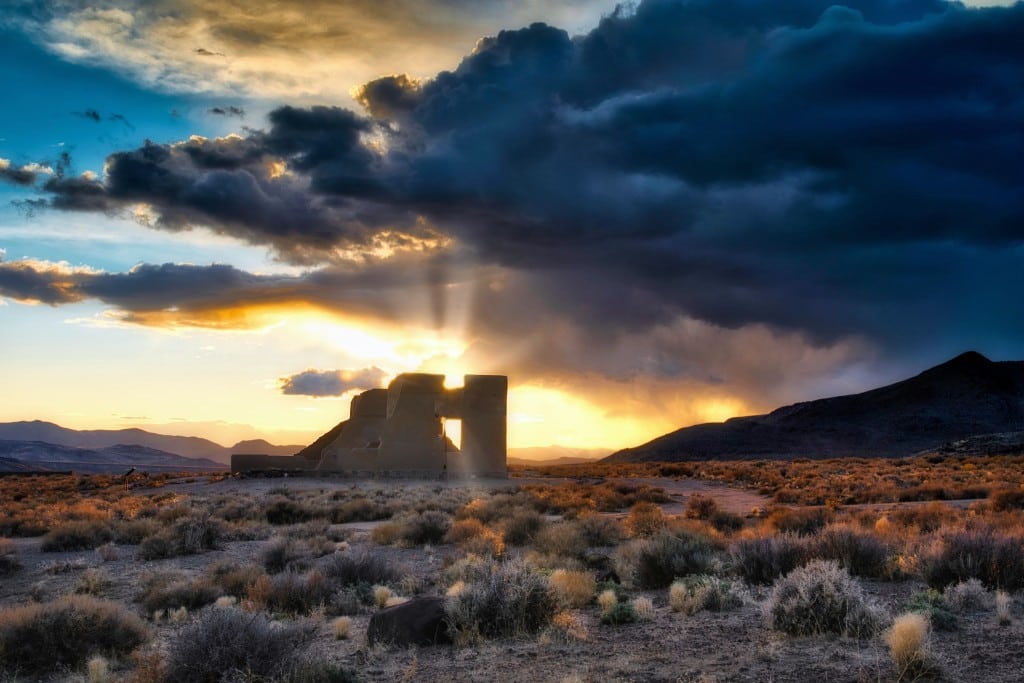
pandemic, shows the value of shifting your perspective even a little bit. Image courtesy of Scott Mortimore.
Because I know from experience that the artistic process can sometimes be a mystery, I was especially interested in how and when Scott knows he has succeeded with a shot. “When you’re in the field taking photos, do you know for sure when you’ve captured something really special?” I ask him. “Or does that become clear only after you get home and start working with the image during the editing process?”
He laughs before answering. “I can’t tell you how many times it’s gone both ways. Sometimes I’m so sure I nailed it that I’ll be driving home, cranking up the music, saying I got it man, it’s in here! And then I get home and look at it and say What the hell was I thinking? And other times I’m just not sure what I have, and then I get home and say Wow, how did I not realize what I captured in that moment?” This is why Scott deletes so few images when he’s working in the field: because, like a fisherman, he can’t always be sure what he has on the other end of the line. “But my observational skills are getting better all the time,” he adds. “I can see things, and that really makes me happy. What was it Dorothea Lange said?” he asks himself, closing his eyes as her words come back to him. “The camera is an instrument that teaches people how to see without a camera.” We both smile at the wisdom of the observation, and it occurs to me that Lange—whose spectacular portrait photography is on display at the Nevada Museum of Art in Reno through February 15, 2026—hit on a perceptive definition of art itself.
Scott’s sustained focus on developing his observational skills, as well as ours, led me to a question that hadn’t occurred to me before. “I’m not a hunter, Scott, but I know you are. Do you see any parallels between photography and hunting?”
“Oh, I like that question! Yes, they both involve stalking. In photography you’re just hunting for something different. But the more important thing hunting and photography have in common is observation. I used to hunt with my father, who had phenomenal eyes, and when his started to fade I became his eyes for him. He taught me a lot about how to look for game. I learned to see the twist of a horn when the rest of the head was hidden in the sagebrush, to observe just the flick of an ear. But then I went to Alaska, and I was on a tour out on a fjord, and our guide kept pointing things out and I just couldn’t see them. It was all foreign to me. I knew my environment and he knew his. It’s all about observing, but that’s never automatic. Observation is a skill that you have to learn. Everything flows from that.”
“Would you say this process of learning to see has been part of your own growth as an artist?” I ask.
“Definitely. If you ask me what’s the most important thing you must master in photography, it’s your eye. But part of that creative growth is also being open to changes of plan as you get new ideas and see new things. Lately I’ve felt drawn to places that are abandoned or run down, places where people once gathered, where you can feel the ghosts. That’s a part of photography that matters to me. I want to document some of these places, because I’ve seen so many of them disappear. And it’s important to me that we get out there and see these places while we have the health and vigor to do it. Hopefully you’ll always have the curiosity, but you might be infirm one day, and you can still look at a photo and walk into it. It’s part of the pleasure of doing what I’ve done. I can go back and look at the images of these places and remember how I experienced them at the time.”
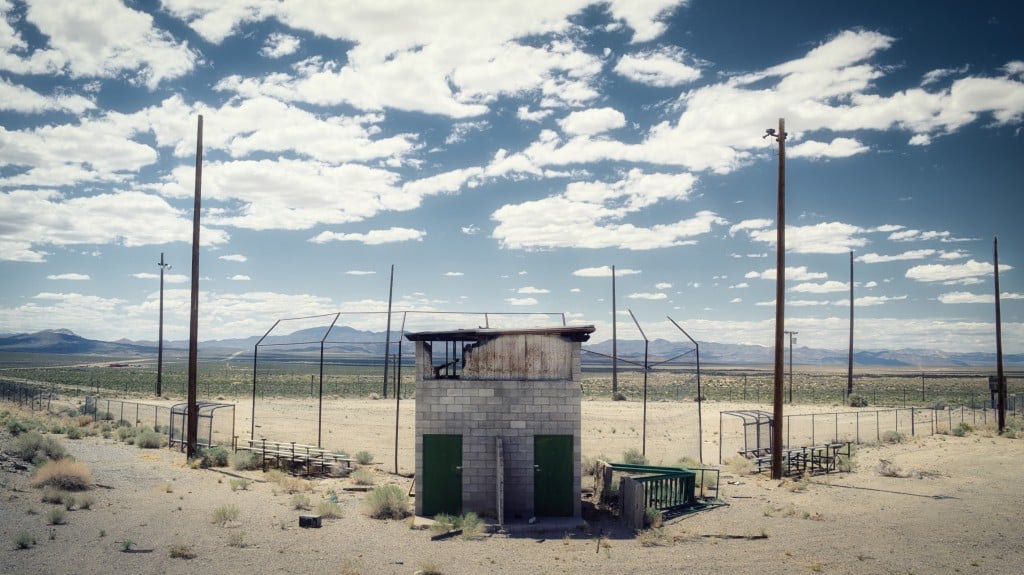
abandoned places, those haunts “where you can feel the ghosts.” Image courtesy of Scott Mortimore.
I’m struck by the fact that, even as a fine art landscape photographer, Scott sees a documentary imperative in his work—that he understands himself to be capturing places that are at risk of erasure. Unfortunately, the threat of disappearance looms not only over adobe ruins and abandoned corrals, but also over the wilderness itself. As an environmental writer, I struggle constantly with this paradox. Is it our work to celebrate these places, or to protect them? Is environmental art merely an aesthetic pursuit, or can it also be an effective tool in our fight to save the landscapes we love? I pose the question to Scott. Since he often shoots places that are under threat, does he see an advocacy element to his work?
“I think you can do your part as a photographer, to try and capture the beauty. I don’t think you can change politicians’ minds all that well. I guess I should be more optimistic. But, yes, I’m especially worried about recent proposals to sell off public lands in Nevada. It really concerns me. I have a friend who found out about these threats to our public lands, and she said ‘I’m so sick of this place.’ That broke my heart, because her heart is all about this place. I totally related to her feelings, and I said ‘I am too, but I can’t give up on it either.’ I want to be engaged in doing my part as a photographer to graphically convey why wilderness and the wild means so much to us in life—why we’ve got to have it.”
As we neared the bottom of our beers, I asked Scott a question I love to ask artists working in any medium. “Scott, have you ever had the experience of a person looking at one of your photographs and seeing something very different from what you see? That happens to me often with writing, but does it also happen with photography?”
“Yeah, it’s funny how that works. Sometimes people do see things that I didn’t see in one of my photographs. But usually it’s more about what they’re feeling. How does this stir you? One of my images may have great meaning to me, but that’s all I can do. I’m there, but I can’t do it on behalf of somebody else. I hope there are others out there who can look at it and get joy from it, or maybe get a little misty over it. That’s out of my control, but I do want the picture to create real feelings. My goal is more emotional than it is technical.”
To conclude our conversation, I asked Scott if he’d be willing to offer an informal breakdown of one of his own images. We quickly agreed on The Sun Slides to the West, one of the photographs that received recognition in the Focus on Nevada contest. Observe this image on your own for a moment, and then read Scott’s take, which appears below the photograph.
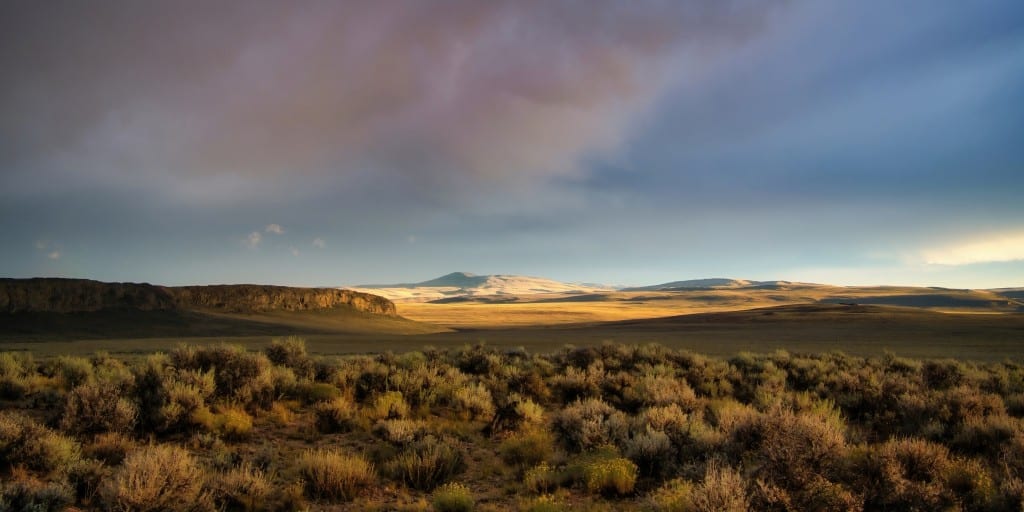
then read Scott’s breakdown of the image, below. Image courtesy of Scott Mortimore.
“The first thing to notice is there’s no immediately obvious subject, and that goes against what you expect in a photograph. Conventional wisdom says you have to have that central subject, and you need leading visual lines directing the viewer’s attention to it. But I would argue that the subject here isn’t what you see so much as what you feel. There are certain elements that matter, though. Hurricane Hilary had just passed through. So I sat down, set up my tripod, had a beer, watched antelope crossing the valley, and then just waited, because light is what really makes this happen! There’s a little bit of raking over the foreground, which I really like. The sky isn’t crazy, just has a little bit of accent. I shot in panorama format because to me that’s what Nevada is all about: it’s a horizontal landscape. I wanted a foreground, midground, and background, but I didn’t want a lot of contrast between them. And, again, the light did me all the favors in the world. I had seen this view at midday, and in that bright sun it just didn’t have much appeal. But I knew this was going to be an evening to sit down and let nature do the heavy lifting.”
“This spot is out between Gerlach and Vya. I’m camped on BLM ground, but the High Rock Canyon Wilderness is less than 100 feet from where this was taken. In the shot we’re looking south, and everything you see in the image is public land—and in the distance that’s all designated wilderness. High Rock Canyon gradually starts to take shape in the distance, beyond the mountain that is left center in the frame. Everything flows in that direction, especially the drainages to the east that flow south and then get serious about carving out that amazing mountain. And on the left here is Grassy Mountain, which is sacred to Native people. On the back side of it is a cave with petroglyphs in it. It’s right above a spring, and it’s a place where you can see pronghorn and wild horses. And on the right of the frame, off in the distance, it’s not in the photo itself, but it’s in my mind, is Hog Ranch Mountain, that’s where my dad’s ashes are. I really love the idea that you could travel through this image. You can look at that photo and walk into it. This is something I hope somebody could put on their wall and admire it for what it is, and say, let me go in there for a minute. It calms me.”
Learn more about Scott Mortimore’s photography and how to purchase it at scottmortimore.com.
Republish our stories for free, under a Creative Commons license.
Author

Related Articles

Wild Christmas Pinyon
While you might imagine that artificial Christmas trees may be traced back only as far as the glory days of plastic in the 1950s, people actually began making fake holiday trees in the mid-nineteenth century.
A Huge Anchor in Lake Tahoe (or Why You Should Meditate)
Reno-based retired professional, author, and meditation teacher on the simplicity of meditation and why, yes, you can do it too.
From Zigong to Reno: Dragon Lights and the Art of Cultural Connection
For several weeks each year, Reno’s Rancho San Rafael Park glows with lanterns and light displays during the Dragon Lights Festival. We go behind the scenes to see how it all comes to life.