
Joe Tanksley: A Red, White, and Blue story of Service and Diversity
How one local former Marine struggled to fit in and survive, and how it helped him evolve
Editor’s Note: The following is part of a series from the Sierra Nevada Ally, called Vet Voices, where military veterans in our region share their diverse perspectives, experiences, and ideas–in their own words.
Ask the average American what they think of when someone says “the South,” and you might get images of historical plantation homes, sweet tea, agricultural fields…and Republican political strongholds. Since the 1980s, most southern states have reliably voted conservative.
The story was no different for rural Virginia native Joe Tanksley, a Marine Corps combat veteran who now calls Reno home. Growing up in the tiny, unincorporated community of Ringgold, Virginia–one hour away from any major town–Joe’s life turned out differently than somebody unfamiliar with him might assume.
“From the beginning, it was very evident that I was different, because my mother is Korean and my father is White,” Joe said, relating that his father had met and married his mother while serving overseas in the U.S. military.
“I was different from every other child there.”
Growing Up Bicultural
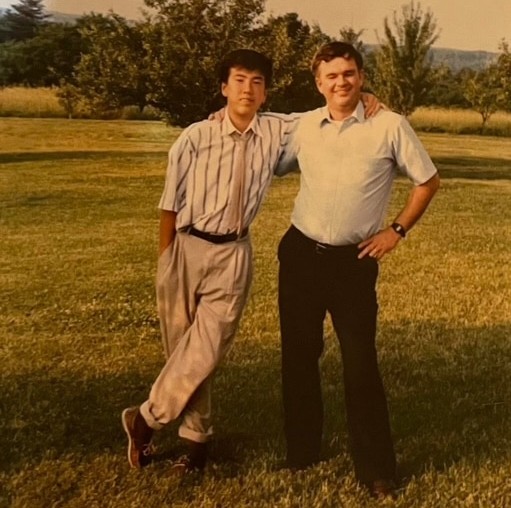
As a child growing up in rural Virginia in the 1970s, there were no Asians in town, let alone mixed-race individuals. Joe was thus frequently bullied and put into remedial classes. Teachers assumed that because he spoke English with an accent due to his half-Korean upbringing, it meant he had a learning disability.
As a young man, Joe recalled further pain and confusion resulting from his bicultural identity, this time affecting his romantic life.
“I was very much in love with this young lady,” Joe recalled. “First time I met her father, he forbade me from continuing to be with her, because he said ‘what are your children going to look like? All the things you’ve been through–all the bullying, getting beat up–I don’t want that for my grandchildren.’”
Despite living in two distinctly different cultural worlds, his father taught Joe from an early age to vote Republican–in line with how most White families in the area voted. Then, as now, Joe said that many poor White southerners blamed their economic hardships on Democrat policies.
Joe also attended a very conservative Christian evangelical church. Initially, he felt so accepted by this religious community that he decided to go into ministry after graduating high school. That career pursuit would last less than two years before Joe left ministerial college upon seeing the “hypocrisy of how some Christians lived,” as he put it. He witnessed too many church leaders placing too much of an emphasis on accumulating wealth and status versus living the message of humility and service Jesus preached in the gospels.
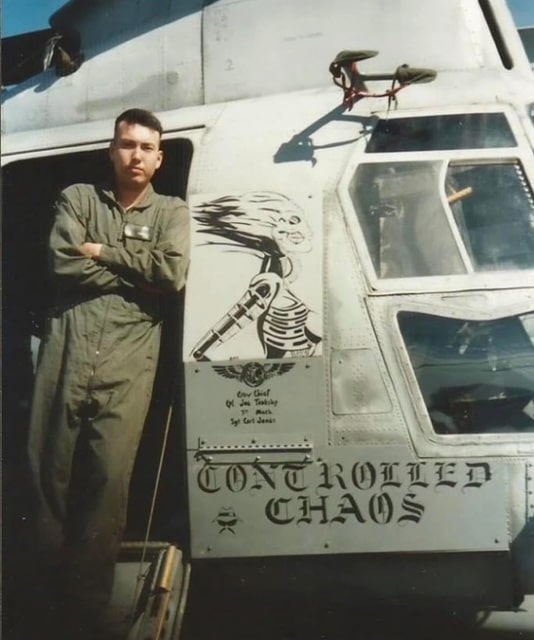
Like many young people seeking direction, Joe then decided to join the U.S. military. In late 1993, he enlisted in the U.S. Marine Corps as a helicopter crew chief, a demanding profession where he was responsible for the aircraft’s maintenance, mechanical and electrical systems, cargo, and personnel.
“I was everything but the pilot,” Joe recalled.
As an unexpected bonus, he experienced an ethnically diverse environment for the first time in his life during his initial Marine Corps training.
“In boot camp, they didn’t care what color you were, what your race was,” Joe recalled. “Everyone was a recruit, and you were completely judged on your merit and your performance. Everyone was just a different shade of green.”
Joe would go on to serve in war-torn Bosnia during the mid-1990’s at a time the United States Holocaust Memorial Museum estimates approximately 100,000 people were killed in a series of conflicts and genocidal actions between Muslims, Christians, and the various ethnic groups populating that area.
Prior to witnessing these atrocities, Joe did not understand how someone could be a Muslim when instead they could choose to be a Christian. During his time overseas, he remembered being asked by a Muslim man, ‘Why are you a Christian?’ Joe told him that he was raised in the faith from the time of birth, and the Muslim man told him ‘my story is exactly the same–just substitute Christianity for Islam.’ At that moment, Joe realized how much political belief and religious fervor are largely matters of historical upbringing.
“(Bosnia) was when I lost my religion,” Joe recalled. “From what we saw over there, what was being done in the name of one god or another, complete destruction or elimination, this was genocide on the same level [as the Nazis inflicted during WWII]. Mass graves, a brother killing his brother and his family, just because they were of a different faith. One brother who had converted to a different religion, he would literally go assassinate his brother.”
He said his world view became radically more inclusive as a result of his time in the military, so much so that he now claims, in a similar vein to a famous Mark Twain quote, that “the enemy of racism and bigotry is travel.”
Going Back Stateside
Along with a more expansive world view, Joe left the Marines with mental and emotional trauma–and two children he had fathered during his years in the service. During his time in the Marines and immediately thereafter, Joe had entered into and ended relationships with two different women. He had fathered two sons in these relatively short-lived romances–relationships that had not endured in large part because of the high operational tempo and breakneck pace of training that his in-demand crew chief job entailed. Even during the times he was home, Joe was preparing for the next mission or the next deployment.
“The only relationship you had was with your fellow Marines,” he said.
Joe would thus ultimately return to the U.S. South a war veteran and a single dad, facing a dearth of social or economic support to help him reintegrate into the civilian and parenting worlds. Additionally, he said he felt angry and rudderless without the structure that the Marines had provided him with, and he quickly found himself resenting the “chaos of civilian life.”
Like others facing unhealed wounds coupled with the stress of being single-handedly responsible for young children, Joe fell into addiction.
“I was an angry former Marine, and I had a drinking problem,” Joe said.
“[I] had to do it all by myself,” he added, explaining that there were next to no services available in the South at that time to help single fathers.
By 2005, he was at risk of losing his kids. He entered rehab and got sober, but that success was fleeting. After leaving rehab, he saw once again that there were no supports to help a single father get back on his feet. Moreover, he had lost several friends and even connections with his family of origin during the past years as a result of his addictions. He thus had little personal support to come back to after rehab, and he soon became homeless, living out of his car. Thankfully, his parents took his children during that time to ensure they didn’t go into the foster care system.
For months, Joe lived off the charity of everyday citizens. He said one person at a rest stop in North Carolina would leave him bags of food in a dumpster that he could rush to before the rats got to it. He said during this time, he also scavenged around hotels, rooting around in pizza boxes left outside the rooms.
“Most people don’t eat their crusts,” he said.
Finding Hope
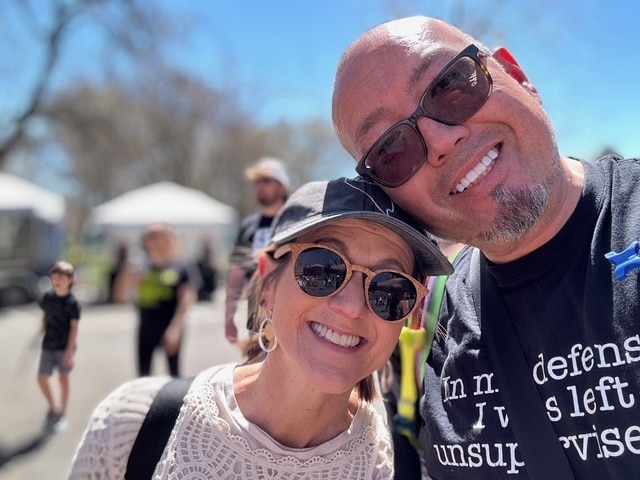
During what seemed like the lowest of lows, Joe said it was also the time he met the woman who would ultimately become his wife. She also had an infant daughter who helped bring more perspectives into Joe’s life.
“Now I had a female perspective…[my wife was] a 100% dirt-worshiping, tree-hugging liberal,” Joe recalled. “I started to see the other side of the fence, because of this woman who I loved, and she loved me. She loved me for who I was, everything about me, all my flaws.”
Her perspective–coupled with the legal and economic troubles Joe was by then only starting to recover from–brought him to new realizations surrounding the complexities of women’s rights and social services. Years of hardship would teach Joe firsthand how cutting programs that help the poor and underprivileged was detrimental to society.
Despite his shifting political and economic views, Joe could not bring himself to vote for former president Barack Obama in 2008. He remained a party-line Republican voter through Obama’s first term. He eventually switched in 2012 after being disgusted by some fellow conservatives’ racism and “birtherism,” referring to the disproven conspiracy theory alleging that Obama was not a natural-born U.S. citizen and was therefore ineligible to hold the presidential office.
Editor’s Note: Current President Donald Trump was a central figure behind the “birtherism” movement when he first began flirting with the idea of running for president in 2011.
“Oh, he’s not a real citizen?” Joe asked sarcastically. “Why, because his name’s not John Smith? His name’s not George?”
This thinly veiled racism was the final straw in why Joe ultimately walked away from the political party he had been faithful to for decades. By now, he was disillusioned in several of the party leadership’s stances on racial issues and lack of support for the social service programs he himself would have deeply benefited from in prior years. He continued seeing Republicans, particularly in the South, advocating for shutting down what social service programs that existed. Joe said the party’s ideology continued being guided by the overly simplistic beliefs that a father should have the means to provide for his family, and that the government excessively taxed the citizenry and gave their money to “undeserving people.”
Since then, Joe has seen the political climate in the United States worsen, particularly during the second Trump presidency.
“We’re seriously in a constitutional crisis,” he said. “It’s the precipice of a complete breakdown of democracy.”
Speaking Up
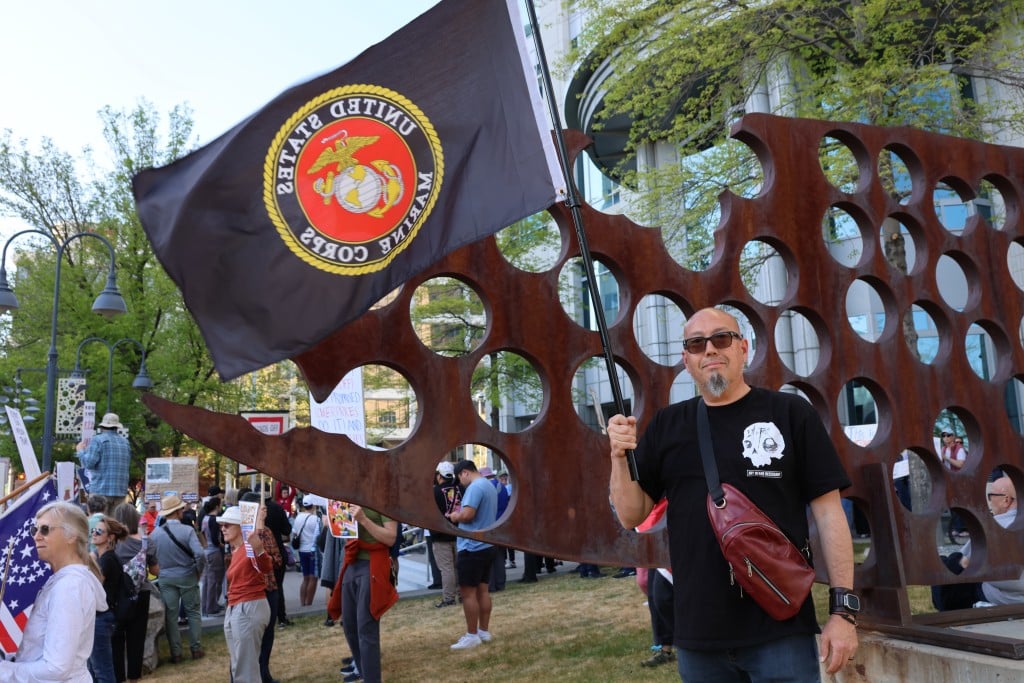
Joe pointed to the swath of executive orders Trump has issued since assuming the presidency in early 2025 that he says are an overreach of power. Many of these are being contested in federal courts, including ending birthright citizenship and dismantling the U.S. Department of Education.
“Historically, we had presidents that respected and knew what the Constitution was,” Joe said. “Historically, we had presidents that had respect for the rule of law, they had respect for the federal [work]force, they had respect for judges even though they ruled against them.”
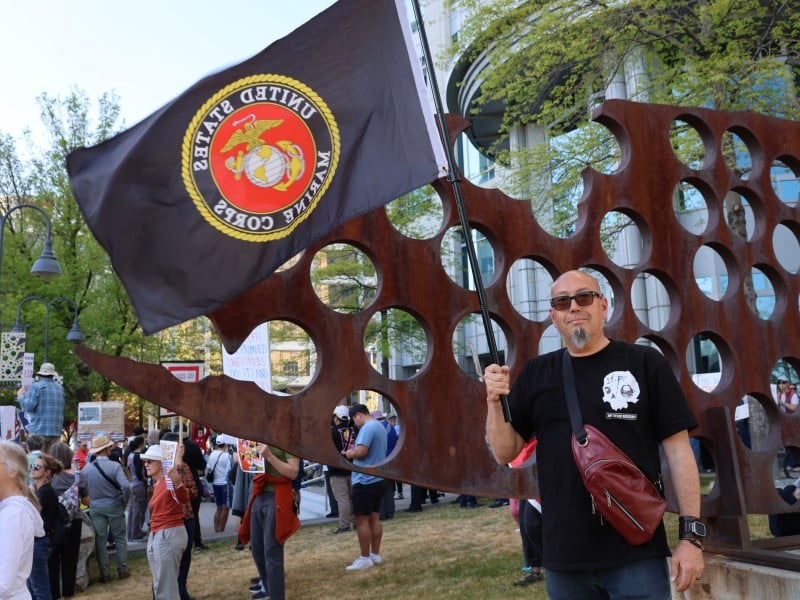
In early 2025, Joe took to the streets in Reno and Carson City, waving a large Marine Corps flag at the various protests and rallies that have taken place in Northern Nevada since Trump took office. He waves this flag to draw the attention of military veterans and the general public, sending the message that many vets are not simple rule followers, and are opposed to this administration’s agenda. Joe is encouraging other former military members to also speak out.
Aside from his general concern for the health of the American republic is his belief that thoughtless cuts to the federal workforce are disproportionately affecting military veterans and veteran services.
“They’re using a chainsaw when they should have used a scalpel,” Joe said, describing the Trump administration’s approach to cutting the federal workforce.
In March 2025, the nonpartisan think tank Economic Policy Institute estimated that nationwide, “nearly 900,000 civilian federal employees are either veterans, spouses of veterans, or spouses of active military, representing 30% of the entire federal government workforce.”
Combining both veterans and spouses of veterans or active military, that figure jumps to over 37% in Nevada.

Joe has felt the pain firsthand of sudden cuts, specifically those made to the Department of Veterans Affairs, a system he routinely accesses for his medical care.
Months ago, he said he had an appointment through the VA to get a tooth fixed that had gotten knocked out by his dog. Once a round of federal workforce cuts was announced, though, he said the VA called and told him they would not be able to provide that service at this time, and that they weren’t sure when they would be able to do so.
In August, the VA’s Office of Inspector General indicated that 137 of 139 VA health centers nationwide reported a severe staffing shortage in at least one area. That was before additional proposed cuts made by the Trump administration.
Although the VA itself was not going to replace Joe’s tooth, VA admin staff had been liaising with a contracted dental provider to perform that service. For people like Joe, workforce cuts mean that necessary support sometimes is not in place for veteran medical care to happen, because this still requires an underlying structure of schedulers, reception staff, and paperwork processing, not simply clinicians and doctors.
Joe said these effects are only starting to be felt and are likely to get worse as more people are forced out of the federal workforce. However, he believes veterans should be vocal instead of victims.
“Veterans are a very well-respected group of Americans,” he stated. “We come with that badge of ‘hey, we did something for America,’ so when you see veterans speaking out saying ‘this isn’t right,’ it causes other people who maybe didn’t dig a little deeper past the [news] headline, maybe didn’t do their own research, it maybe gives that citizen that wasn’t a veteran a second thought.”
“But first we have to speak up.”
Living the Oath
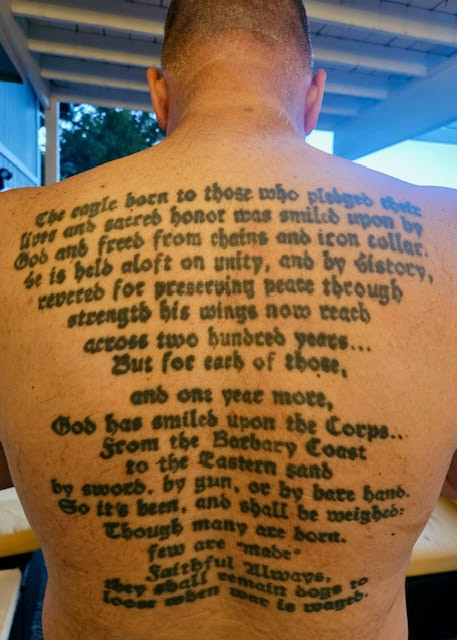
Joe believes veterans can lend protest movements additional credibility, particularly among more conservative-leaning folks who may not respond well to a more stereotypical sort of protestor.
“If they see a purple-haired, 19-year-old guy standing with three different flags in his hand on top of a monument with a spray can in his hand…they don’t listen to him,” Joe said. “A combat vet that’s been through the shit, standing there saying ‘hey guys, this isn’t right’, it makes them do a double take.”
Joe hopes that his story and ongoing visibility will inspire others, particularly in the military veteran community, to speak out and take a stand in support of the Constitution that every military member swore an oath to defend. He credits his wife with helping embolden him to pursue this cause.
“She’s been my voice of reason, she brings me back to center, she’s really helped me open up my eyes,” he said. “She’s [said to me] ‘hey, you need to start talking, you need to start saying more, you need to start showing up more.’ Without her, I wouldn’t be in Reno and out of the South, because I wouldn’t have had the courage to do it by myself.”
Under federal law, all those enlisting in the Armed Forces must take the following oath:
“I, ____________________, do solemnly swear (or affirm) that I will support and defend the Constitution of the United States against all enemies, foreign and domestic; that I will bear true faith and allegiance to the same; and that I will obey the orders of the President of the United States and the orders of the officers appointed over me, according to regulations and the Uniform Code of Military Justice. So help me God.”
Republish our stories for free, under a Creative Commons license.
Related Articles

Public Space and Civic Identity in the Mountains: Truckee Debates Its New Library
Despite overwhelming public support, a funding measure for a new library has led to contentious arguments around its financing and place in the community.
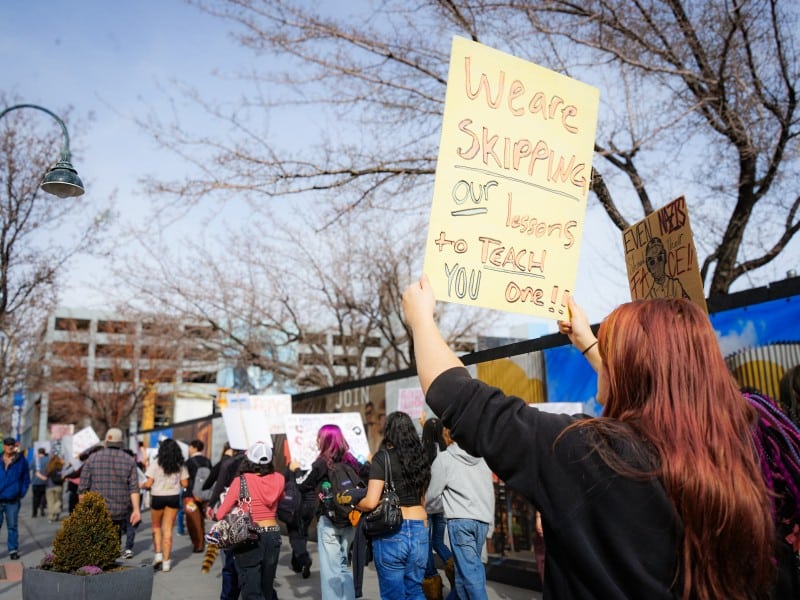
Photos: Students Walk Out to Protest ICE
Students across Washoe County took part in a nationwide walkout to protest the actions of federal immigration officers.
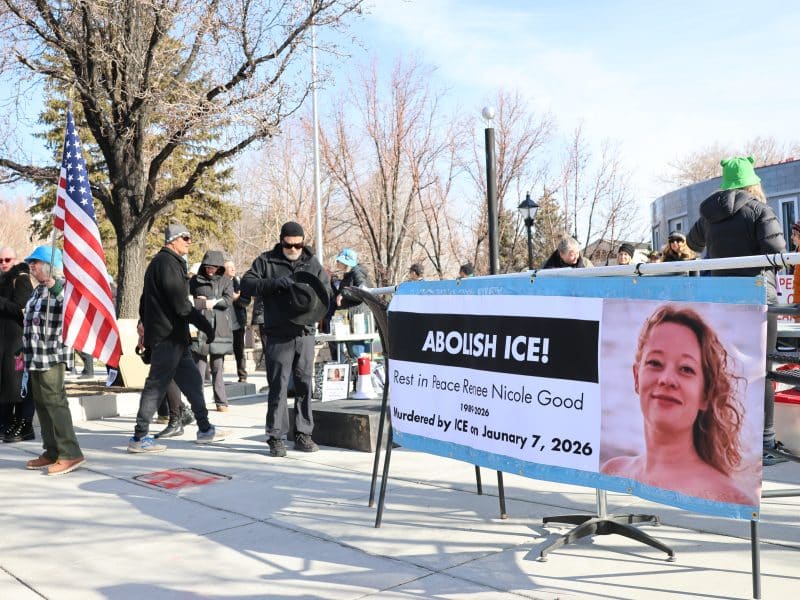
Photos: Rally for Renee Good in Carson City
Community members gathered to protest ICE, federal immigration policy, and the human cost of enforcement.