
We Know Reno Is the Fastest-Warming City in the U.S.—What’s Next?
Local leaders and scientists discuss solutions at inaugural Northern Nevada Heat Summit.

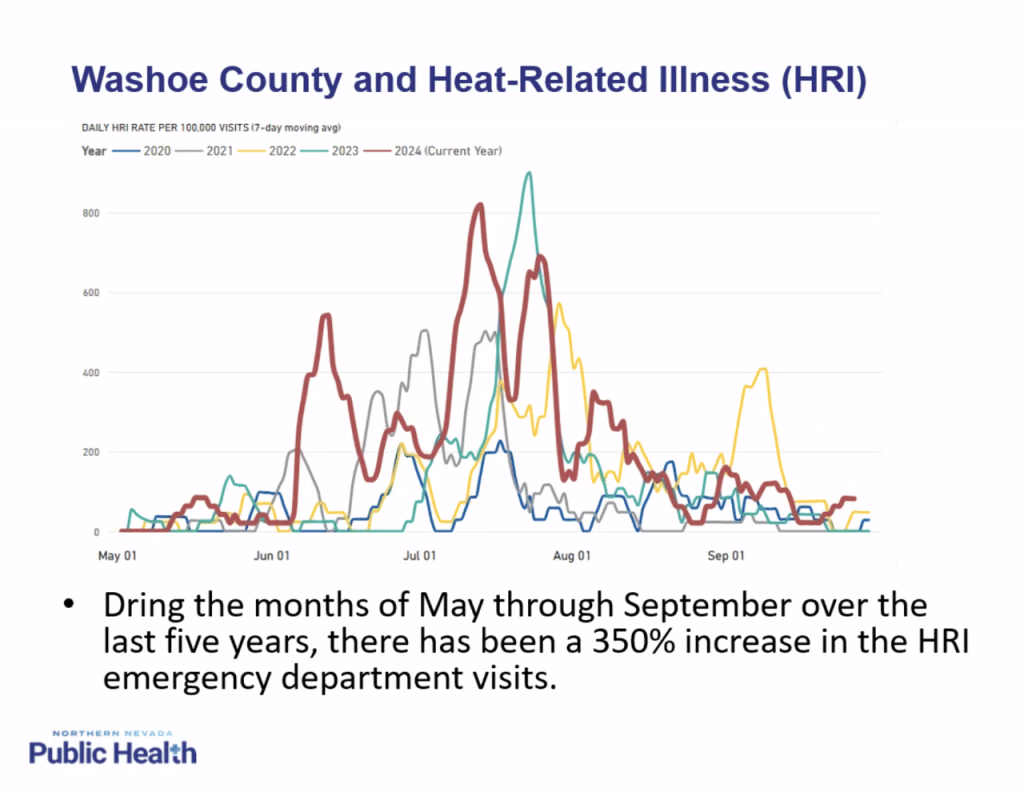
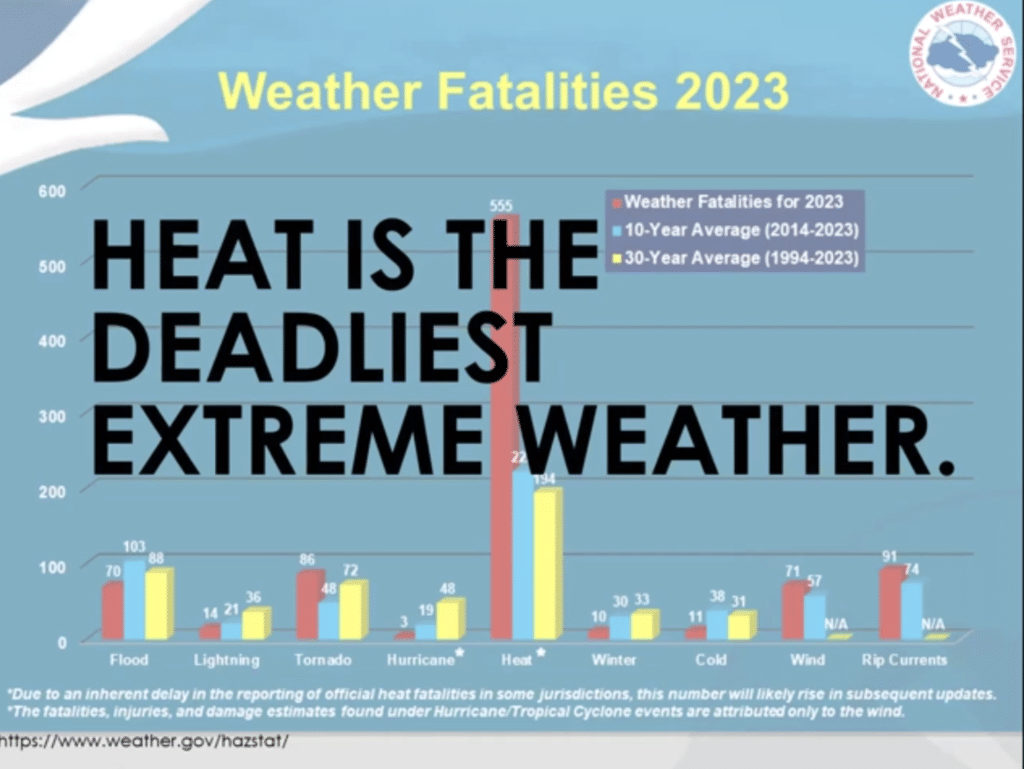
It may not seem like it at first, but heat is a serious health threat. Extreme heat is the No. 1 weather-related killer in the United States. Last summer, 526 people died in Clark County, and since 2020, there have been 11 heat-related deaths in Washoe County, according to data from Northern Nevada Public Health.
What does this mean for Nevada, home to Reno and Las Vegas, the two fastest-warming cities in the country?
That’s what researchers, leaders and community members were working to figure out during the first Northern Nevada Heat Summit, which took place this month at the University of Nevada, Reno. Although these numbers are alarming, community leaders are working on prevention, facilitating discussions around the research and efforts to date, and what else can be done moving forward.
Organized by the Reno-Sparks Heat Mapping Project, the summit featured expert speakers from the Nevada State Climate Office, UNR, the Desert Research Institute (DRI), Washoe County, and Northern Nevada Public Health.
The experts highlighted the importance of data collection to understand how temperatures vary across the city and to better allocate resources where they’re most needed. They also acknowledged that while the data is clear, actions—such as tree planting and establishing cooling centers—are crucial and may be challenging to implement. This is especially true in Northern Nevada compared to the southern portion of the state.
Lessons Learned from Southern Nevada
Ariel Choinard, who leads the Nevada Heat Lab at DRI, explained that extreme heat is a systemic issue that affects everything from housing and energy costs to infrastructure and workforce safety.
“We have folks who are burdened by the heat,” Choinard said. “We know that people make really tough trade-offs when it gets hot. People do choose between cooling their home to a safe and livable temperature or putting food on the table.”
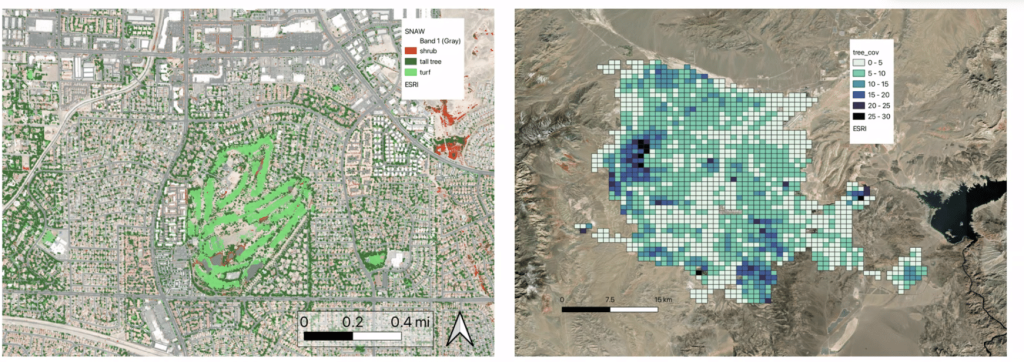
According to Choinard, there are important lessons to learn from Southern Nevada—particularly Las Vegas—where the urban heat island effect is more severe. Tree planting, often considered a go-to solution, is more complex than it appears.
“Trees take time to provide benefits, their maintenance is costly, and in many cases, trees planted in the past weren’t tracked, so we don’t know how well they survived,” she said.
Cooling centers are another tool in the response toolkit, but as Choinard clarified, the Nevada Heat Map is a research initiative—not an emergency response system.
“We are not emergency management, but we’re occupying a really difficult space right now because there’s no one else to do it,” she said. “Our only response to extreme heat is activating cooling centers, and that’s handled by Clark County Social Services. It’s not a funded response and it has a lot of limitations.”
There are currently 37 cooling facilities across Southern Nevada, located in libraries and community centers. However, these centers are only opened when the National Weather Service issues an extreme heat warning. They operate during regular business hours and are often closed on holidays.
Still, she said progress is happening.
“This might sound like baby steps, but it means a lot,” Choinard added. “Clark County Social Services is going to make sure every single cooling center across Southern Nevada has bottled water available for visitors and that there are signs on the buildings identifying them as ‘cooling centers.’”
To improve heat resilience across the state, Choinard recommends expanding heat warnings that are regionally and culturally relevant—and available in multiple languages—especially for neighborhoods experiencing extreme localized heat. She emphasized the need for mobile and temporary cooling centers, emergency in-home cooling support, and better outreach through trusted community organizations. Messaging, she added, should also address the intersection of heat and substance use. A deeper understanding of the economic costs of heat and whether current resources, such as cooling centers, are truly effective is also essential to guide future strategies.
Modeling the Future
Juan Henao, researcher and atmospheric modeler, and John Mejia, associate research professor of climatology, both at DRI, are taking the heat mapping work a step further. They are developing climate models to project how different interventions—such as increasing tree cover or replacing asphalt with reflective materials—could reduce future heat exposure in Las Vegas.
Unlike typical weather forecast models, which often use simplified representations of urban areas, their approach captures detailed urban features—such as building dimensions and types, as well as street-level vegetation—and models that show interactions between shade, wind, and surfaces.
However, this research is currently focused on Las Vegas. While the team has gathered some preliminary data for Reno, replicating the same model for the “Biggest Little City” poses unique challenges.
“Reno is a smaller city, which means the model needs a higher resolution to accurately represent it, leading to greater computational costs—and there’s generally less data available,” explained Henao. “Additionally, Reno’s complex topography requires more modeling effort to capture it accurately.”
At present, there is no modeling project underway for Reno. But researchers hope that future funding will enable the development of climate models tailored to Northern Nevada, further improving the precision and reach of heat mitigation strategies.
What Are the Next Steps for Northern Nevada?
In Washoe County, the preliminary heat mapping data has started to drive action.
“Now we know what it looks like, and we know where it’s hot,” said Brian Beffort, Sustainability Manager for the county. “The question is: what do we do with this information?”
Nevada lawmakers are weighing in on this issue also. Following the signing of AB96 in this year’s legislative session, major counties in Nevada—including Washoe—will be required to include heat mitigation in their development plans. Beffort said the county is already preparing briefings for commissioners and key partners to explore interventions such as tree planting, the use of cooler materials for roads and rooftops, and improved access to cooling centers.
As Nevada’s cities continue to top national charts for warming, local experts agree that meaningful progress depends on turning maps and models into concrete action—and fostering more interdisciplinary conversations.
“Trees are just one part of the solution,” Beffort noted. “They’re great for shade and air quality, but we need a whole range of strategies. And now, thanks to all the work done last year, we have a starting point.”
Editor’s Note: A previous version of this story noted that Ariel Choinard was the head of the Nevada Heat Map project at DRI, when she is the head of the Nevada Heat Lab at DRI. The story has been corrected.
This work is made possible by Press Forward, a national coalition investing more than $500 million to strengthen local newsrooms and close longstanding gaps in journalism coverage. Donate to join the movement and support coverage on civics, climate and community in the Sierra Nevada region.
Republish our stories for free, under a Creative Commons license.
Author

Related Articles
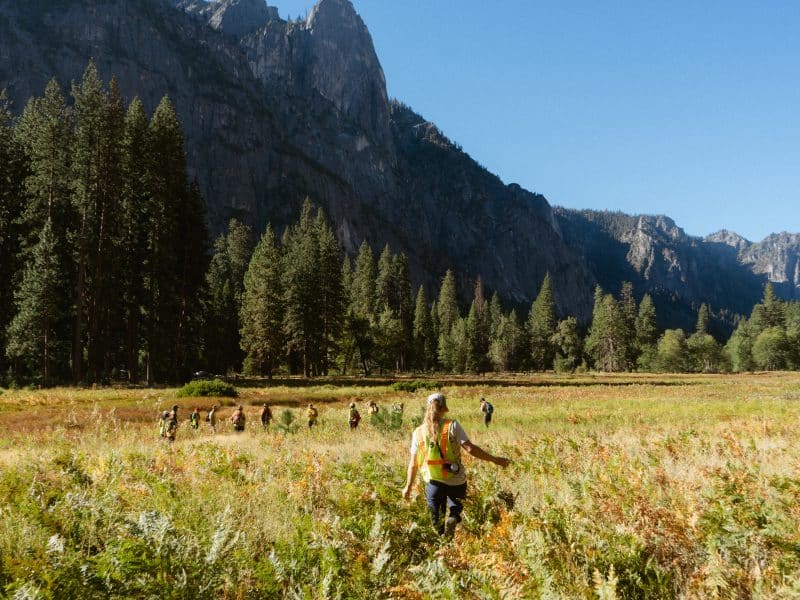
Hard Work, Low Pay, High Risk: Who Wants a Job in Forestry?
How local efforts are helping to better opportunities in forestry for people and the profession.
Ally Audio: Where’s the Mountain Snow We All Love?
Check out the latest edition of Sierra Nevada Ally’s podcast
When Winter Comes as Rain in the Sierra Nevada
A warm, wet start to the season is reshaping snowpack — and what it means for local businesses in Truckee and beyond.