
National Parks: How Our Best Idea Is Being Dismantled
Often called “America’s Best Idea,” the National Park Service has long stood as a testament to democratic values: public lands preserved not for profit, but for people. Today, that idea is under siege.
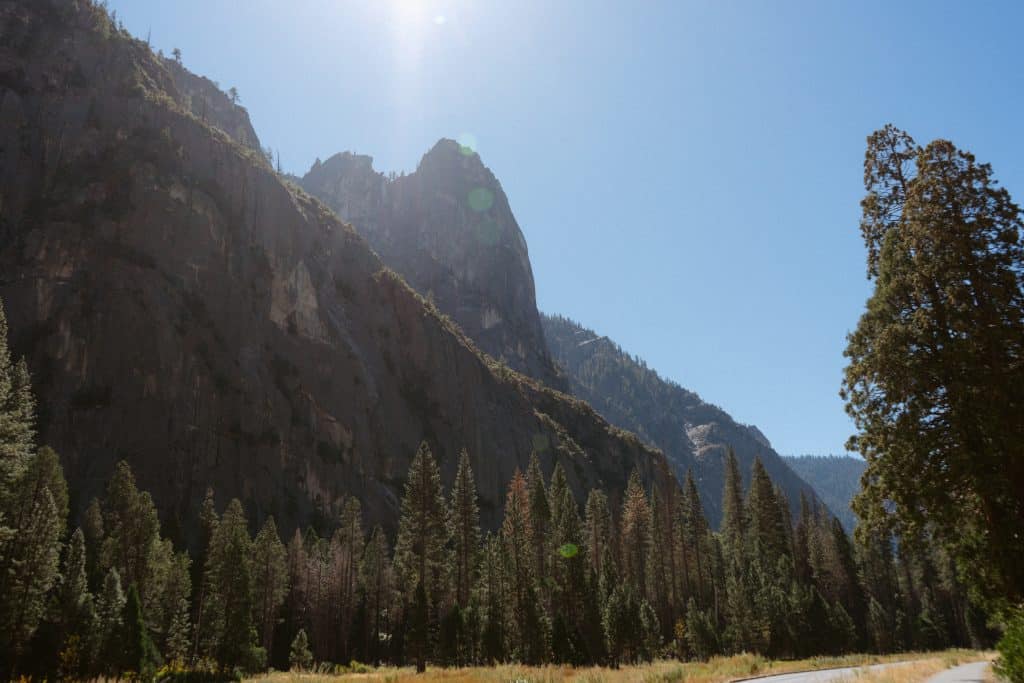
National Parks recorded more than 331 million visits last year—the highest number of visits ever recorded. Yet, recent federal cuts to the National Park Service have conservationists worried about the future of these areas.
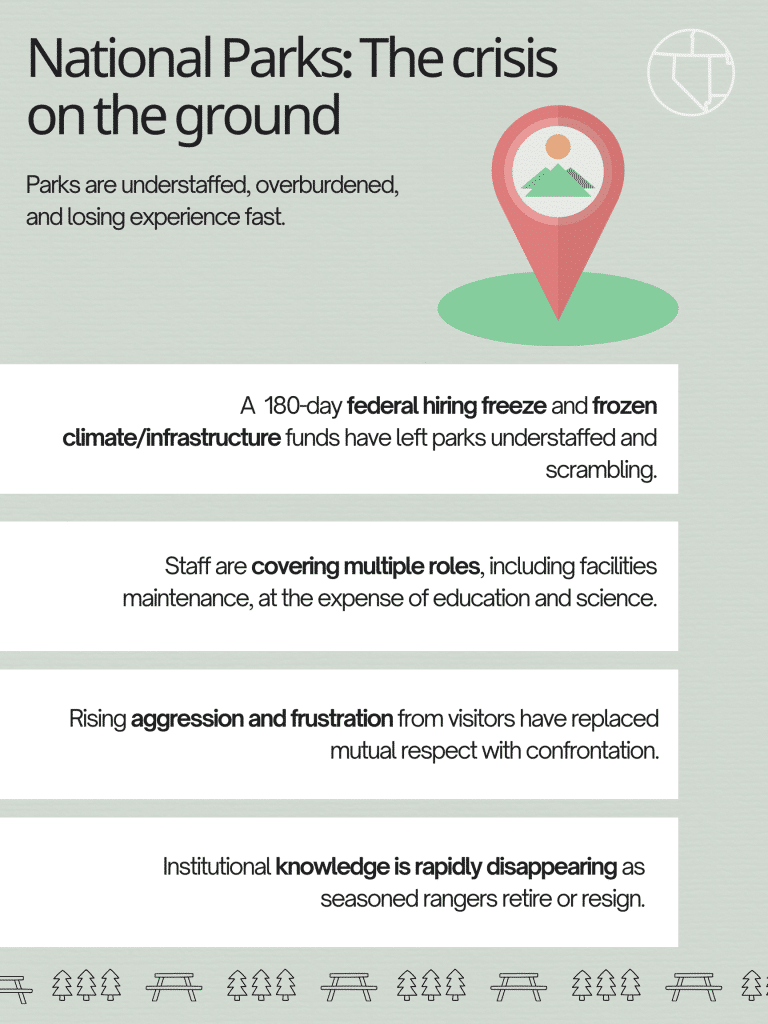
The cuts include slashing more than 1,000 full-time positions within the National Park Service (NPS), rescinding thousands more seasonal hires, and freezing infrastructure and climate-related funding, actions that will stall wildfire mitigation, trail maintenance, and research.
“It’s like seeing the flash of a bomb before the blast hits,” said former park ranger Jesse Chakrin.
Chakrin is now the executive director of The Fund for People in Parks, an official philanthropic fundraising partner of the NPS. But for 20 years, he was a park ranger in both Denali and Yellowstone National Parks.
Following the recent federal hiring freezes that have shrunk staff by 20% in just a few months, along with deep budget cuts to the NPS, he sees a system teetering on collapse. Chakrin said rangers are stretched thin, and now often cover multiple jobs outside their original training.
“Visitors are showing up and there’s no ranger at the station. There’s trash on the trail. Programs are canceled. And it’s not because no one cares—it’s because there’s no one left to do the work,” Chakrin said.
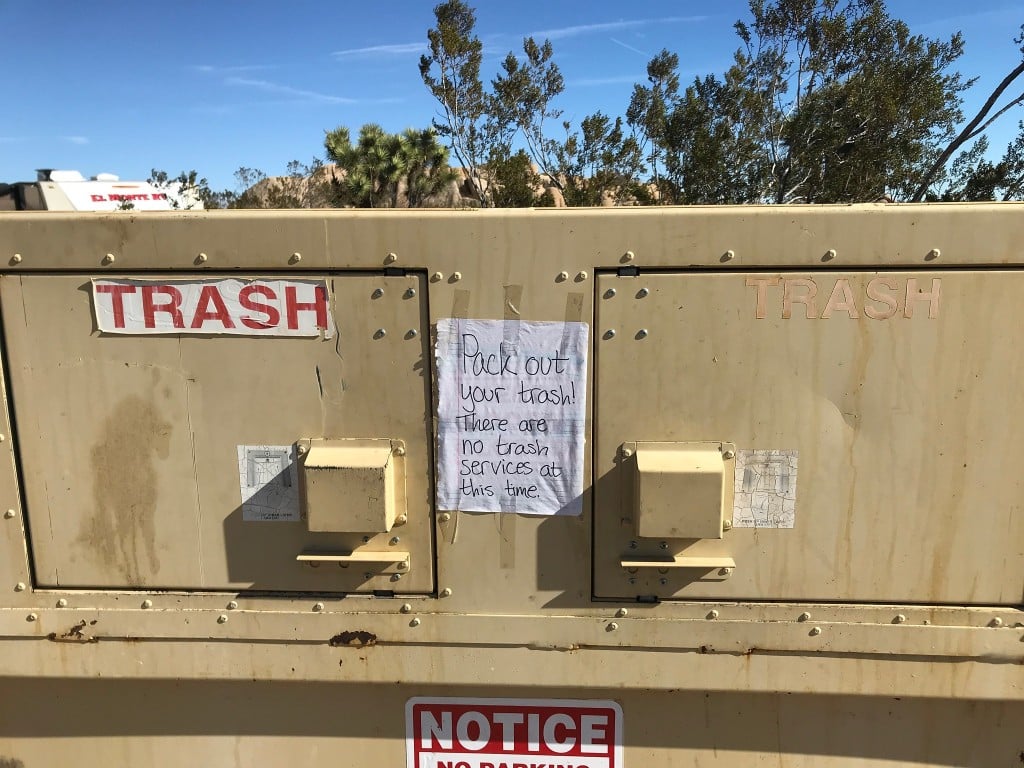
A lot can go wrong in National Parks—cars break down, hikers get lost, wastewater systems fail—and it all falls on increasingly overstretched NPS staff. Rangers are juggling multiple roles, trash is piling up, emergency responses are delayed, and frustrated visitors are growing hostile. With employee credit cards frozen, they can’t even buy basics like toilet paper, repair parts, or rescue gear.
“When you layer that on top of existing delays in the federal system, it’s effectively an entire fiscal year where we can’t backfill critical roles,” Chakrin said.
But the crisis doesn’t stop at overflowing trash bins and shuttered visitor centers. The long-term damage threatens to hollow out the civic and ecological soul of America’s most cherished spaces.
“It’s heartbreaking,” Chakrin said. “You dedicate your life to protecting something you love, and then watch the support system behind it get quietly dismantled. It doesn’t happen all at once—it’s slow. And that’s what makes it harder to fight.”
The Short-Term Impacts
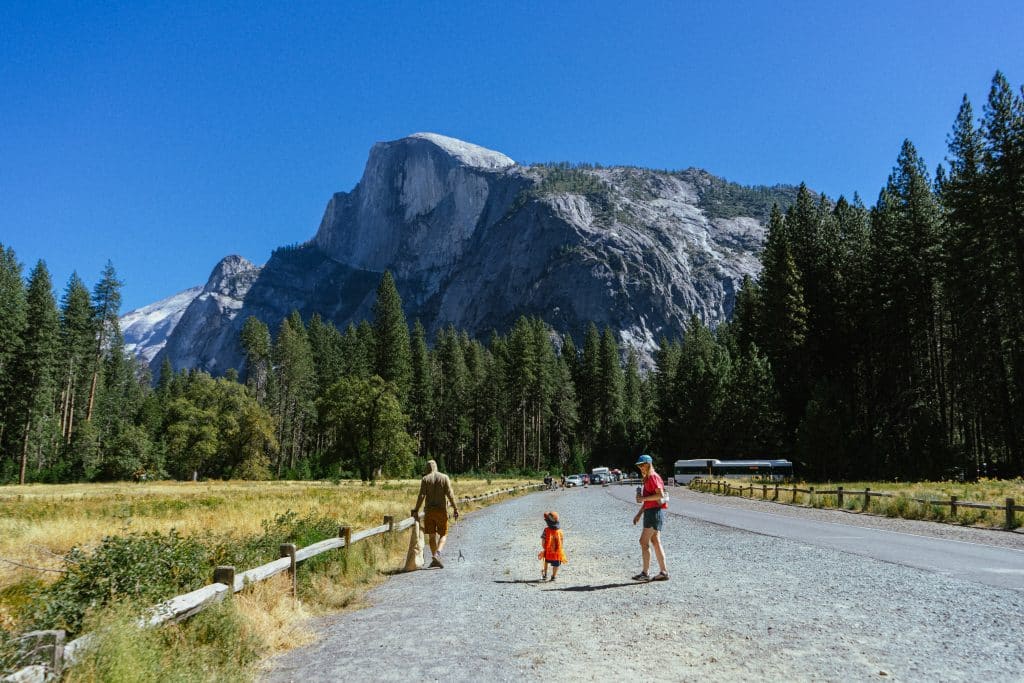
National Parks are more popular than ever. 2024 set the record for the most visits to sites managed by the NPS, with annual visit counts rising steadily since the end of World War II. If an 80-year trend is anything to go by, visitors will be more eager than ever to visit the parks in 2025.
Yet, potential park visitors are wondering whether to cancel trips, worried that attendance will only contribute to the chaos.
“I recently booked non-refundable tickets to Utah to go to the national parks there in March,” one Reddit post read. “But now I’m seeing all these posts about how there aren’t enough park rangers. It looks like the parks didn’t close, but are they going to stay open? Is it still safe?”
Other posts across social media echo similar concerns. And the Trump administration is responding by forcing parks to stay open.
An order issued last month by Interior Secretary Doug Burgum decrees that national parks “remain open and accessible,” and obtain permission from top officials for any closures or reductions in hours. But it’s unclear how that will play out if the national parks remain severely understaffed.
Parks Pay Their Way—And Then Some
A survey from the PEW Research Center published last year shows that the NPS is the most popular of all federal agencies, with a 76% approval rating. It is also one of the rare federal agencies that generates more than it costs. In 2023, the NPS supported 415,000 jobs, generated $26.4 billion in visitor spending, and contributed $55.6 billion to the U.S. economy–despite a budget request of just $3.6 billion that same year.
Further cuts to the NPS—outlined in the Trump administration’s discretionary budget proposal—would save a mere 0.003% of the federal budget, while devastating a system that brings millions of Americans into direct contact with their country’s natural and historical heritage.
For something as popular and lucrative as the NPS, these cuts beg the question: National parks are profitable and popular—why mess with them?
Critics argue that by slashing funding and staff at the NPS, the Trump administration is deliberately weakening these agencies, then pointing to the resulting dysfunction as evidence that public lands would be better off in private hands.
It’s “a self-fulfilling prophecy that the parks can’t be managed by the federal government, that they’re failed enterprises, and that the only option is to privatize them,” said Bobby McEnaney, director of land conservation and nature for the Natural Resources Defense Council.
The Long-Term Implications
On May 2, President Donald Trump’s 2026 discretionary budget was released, signaling the administration’s long-term vision for the NPS.
The budget document calls for a $900 million reduction in NPS management, proposes the transfer of many NPS-managed sites to state and local control, and calls for the elimination of matching federal funds for parks projects. No specific sites were named, but the message is clear: downsizing isn’t temporary—it’s indeed part of a broader shift to localization and privatization.
The budget also calls to “continue supporting many national treasures” while prioritizing “larger projects at the Nation’s crown jewel parks.” This indicates that the administration intends to prioritize certain premiere parks while potentially downgrading or transferring others. However, the lack of specifics regarding which sites would be affected raises concerns about the future of the national park system.
The federal freeze is also costing something harder to replace: institutional knowledge. Experienced rangers, scientists, and cultural interpreters are leaving. Their departure means decades of conservation expertise, emergency response skills, and community connections vanish overnight.
Park rangers explain climate change and document species loss.
Educators partner with schools and Indigenous communities to share histories others might ignore.
Cultural interpreters protect fragile artifacts and oral traditions that tether us to place and people.
Chakrin, a former park ranger, believes the gutting of the NPS isn’t about efficiency at all. It’s all about removing institutions that preserve data, science, and stewardship.
“When these positions stay empty—biologists, resource managers, even seasonal techs—that’s not just a staffing issue. That’s lost data. That’s science we don’t get back,” he said.
The Sierra Nevada Ally reached out to several current park rangers, but none wanted to speak publicly for this story.
“Many of my NPS friends that are still working are too wary to speak to the press,” Chakrin wrote in an email.
This shift to fewer employees and more local control would also likely mean higher fees, reduced protections, and fewer educational and cultural services—further limiting access to those who can afford it.
Parks, once envisioned as a shared inheritance, risk becoming exclusive preserves.
The National Parks were never meant to turn a profit (even though they do) or become privatized—they were meant to reflect a belief that some places should belong to everyone. But Chakrin said that today, that ideal is being eroded under the guise of efficiency and reform.
“We have this incredible system of parks—not just as beautiful places, but as a democratic idea,” Chakrin said. “They’re supposed to belong to everyone. But if we don’t invest in them, and if we don’t treat the people who care for them with respect, we’re going to lose something far more than visitor services. We’re going to lose trust.”
If the parks continue to lose their stewards, educators and defenders, what remains? As the 2025 summer season approaches, the question is no longer whether we can visit these places, but whether we’ll still recognize them when we do.
This work is made possible by Press Forward, a national coalition investing more than $500 million to strengthen local newsrooms and close longstanding gaps in journalism coverage. Donate to join the movement and support coverage on civics, climate and community in the Sierra Nevada region.
Republish our stories for free, under a Creative Commons license.
Author

Related Articles
How Are Water Managers Adapting to a Smaller Sierra Snowpack?
Warming winters are reshaping runoff. With less snow to rely on, water managers are navigating a future defined by rain, risk, and uncertainty.
Hard Work, Low Pay, High Risk: Who Wants a Job in Forestry?
How local efforts are helping to better opportunities in forestry for people and the profession.
Ally Audio: Where’s the Mountain Snow We All Love?
Check out the latest edition of Sierra Nevada Ally’s podcast