
Robust water system eases drought concerns
Coming into this winter, northern Nevada and parts of northern California were abnormally dry and nearing moderate drought. But a late winter storm in March helped create a healthy water outlook for the Truckee Meadows.

About a 7 minute read
Jeff Anderson feels good about this year’s water supply for northern Nevada. He’s a water supply specialist with the Natural Resource Conservation Service (NRCS), where he has worked for more than 20 years, half of which have been in Reno.
While a late storm in March helped the water outlook, he said it also poses a risk.
“We did see some melt in March at almost all of our SNOTEL [snow telemetry] sites, even the higher elevation ones,” Anderson said. “Which definitely was early for those sites and [we] saw significant melt at lower elevation sites.”
Due to winter melting, the region’s peak snow water amount this year is expected to fall below the average. Anderson and water managers use this snow-water equivalent (SWE) measure as a benchmark for the water content in the snowpack. Essentially, SWE is the amount of water in the snow if it were to melt.
“We can weigh the snow pack and from that determine how many inches of liquid water they would be on the ground if we were able to melt that snow down instantaneously and have it stay in place,” said Anderson.
The process is done in one of two ways. One way is a method invented by James Church that involves using snow tubes that are weighed before and after they are filled with snow. The weight of water is known, so the amount of water locked up in the snow can be determined. The other method is more automated.
“Our automated SNOTEL sites have what’s called a snow pillow,” explained Anderson. “Which is a fluid-filled bladder that acts as a scale under the snow.”
The bladders weigh the snow and calculate the amount of liquid water contained at that location. With this information, officials like Anderson can better predict how much runoff to expect during the spring melt, important information when officials are planning for the upcoming hot summer months.
“In terms of the fire season, it really depends on how quickly does the snow come off,” said Anderson. “Because we already had melt, that means that the snow pack has already absorbed quite a bit of energy.”
Energy that could translate into a snow-free region earlier in the year. Once the snow melts, fuels start growing and drying. An earlier melt translates into drier fuels in July and August.
“The golden bullet for fire seasons is how long there is no snow,” said Anderson. “One area that is very different is the lower elevations, below about 7,000 feet,” said Anderson. “We just never really developed a good snow pack at those elevations.”
The warming period the region experienced in mid-March came early and injected the snowpack with thermal energy. Like a blooming flower, the snowpack began melting with this warmth. Although a considerable snowstorm following this warm period deposited a substantial amount of cold snow on top of the existing snowpack, the thermal energy absorbed was sufficient to initiate melting of the snowpack.
These early-season warm periods and subsequent early melting are becoming more common with climate change, allowing a significant amount of energy to enter the snowpack, even as more snow accumulates.
“The deeper snowpack is already ready to melt, so when you get warm days it will probably start to melt relatively quickly again,” said Anderson. “The bounds of what the climate can do right now is becoming more variable, which makes it more challenging to manage the water supplies.”
That’s why Anderson said it’s important for water managers in the region to build water resiliency into the systems.
“Developing tools that help us to monitor the snowpack and even predict the weather further in the future is really important for the Western U.S.,” he said.
Water Management
Luckily, the Truckee Meadows Water Authority (TMWA) has some tricks up its sleeve to manage variable water years.
“Because of our last late season storms, it actually boosted us up over 100% and we’re at about 109% at the Lake Tahoe Basin,” said Kara Steeland, the Senior Hydrologist and Watershed Coordinator for TMWA when speaking with the Sierra Nevada Ally in early April.
That means for now, reliable water availability for residents. To supply clean drinking water to the region, the agency uses three sources of water: surface water, groundwater, and upstream storage.
Surface water is mostly the Truckee River and it accounts for 80 to 85% of the total end-user supply. Two treatment plants along the river treat and return water to the system: one at Chalk Bluff in western Reno, which treats approximately 90 million gallons of water daily, and another at the Glendale plant, which treats about 37 million gallons a day.
Groundwater accounts for the rest, about 15 to 20% of the supply. TMWA has more than 80 wells it can tap into as needed, and the system includes an aquifer storage and recovery system. In the winter months, treated water is injected into the aquifers to recharge them.
But it’s the upstream reservoir storage that helps regional water managers plan for variable water needs. Six reservoirs provide around 27,000 acre-feet of water that can be tapped into in times of need. Lake Tahoe, Donner Lake, Independence Lake, Stampede, Boca, and Prosser reservoirs all contribute to this storage.
“Lake Tahoe is most likely to get really close to filling this year,” said Steeland. “That will be the second year in a row that Lake Tahoe is full or nearly full.”
In 2024, the region’s peak water demand was 149 million gallons per day. TMWA officials say the system can accommodate the use of more than 200 million gallons of water every day. This is in part due to robust management and multi-partner agreements, which forecast water usage and provide dedicated upstream storage.
“The region is currently drought-free and our regional outlook is solid with those full reservoirs upstream,” said Steeland.
Lake Tahoe is a barometer for the region’s water system. The top six feet is technically a reservoir and is just one item in the toolbox used by TMWA to manage the region’s water supply.
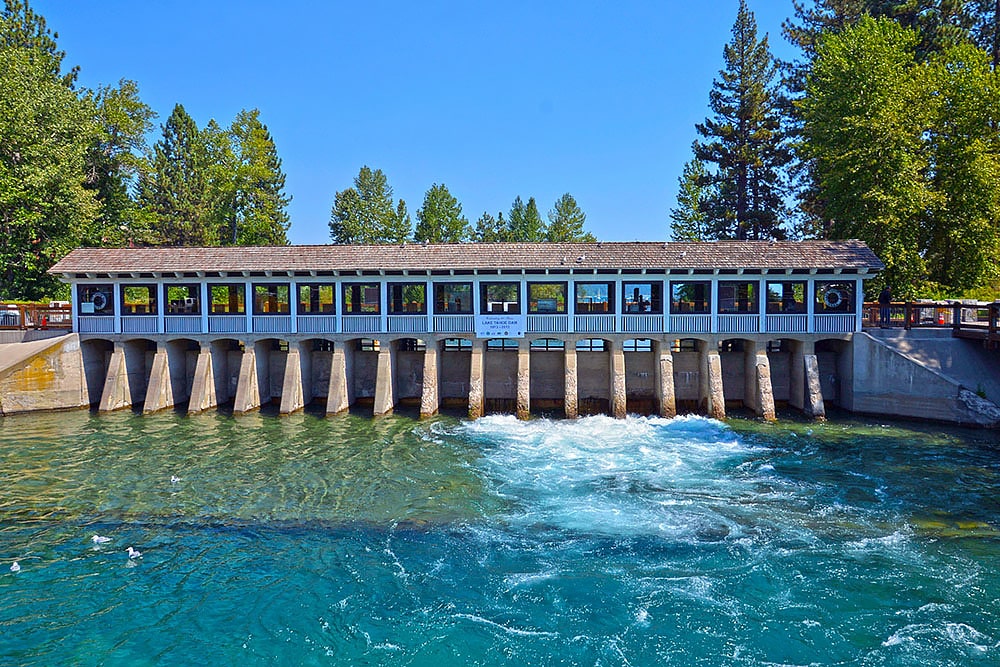
Another is the Truckee River Operating Agreement (TROA), which was signed in December 2015, and enables the region to accumulate substantial drought reserves. Decades of negotiation between 15 regional groups and municipalities led to the agreement, with TMWA working with the Pyramid Lake Paiute Tribe and several regional water and conservation agencies.
The TROA has since proven valuable due to the extreme variability of the Truckee River watershed. The agreement allows water users to store water, including unused and unexercised water rights, in federally owned reservoirs. That means in times of drought, users can tap into this storage as needed.
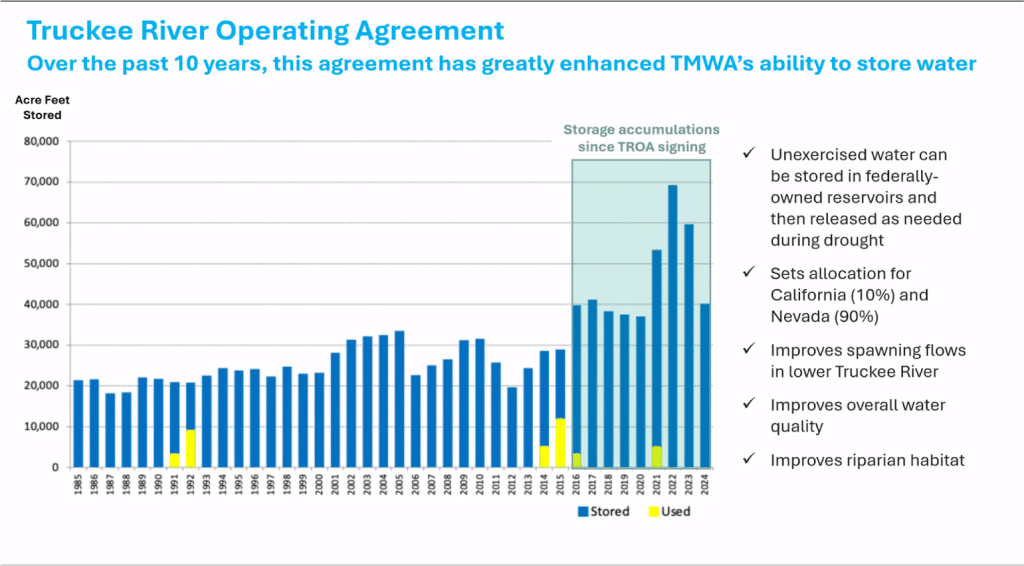
“It is a multi-benefit solution,” said Steeland. “It provides our community with drought supplies, but it also improves spawning flows in the lower river for endangered and threatened species…It improves overall water quality and protects and preserves riparian habitat.”
Early snowpack melting
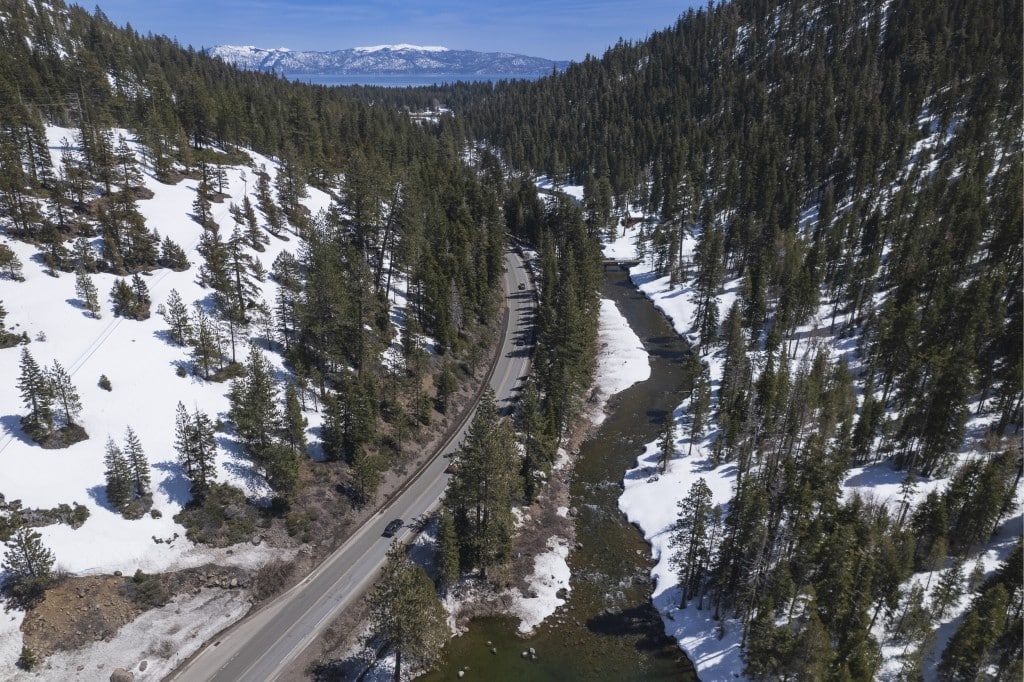
With spring in full swing and temperatures rising, the Truckee River has also risen with snowmelt, and officials are looking ahead to hot, dry summer months, which can lead to a hot, dry fire season.
The late March storms provided enough cold snow to ease drought concerns. And as of now, TMWA officials expect the Truckee River to maintain healthy flows throughout the water year, which goes from Oct. 1 to Sept. 30.
That said, officials are still asking residents to be smart about water use.
“One of the cornerstones of our conservation efforts is our assigned watering program, which has been in place since the 1980s,” said Steeland.
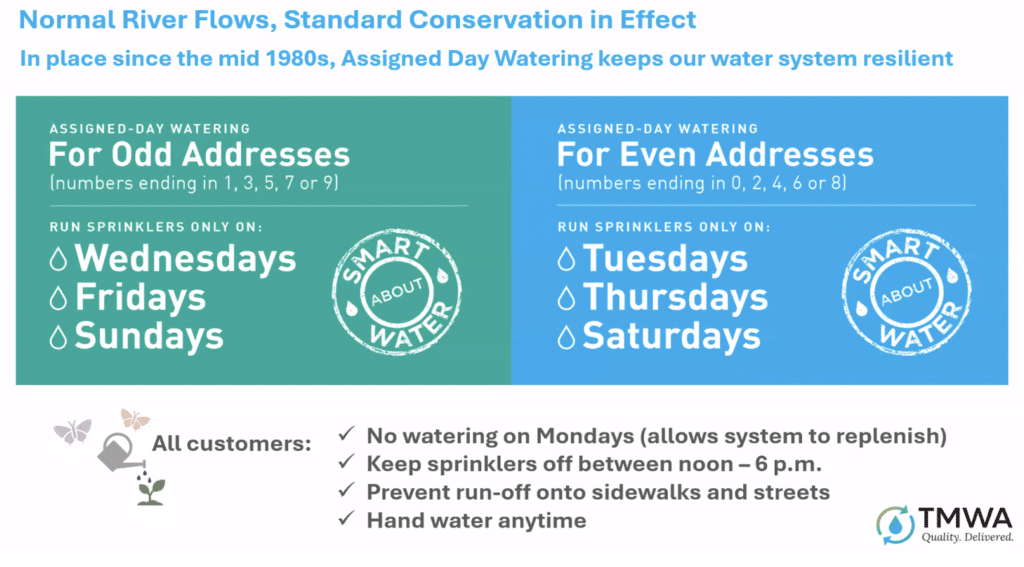
Assigned watering is a method used by TMWA to manage home irrigation systems and water demand. Alternating when homes run lawn sprinklers reduces the stress load on the water system. With Reno recently approving two new data centers, the demand on the region’s water supply is likely to grow. But for this year, TMWA forecasts a healthy water year for residents.
“[We are] expecting normal river flows for the rest of the year,” said Steeland. With a “fully charged system upstream to supply TMWA and other users on the system.”
Read More
TMWA recently released its Water Resource Plan. This twenty-year plan is revised every five years and serves to inform water management over two decades. The agency is hosting a webinar in June to encourage public involvement and provide information around this regional water plan.
This work is made possible by Press Forward, a national coalition investing more than $500 million to strengthen local newsrooms and close longstanding gaps in journalism coverage. Donate to join the movement and support coverage on civics, climate and community in the Sierra Nevada region.
Republish our stories for free, under a Creative Commons license.
Author

Related Articles
How Are Water Managers Adapting to a Smaller Sierra Snowpack?
Warming winters are reshaping runoff. With less snow to rely on, water managers are navigating a future defined by rain, risk, and uncertainty.
Hard Work, Low Pay, High Risk: Who Wants a Job in Forestry?
How local efforts are helping to better opportunities in forestry for people and the profession.

Ally Audio: Where’s the Mountain Snow We All Love?
Check out the latest edition of Sierra Nevada Ally’s podcast