
Can Nevada cyclists benefit from the Idaho Stop?
Lawmakers propose a new law that allows cyclists to yield rather than stop. But will the measure help public safety for riders and drivers?

One of the first lessons taught in drivers’ ed is that the intersection is one of the most dangerous areas of the road. It has the highest likelihood of a crash, with about one–half of all traffic injuries in the U.S. happening at intersections, where vehicles traveling in different directions converge, buffered only by stop lights, signs, or even roundabouts.
When it comes to safety, it doesn’t matter if you’re in a car or on a bike.
“I was turning left at a four-way stop when a motorist on my right failed to yield the right of way,” Vincent from Madison, Wisc. posted on the social media website, Reddit, where he shared his personal experience on the bike commuting subreddit. Vincent’s experience is something cyclists strive to avoid: being hit by a car. Fortunately, he only suffered a broken arm and a damaged bike.
But it’s an issue one Nevada lawmaker is hoping to put into state law.
Representative Heather Goulding has introduced AB 168 into the current Nevada legislature. As it is proposed, the bill “creates an exception to the requirement to stop in obedience to a stop sign if the person can safely proceed through the intersection without stopping.”
It is important to note that this bill does not override existing right-of-way laws. Cyclists would still need to follow roadway laws and stop if there is oncoming traffic, or if they are not the first one to a four-way stop.
“The purpose of the bill is to legalize what’s known as the Idaho stop,” said Goulding. “The concept is that the most vulnerable place for bikers is when they are passing through an intersection.”
In 1982, Idaho introduced what is known as the Safety Stop for cyclists. Ten other states have since established the law. Delaware introduced it in 2017, and within 30 months, there was a 23% reduction in bike-car crashes.
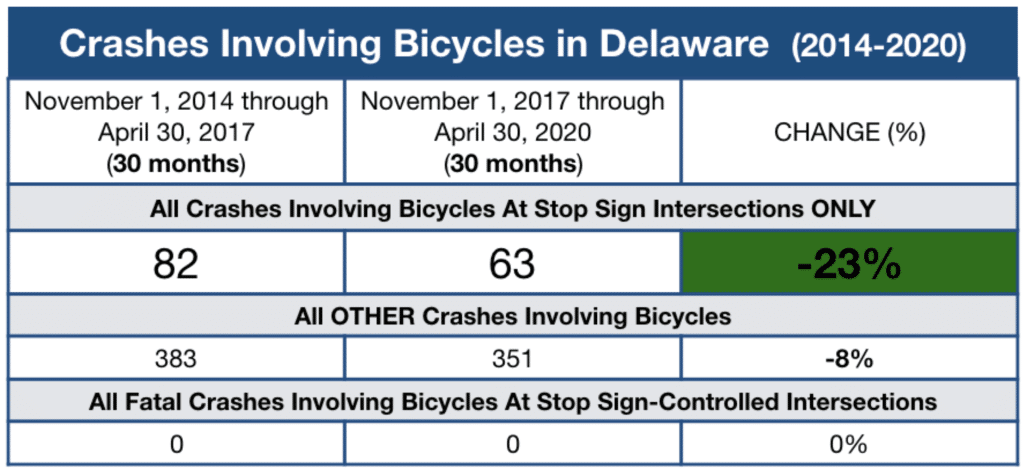
The aim of the law is simple. A cyclist wants to get through an intersection as quickly as possible, as more than a quarter of cyclist deaths happen in these high-traffic areas. A key to safe cycling is to behave predictably at intersections. The goal of the safety stop measure is to increase understanding between bicyclists and automobile drivers.
“The point of the bill is to reduce bicycle risk, to increase safety for cyclists, and to help create an environment in the state of Nevada that is bicycle friendly,” said Goulding. She added that if a cyclist can smoothly roll through an intersection as quickly as possible it has been shown to reduce car-bike accidents.
The Sierra Nevada Ally contacted the Nevada Office of Traffic Safety who did not have anyone available for an interview. We also reached out to the Regional Transportation Commission for input but have not received a response.
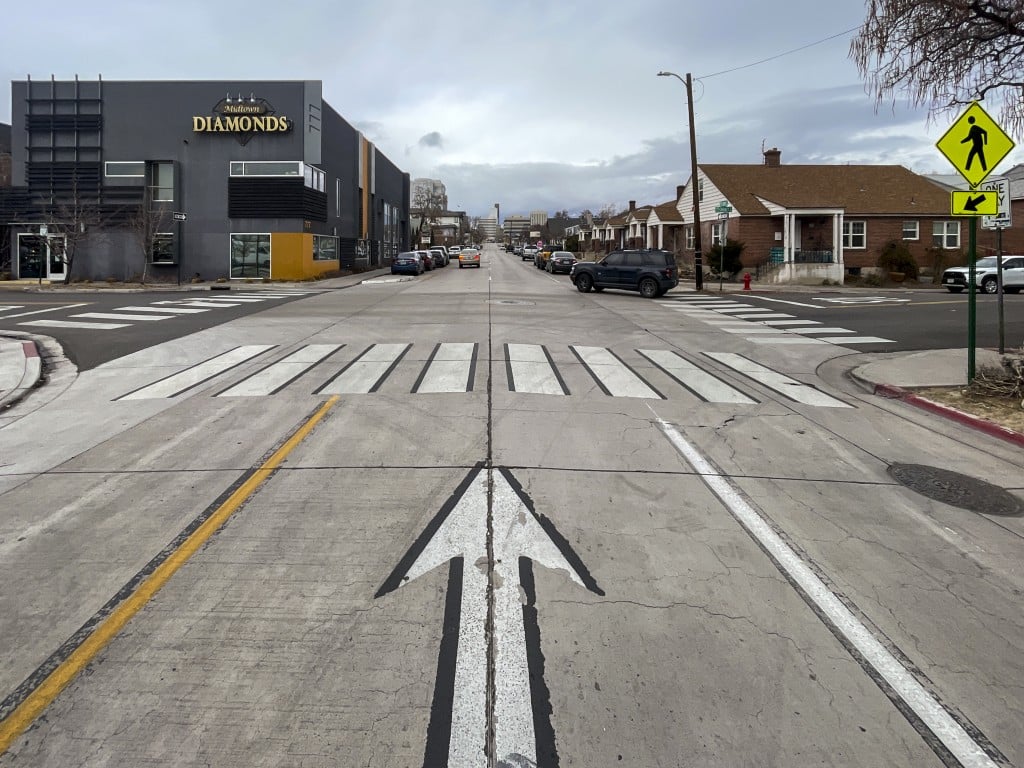
Full disclosure, I am an avid cycling commuter, and one critical intersection I believe would vastly improve with this law is the crossing of northbound Center Street and the east-west bound Cheney Street. Center Street goes from a single to a double lane as it crosses Cheney Street. This presents ambiguity on where oncoming traffic may end up for a cyclist moving through this particular junction. Because the crossing is still relatively narrow, around 40 feet, a cyclist traveling on Cheney can easily roll through this intersection safely if the safety stop legislation makes it into law.
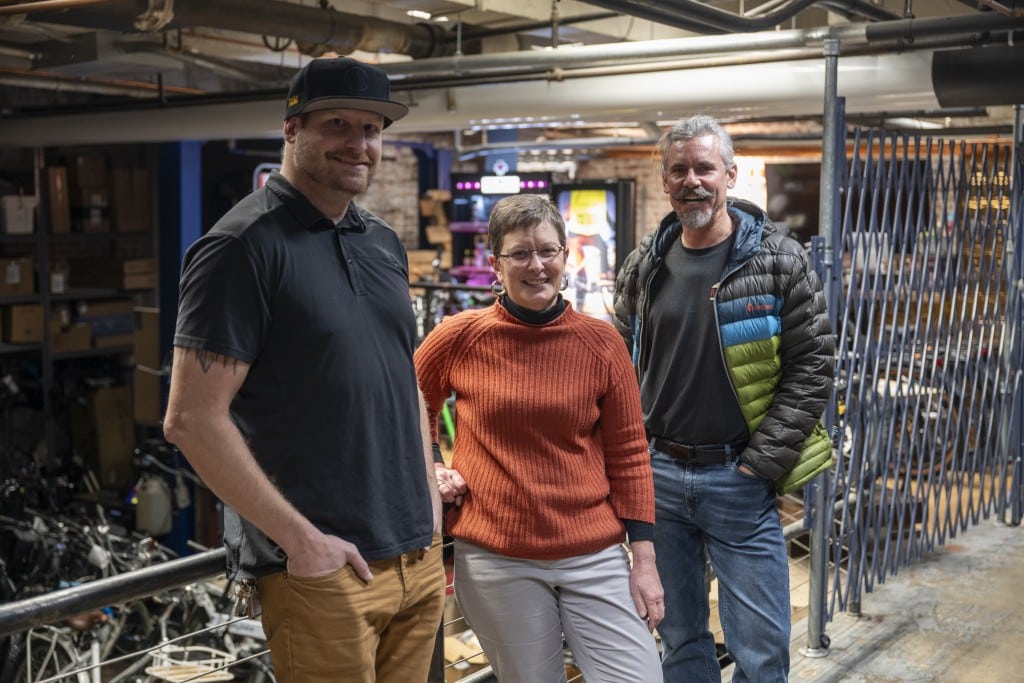
Ky Plaskon worked closely with Goulding to draft language for the bill she introduced into the Nevada Legislature. He’s the secretary and soon-to-be president of the Nevada Bicycle Coalition, and he is an avid bicycle commuter who knows a lot about the dangers of riding alongside traffic.
“Cyclists have the most to lose at intersections. It’s where they are hit and killed a lot by drivers,” said Plaskon. “Getting cyclists in and out of dangerous intersections as quickly as possible reduces the potential for conflict.”
The nature of this bill will have a significant impact on the safety of cyclists across the state. While most car-bike incidents are in Clark County, this bill will be statewide and have an immediate effect.
“We’ve got 40 years of data showing that this works,” said Plaskon. “What we found as a bike group is that drivers end up being afraid when they’re around cyclists, and they don’t know what to expect, and they don’t want to hurt them.”
There’s also a major difference in physics. With the ease of pressing down one’s foot, a driver can move tons of metal forward at an accelerating pace. A car can be through an intersection in two to three seconds. The time it takes a cyclist to get through an intersection from a complete stop is between 15-30 seconds, depending on the size of the intersection.
Pedaling from a stop requires the most effort and is something regular cyclist commuters try to avoid. Many will slow down to a roll to verify that no cars are near or approaching the intersection. If the intersection is clear, a cyclist’s momentum and a quick pedal can move them through the intersection much quicker. This is what the forthcoming bill is hoping to address.
“We’re basically not punishing the cyclists for their common behavior,” said Plaskon.
Like car drivers, a cyclist’s safety depends on the responsible use of the road. This legislation is not a get-out-of-jail-free card for cyclists. If amended, the law will still require a cyclist to follow right-of-way laws, as in yielding to cars who arrived at the intersection ahead of them. Cyclists will still not be able to fly through an intersection and cut off other cars. The law in Minnesota specifically states that a cyclist must “slow to a speed that allows for stopping” before entering the intersection. Once the cyclist has deemed the intersection clear of traffic, they “may make a turn or proceed through the intersection without stopping.”
If the bill does become law, there will be an education component necessary to realize the benefits of the safety stop. Plaskon hopes there can be an education campaign for drivers about how to behave around cyclists. With proper education for both car drivers and cyclists, this legislation will improve the safety of everyone using public roadways.
“I like to say that you’re surrounded by a pit of alligators,” said Plakson about being at an intersection on a bike. “You’ve got traffic coming from five, six different directions, these huge vehicles that often can’t see you, and when you have to stop there, then you’re even less visible.”
Plaskon said he hopes this bill can also address the inequality of roadway laws that favor drivers over other vulnerable road users. He believes it’s time to figure out how existing laws can be adapted for cyclists and benefit everybody trying to use public roads, not just automobiles.
“Road laws are written for drivers [and] the law is putting cyclists at risk, punishing the healthy activity that we want to encourage,” he said.
Plus, getting more people on bikes is good for the climate. Two human-powered wheels generate almost no carbon emissions compared to a car. However, according to the U.S. Census, less than a million people pedal to work each year. In a car-centric society, viable routes for cyclists are sometimes non-existent. People may live too far from their employment, and the commute is often too dangerous.
But, safe cycling is a two-way street. Cyclists’ safety often depends on the predictability of their riding. The safety stop helps reduce, if not eliminate, the ambiguity that often occurs at a stop sign between a car driver and a cyclist. Remaining vigilant is also essential.
“I think it would be fantastic if Nevada had a culture of supporting safe biking. I love the idea of our state and our community moving toward having an ethic of supporting bike safety, micro transport, all micro model transport,” said Goulding.
“These are all things that I think that we want a community that supports this kind of behavior, being community friendly, instead of just big car friendly.”
This work is made possible by Press Forward, a national coalition investing more than $500 million to strengthen local newsrooms and close longstanding gaps in journalism coverage. Donate to join the movement and support coverage on civics, climate and community in the Sierra Nevada region.
Republish our stories for free, under a Creative Commons license.
Author

Related Articles
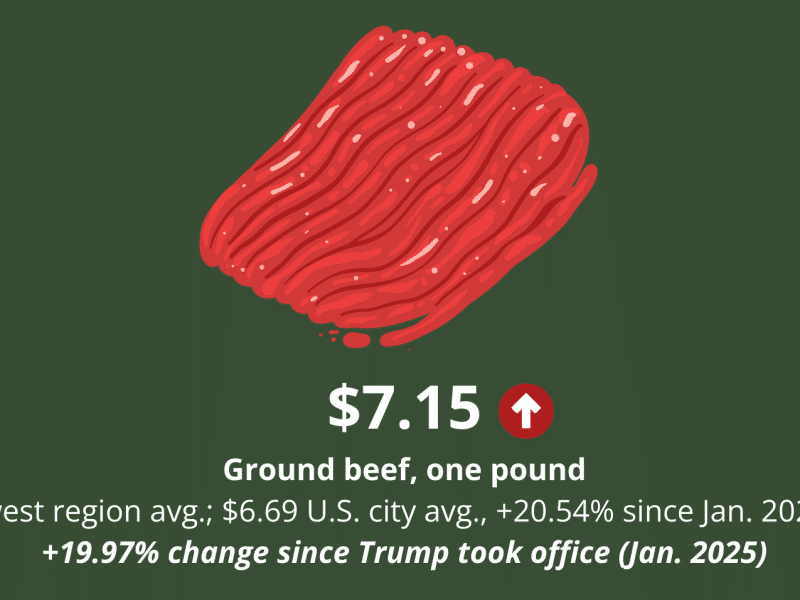
Tracking Food and Gas Prices in the Trump Era (Updated for December)
President Donald Trump campaigned on the promise of lowering grocery prices for everyday Americans. We’re tracking how that’s going.
The Realities of Our Rapidly Changing Immigration Landscape
While most immigrants come to the United States legally, one Reno-based immigration attorney says doing things “the right way,” is complicated, expensive and full of roadblocks.

How does a special session in Nevada work?
The recent special session of the Nevada Legislature is behind us. How are they called?