
The Corporate Squeeze of the Ski Industry: Vail’s Manufactured Value Brings Epic Profits—But at What Price?
Vail Resorts leads the charge in ski mountain monopolization–but their success only magnifies the industry’s growing systemic struggles.

While there have been many close calls over the years, no U.S. ski resort had experienced a strike in more than 50 years—that is, until last last month in Park City, Utah. After 10 months of negotiating, the Park City Professional Ski Patrol Association’s (PCPSPA) at the Vail resort hung up their jackets and formed a picket line. The strike lasted two weeks, as the patrollers fought for better wages and working conditions.
“Vail Resorts forced this walkout by bargaining in bad faith and repeatedly violating the National Labor Relations Act,” PCPSA posted to their Instagram. “Consistent with Vail’s bad faith tactics, after yesterday’s seven hour negotiation session with a mediator present, the company continued to refuse to give a counteroffer on wages or benefits.”
It’s no secret that skiing is big business. According to Vail Resorts’ 112-page investor report, the company returned $800 million to shareholders last year. So, why couldn’t the world’s largest ski resort company keep up with rising wages? Now the leading mountain resort operator in the United States, Vail has become a powerhouse in the ski world.
The recent strikes are just one symptom of Vail’s aggressive expansion, with its business strategies magnifying the growing divide between corporate interests and the grassroots culture that once defined skiing.
The Rise of Corporate Skiing
For much of skiing’s history, mountains were locally owned. Independent operators—often passionate skiers themselves—ran the resorts and shaped their surrounding communities. However, in the 1990s, ski resorts began consolidating under large corporations, with private equity firms joining the fray. Soon, the industry came to be dominated by a small handful of major players.
Today, Vail—alongside its primary competitor, Alterra Mountain Co.—dominates the resort industry. Growing from just five resorts in 2008 to 42 today, Vail operates iconic resorts like Whistler, Park City, Breckenridge, and in Tahoe, Heavenly, Northstar, and Kirkwood.
This consolidation has led to fewer competitors, which gives ski resorts more freedom to raise prices. Though skiing was never cheap, it has become increasingly unaffordable, with single-day lift tickets now reaching more than $300 at some Vail locations—three times what they cost in 2010. In 1990, a one-day lift ticket at Vail Resorts cost $38, as reported in The New York Times. Skiers aged 65 to 69 paid $28 per day, while those over 70 skied for free.

These steep price hikes reflect the industry’s corporate shift, pushing skiing beyond the reach of many.
The Epic Pass Effect
In 2008, Vail introduced the Epic Pass, a multi-mountain, all-season pass that would quickly become the cornerstone of the company’s growth strategy. The pass–costing $982 this year, plus taxes and fees— has become the popular option for resort-goers, with 75% opting for the prepaid, all-access Epic Pass.
While the price tag is steep–costing nearly a month’s rent for a studio apartment in Reno–it almost makes sense when you compare it to the cost of a single-day ticket. Today, Vail visitors are left with two options: spend a couple hundred bucks per day, or spend a thousand dollars if they’re going to ski more than five days. Either way, Vail wins.
Full disclosure, I have been an Epic Pass holder on and off for several seasons, so I have personal experience in this realm.
By marketing the Epic Pass as a cost-saving alternative, Vail successfully manufactures its perceived value to the public. But this isn’t the only way the pass benefits the company; it also helps ensure profitability in an era of increasingly unpredictable snowfall.
According to the EPA, 80% of U.S. weather stations have reported a decrease in snowfall since 1955, with all sites recording a shorter snowpack season overall.
Naturally, these trends are worrying to a business like Vail, whose main selling point is snow. The Epic Pass means they can continue to deliver strong returns to shareholders, regardless of how good the snow will be the coming year.
Beyond the Slopes
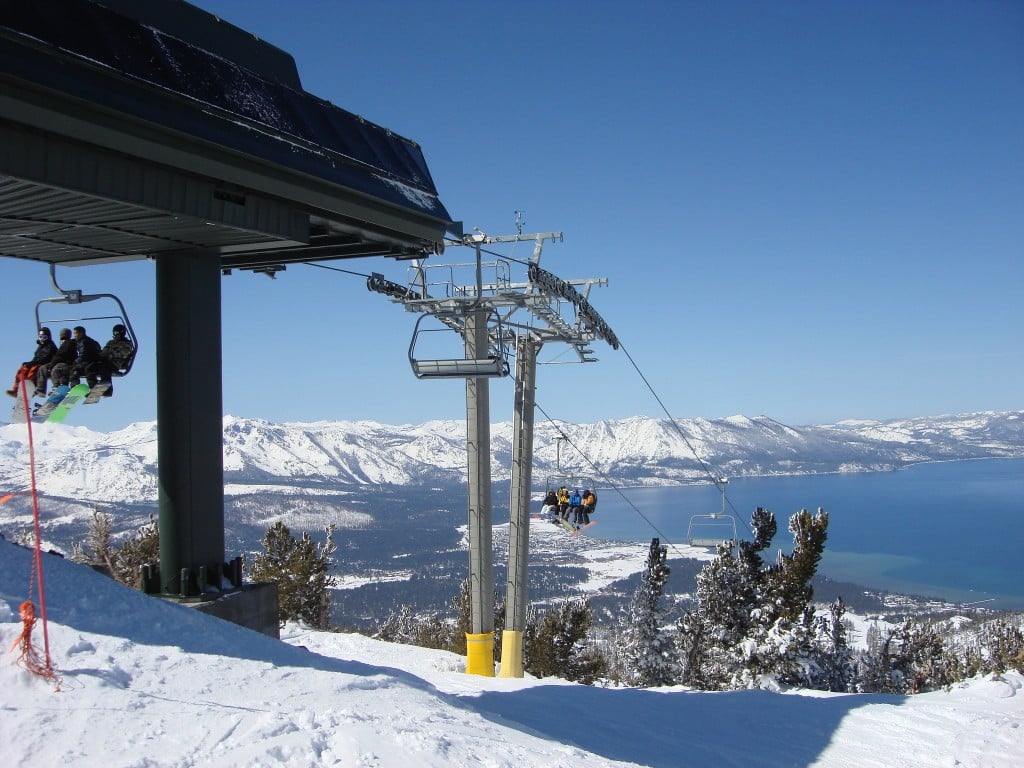
At the time, the idea of an “affordable” season pass to several mountains seemed ludicrous, but Vail saw the big picture: with each new acquisition, Vail increases its number of season pass holders and in turn increases the number of visits to their resorts, serving another one of the company’s key business objectives: to boost non-ski spending.
Having acquired hotels and restaurants under the Vail name ensures skiers’ dollars continue to be spent at Vail—often at premium prices. Last year, Vail generated $336 million in lodging revenue and $227 million in on-mountain dining.
“Many of our properties are used across all segments in complementary and interdependent ways”, Vail’s investor report says. Out of the resort properties listed, Vail owns approximately 56% of them, while leasing and contracting the rest.
Vail declined to comment in time for this story.
Vail’s vertical integration has reshaped ski towns. From high-end lodges to exclusive dining experiences, every aspect of the ski trip now funnels into the conglomerate’s coffers. When out-of-towners visit a Vail Resort, often they have arranged to be picked up in a Vail-owned shuttle to take them to their Vail-owned hotel, where they will eat at one of the many Vail-owned restaurants.
This vertical integration serves to maximize the amount of guest dollars–and ensures they end up in Vail’s pocket.
Labor Struggles on the Mountains
“We don’t want to leave this town, but affording to live here can be difficult with our current wages and the high cost of living,” PCPSPA wrote on social media. “We love our jobs, and we want the company to show us their respect by paying us living wages.”
The Park City strike underscores what happens in an industry with little to no competition: employers face less pressure to maintain or improve wages and working conditions. Resort consolidation has reduced the number of potential employers, so if a particular resort isn’t paying well, employees aren’t left with a lot of options.
Vail’s vertical integration in and around the resort has made staying in the community an increasing challenge for its employees. While Vail did increase its starting wage to $20 in 2022 amid staffing shortages, the cost of living in resort towns like Vail, Aspen, and Park City continues to increase. Patrollers at Park City told Business Insider that they struggle to not only find, but afford housing in the area, with many of them commuting long distances to work. Currently, Park City offers no employee housing options.
The PCPSPA worked to address some of these issues during its months-long negotiations with Vail Resorts, which culminated earlier this month with the ratification of a contract that includes wage increases and enhanced benefits, such as improved parental leave policies and expanded educational opportunities.
Amidst the two-week walkout, Park City Mountain imported strikebreakers–also known as scabs–from their other resorts to work the lifts to keep wait times to a minimum. It didn’t totally work out.
“This contract is more than just a win for our team,” Park City patroller Seth Dromgoole said of their deal with Vail. “It’s a groundbreaking success in the ski and mountain worker industry.” Other Park City employees, including instructors, have similarly cheered, hoping that the bump will eventually extend to them.
Between a Rock and a Harder Rock

While historic, the PCPSPA strike isn’t so surprising; it would be hard—and frankly, incorrect—to view the rise in ski area labor organizations in recent years as anything other than a direct symptom of ski resort consolidation.
Beyond its workers, Vail’s biggest challenge comes from its core demographic: the everyday skier and rider–aka, the majority of its customers. These are people with full-time jobs who may not have the means to forgo the lifts in favor of the backcountry, whose lives cannot solely revolve around skiing. Big-name resorts have their place in the ski industry, as do their mega passes. However, when corporations rather than skiers and riders drive the industry’s priorities, things start to go downhill quickly. If resorts continue to risk pricing out their core participants, they may eventually find themselves with no one left to purchase their $300 day passes.
As for me, I’ll be getting my money’s worth, spending much of my time at one of my local Vail mountains for the remainder of the season. Next year? Who knows—maybe I’ll go with Ikon or stay small with Donner Ski Ranch. But one thing’s for sure: if resorts continue to be gobbled up by one industry giant or another, we will keep finding ourselves stuck between a rock and a harder rock.
The good news is that, no matter the current state of ski resorts, external factors are not the death of the sport, despite what many are saying (and have said for years). There are still plenty of smaller, privately-owned mountains thriving across the country.
After all, the two most important parts of your season are how good the snow is, and how much fun you’re having on the mountain.
This work is made possible by Press Forward, a national coalition investing more than $500 million to strengthen local newsrooms and close longstanding gaps in journalism coverage. Donate to join the movement and support coverage on civics, climate and community in the Sierra Nevada region.
Republish our stories for free, under a Creative Commons license.
Author

Related Articles
Data Centers: Economic benefit or environmental boondoggle?
The city of Reno, Nev. is approving more local data center projects. Are they worth the environmental cost?
Getting Sparks “Unstuck” from its Land Problem
Within just a couple years, the city may not have residential developable land left, leaving it unable to collect additional property taxes needed to provide services. Local and federal officials are working to change that.

The Trump triumph portends an economic fallout
Do voters understand what Trump’s sweep means for the price of eggs, housing and cars?