
Firecology
Growing Up and Living in Wildfire Territory.

Fire ecology is a scientific discipline concerned with natural processes involving fire in an ecosystem and the ecological effects, the interactions between fire and the abiotic and biotic components of an ecosystem, and the role as an ecosystem process.
Dry and just plain hot, you could literally fry an egg on the concrete or on the hood of a car thanks to the sweltering 113-degree Fahrenheit heat. I was born and raised in Redding, tucked into a valley in the dead center of Northern California.
As I grew up, I never strayed too far away from the NorCal region except for the couple of years I spent in Florida. I knew right away when I stepped into that humidity that I would eventually end up back on the West Coast, maybe the sluggish air alone was enough of a culture shock for me, the vapor pressure too unfamiliar. I never quite got used to Florida’s sunny mornings and afternoon thunderstorms, having to run out to my car when the dark gray clouds moved in to roll the windows up on my PT Cruiser. In NorCal, I never left my windows up otherwise my car would get ridiculously hot, immediately burning the back of my thighs on the leather seats. I missed my four seasons, the arid air, and spending lots of time in or near fresh bodies of water. I realized in my early twenties that I was the happiest in places where I could see the water every day, which is how I ended up in North Lake Tahoe.
However, I didn’t realize how the NorCal summers would continue to get hotter and how easy it would be to start a wildfire, sparked from an unattended campfire or a dragging trailer chain meeting dead grass, and that whole swaths of forests would go up in flames and burn quicker than some people and animals could escape it.
A few theories are out there about what is causing these increasingly intense “firestorms” (and now we have “zombie fires” to worry about), but I believe that the erratic weather systems both in the winter and summer boils down to climate change. That deserves a separate essay by a true expert- which I am not. I’m just here to share my experience growing up and living with wildfire…
Jones Fire, Shasta County– October 1999
Cause: Undetermined
The bright menacing orange flames were getting sharper, creeping closer as they lapped against a small mountain range across the field in front of our house. They were less than a mile away, starting to flicker over the ridge.
I was standing on the front porch with my parents looking out across the field towards the dark night sky. These were the days when I maybe had a Nokia flip phone and there was no broadband emergency system. We ran inside and turned on the news, the red ticker at the bottom of the TV constantly reading “evacuate.”
A few minutes after, a police officer drove down our quiet street yelling at us over a megaphone to tell us and the neighbors to leave.
This was the house my dad built, where I lost my first tooth, learned how to swim, roamed the property for days on end picking up “cowapitters.” I couldn’t imagine it gone.
After a few moments of stunned silence, my mom and I ran around grabbing pictures, clothes, and random items. I don’t even know what I stuffed into my suitcase, probably my journals. My dad on the other hand got the water hoses out and started watering down our wooden shingle roof.
“We’ll pull water from the river if we have to,” he said.
We never left our house, not really knowing where we would go if we did and believing that we would never forgive ourselves if we abandoned it and it burned down. The Jones Fire started at Shasta Lake and burned 26,200 acres– the size of 19,650 football fields– stopping just shy of the Sacramento River. Firefighters put it out within four days. At the time, it was the second most destructive wildfire recorded in California.
Angora Fire, South Lake Tahoe–June 2007
Cause: Illegal Campfire
There’s a picture somewhere of a few of us being out on a boat out on Lake Tahoe off the shores of Incline Village, smiling with life jackets on and jumping in and out of the water. The day is sunny and warm but from what I remember, pyro cumulus mushroom ballooning clouds were in the background. We were out there for a couple of hours, all of my friends taking turns wakeboarding, although all of their sessions seemed shorter than usual.
When it was my turn on the water, I figured out why. I could only take one wakeboard run before my energy was choked out by smoke, leaving me feeling lethargic and tired. After ten minutes or so, the sky darkened, and we decided to head back in.
We took another photo of all of us in the boat when we finished wakeboarding. Looking at it later, it’s eerie. You couldn’t see anything past the Ski Nautique, the entire lake encased in what seemed like a dense fog (which was likely soot falling from the sky). While we were safe in North Lake Tahoe, we’d learn later that people in South Lake Tahoe were evacuated by then as gusty winds carried the flames 3,100 acres and annihilating 242 homes. The fire burned for more than ten days, causing more than $141 million in damages–the cost of a 105,000-square-foot mega mansion in Los Angeles that sold in 2022. I remember reading an article in the Reno Gazette-Journal about how firefighters found a meadow and wrapped themselves in fireproof shelters until the wildfire passed. A chipmunk pushed its way into one of the shelters but soon died in a fireman’s hand.
I’d lived in Tahoe for less than a year at that point, but whenever I drove that stretch between Emerald Bay and Camp Richardson, I’d get choked up looking at the ribbons of scorched trunks on the steep hillside.
Carr Fire, Whiskeytown-Shasta–July 2018
Cause: Sparks from a vehicle tire failure
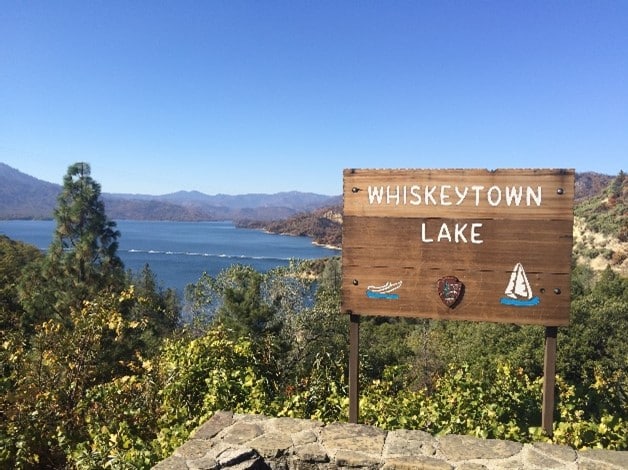
As I drove west on Highway 299, the landscape changed from luscious green to a beiger landscape. It was subtle at first, the blue skies slowly turning umber and grayish, the pine trees having lost their needles, replaced by charred lonely trunks.
The air smelled like a permanent smoldering campfire, adding texture to the barren terra. As I continued driving, I stopped next to a burnt-out car. It was parked in front of a stone chimney standing all alone, seemingly abandoned by the furniture and people that used to inhabit the space with it. My eyes got blurry with tears as I wondered where the people, their pets, and the surrounding wildlife went. It was that overwhelming sense of loss on a wider scale that always got me, like 9/11. “Never forget,” flashed through my mind as I thought about firefighters always across the nation doing all they can every summer and fall to stop things from burning, to save people and places.
It was a relief when I came upon Whiskeytown Lake, and its calm blue water brought on a sense of hope that not all was lost. I went into the visitor center and was greeted by a lovely smiling US Forest Service ranger. It was months after the Carr Fire when I visited, my primary purpose was to research the first edition of Moon Northern California Road Trips. I was comforted at seeing the contents of the center still entirely intact, along with the bright cerulean nature of the lake.
Although the ranger warned of the lake’s most recreated Brandy Creek/Oak Bottom areas not reopening for a while because of the possibility of heavy rains and mudslides, she did say that there was still plenty to do and see at the Whiskeytown. Maybe seeing the crestfallen, slightly agitated look on my face, she told me about the incredibly rare amphibian that was found in Brandy Creek following the fire, and certified police recovered a woman’s precious diamond ring given to her by her late husband while sifting through the rubble.
As of February 2023, a few hiking trails and primitive roads still remained closed due to the Carr Fire but fortunately Oak Bottom has reopened. The Carr Fire burned ninety-seven percent of the park and more than 100 structures; it was recorded as the most destructive fire in the National Park System’s history.
Caldor Fire, El Dorado County– August-October 2021
Cause: Under Investigation
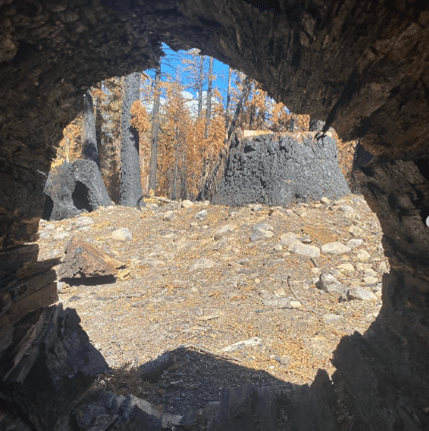
While working at a paddleboard rental shop/café on the shores of North Lake Tahoe, there were no rentals going out on Labor Day weekend, the last hurrah of summer. All lake activities were unavailable when the particulate matter in the air on the Air Quality Index was that unhealthy. Being out on the lake was creepy because of the low visibility and not being able to see past my paddleboard, and my newly formed hacking cough made me feel like I had somehow smoked a pack of Camels a day for a year leading up to that point.
A little fire that started just a bit south of Pollock Pines in El Dorado County where my Aunt Charmen lives spread quickly to take out 1,003 structures from there to Christmas Valley, thanks to a combination of windy weather and a multitude of combustible fuels on the forest floor. It was ignited and quickly blazed, the air getting thicker and smokier until you couldn’t see across the lake, let alone 100 feet out into the water.
As the fire spread east, upwards of 20,000 people evacuated from South Lake Tahoe. I remember driving from Carnelian Bay to Incline Village, seeing people with their belongings piled up on top of their cars like they were the Beverly Hillbillies migrating west. Seeing e-bikes strapped to the back, I thought, That’s smart to remember, as that expensive piece of outdoor equipment is probably not insured.

I thought about what I would do if I had to evacuate. I’d pack up my things and take them down to the lake, load up the kayaks with all of my stuff, and paddle out into the water and wait it out like that couple that jumped in their pool during that fire in Napa, I told my friends. There’s no way I would try to leave the basin, I’d be stuck in traffic for hours. No way I’d burn up in my car.
A few days later, the El Dorado Sheriff’s Department issued a statement via Facebook titled something like, “Reasons Why You Shouldn’t Go to the Lake to Escape a Wildfire.” It listed things about panicked boaters driving into the abyss and possibly running you over; the risks of high winds and capsizing; asphyxiating on the smoke; contracting hypothermia; and more. Bad idea, I guess.
I must admit that the Caldor Fire added to my growing resentment towards tourists and Airbnb’s. While so many people were displaced from their first/permanent/longtime homes in South Lake Tahoe, the “Do Not Come Here” warnings did not stop out-of-town media and other non-residents from coming. Reporters from Sacramento were seen trespassing on private property as their barred owners were watching them tromp all over their threatened homes on the news from an emergency shelter.
“We’re from Sonoma State University, here to cover the Caldor Fire,” two freshmen students with press badges told me while I was working at the café. “Great,” I said, while thinking to myself, I’m a reporter, too, and I’m staying out of the way of firefighters while being respectful to those who’ve been evacuated. What makes you so special? It made me mad, thinking of the way the media flocked to a natural disaster and got in the middle of things, like they were somehow more important than the people who’d been displaced. Unless you can stop the fire, then get out of the way and let the firefighters do their job.
And then there were the tourists who came into the café, telling me they were from Sacramento or Texas or something. “I couldn’t stay in my booked Airbnb in South Shore, so I came up here. This is my first time in Tahoe,” they said to me. I felt conflicted about these comments… on one hand the cafe needed the business but on the other hand people weren’t supposed to be coming to Tahoe because, you know, there was a raging fire going on. There were the brides that were mad that smoke was in their wedding photos blocking Tahoe’s iconic views, and corporate event organizers upset that their team-building s’mores-making nights got canceled since charcoal and propane fire pits were banned.
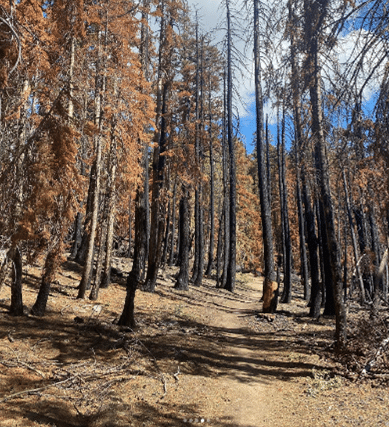
On one Monday morning in mid-September, I was writing about the evacuations for the Sparks Tribune when instantly the “recommended” evacuations on the map turned to “mandatory.” I immediately called the Cal Fire Media Line.
“The evacuation map just changed and now there’s a mandatory evacuation that stretches down to the West Shore to Tahoma, what’s going on down there?” I asked. In a calming tone, the firefighter gave me a standard media answer.
“Well, off the record, I live eleven miles north of Tahoma, is there an immediate threat?”
“No,” the firefighter reassured me, saying that the wind wasn’t moving in that direction but considering the fire spread up to a mile the night before, they needed to be safe than sorry and force everyone out before it became an emergency.
The worst was in Tahoma, where one side of a street had to evacuate and those on the other side could stay because that’s where the county line was divided. Do you know what I would do if I had to evacuate? Probably cross the street to my neighbor’s house.
But even after that phone call with the firefighter, I still panicked. I ran around the house throwing random things in a duffle bag. And I grabbed the stupidest things- a couple of bras, my first aid kit. I had no idea what to take, I just saw a lot of crap. What I didn’t need clouded my judgment for what was important, truly priceless items. What about the multitude of $6,000 original Jason Forcier paintings, the box of photographs? This is what I would’ve forgotten and let burn.
In the middle of the pandemic, we now have this. As if Tahoe hasn’t been battered enough.
Writing this has triggered memories of other fires that seem to get more prominent as the years go by. There was the Camp Fire of 2018 that took out the entire town of Paradise, California, a half-hour away from where I went to college, in which people set up makeshift homeless camps lining the streets of Chico for months following the destruction. There was the Dixie Fire in Northern California in 2021; it burned 963,309 acres– the size of 722,482 football fields– and cost a whopping $1.15 billion to fight. Parts of Lassen Volcanic National Park are still closed because of it. Even the 2022 Mosquito Fire in the El Dorado Hills was scary– as the historic little area of Georgetown evacuated, my family wondered, Would grandpa’s house burn down?
In July of 2022, a mere three days after I submitted my last chapter for the second edition of Moon Northern California Road Trips, set to come out this summer, the Oak Fire broke out.
Once again, I called the Cal Fire Media Line.
“What’s going on over there?” I asked a firefighter, feeling a bit of déjà vu from the previous year. “I just wrote a chapter on Yosemite for a guidebook that’s coming out next year; is Mariposa Grove burning down?”
“Not yet,” he said. “We are getting a handle on it, and we have a dozen firefighters just in that area because we know how important it is to protect those trees,” he added, referencing some of the largest sequoias in the world. Yosemite would be okay, but in talking about all of the recent wildfires and how difficult it is to keep national parks open for recreation, he said something along the lines of, “These fires are getting more intense, harder, and more expensive to fight. It’s likely due to the changing climate and current firecology…someone should write a book about that.”
Republish our stories for free, under a Creative Commons license.
Author

Related Articles

It Could’ve Been Me
The tragedy in the backcountry outside of Truckee is a reminder to not judge too quickly and reach out to those close to you

Wild Christmas Pinyon
While you might imagine that artificial Christmas trees may be traced back only as far as the glory days of plastic in the 1950s, people actually began making fake holiday trees in the mid-nineteenth century.
Freebirds
A Thanksgiving lesson in forgiveness