
Report: A look at Nevada’s push for critical mineral mining
Nevada is going ‘all in’ on critical minerals to boost its economy, bolster rural communities and take charge of the burgeoning electric vehicle market. Not everyone is on board.

Critical minerals are projected to play a pivotal role in the renewable energy transition. This is particularly true for resources like lithium, which is gaining relevance due to its use in lithium-ion batteries that power electric vehicles (EV).
Lithium
“Lithium is a keyword in the modern renewable space, primarily because of the new technologies associated with it,” said Sheldon Mudd, executive director at Northeastern Nevada Regional Development Authority. “Especially in the state of Nevada, we’re finding so many heavy lithium deposits. But EV batteries are not made out of just lithium, these other minerals have to be utilized and capitalized in order to make that technology work. So we have to recognize that as an industry and as a society, all of these metals go hand-in-hand.”
These critical minerals and their use in varying capacities for battery technologies, are bound to be foundational catalysts for the renewable energy transition. According to McKinsey & Co., the battery energy storage systems (BESS) market is projected to reach between $120 billion and $150 billion by 2030.
But, as Nevada seeks to ramp up its renewable battery economy, the state cannot rely on lithium alone. A series of other critical minerals – cobalt, copper and nickel – don’t get the big headlines, but they are equally vital to helping Nevada close the lithium loop. The Department of Energy includes cobalt, copper and nickel among the 38 critical minerals essential for developing renewable energy technologies.
Cobalt
Originally listed as a critical mineral by the United States Geological Survey (USGS) in 2018, cobalt has strategic relevance for its use in rechargeable batteries and superalloys.
That’s because 70% of the world’s cobalt is sourced from the Democratic Republic of the Congo, according to the USGS. Predominantly obtained as a byproduct of copper and nickel production, cobalt often needs to be refined before it can be consumed – which means the U.S. must rely on the world’s largest producer of refined cobalt: China.
“There’s been a real stranglehold on the supply of cobalt for batteries,” said Mitchell Smith, co-president and director of Global Energy Metals Corporation (GEMC), a Canadian company with copper, cobalt and nickel projects in Australia, Canada, Norway, and the United States. “It plays a very important role with the stability of the lithium-ion batteries used in vehicles and electronics. But because of geopolitical tensions with respect to China and their hold on cobalt production and refining, there has been a big movement towards finding new sources.”
Now, a rush for cobalt and other critical minerals could be emerging in the state of Nevada.
Last fall, GEMC initiated a strategic review of two potential mining sites in the state. The company believes it has found high potential for cobalt, copper and nickel at two Nevada locations: Lovelock and Treasure Box, respectively.
“We saw this as a strategic opportunity to influence the material supply chain for battery manufacturing in the United States, especially given there’s a large battery Gigafactory by Tesla and Panasonic, just 100 miles west of where this project is located,” Smith said.
Lovelock is a historical mine with lodes in both Pershing and Churchill Counties that experienced mining operations for all three metals between 1883 to 1890.
According to GEMC records, Lovelock has not been explored during the modern era despite its elevated values of cobalt, copper and nickel.
Copper

Treasure Box, meanwhile, is a Churchill County site primarily drawing interest as a source of copper.
“Treasure Box had limited copper production early into the 20th century,” Smith said. “Since then, there’s been sporadic exploration and development work done at the site. Yet, Treasure Box showed high levels for copper. So our take is that the project warrants further exploration and development, especially given the need to secure a supply of copper.”
Known as one of the oldest historically used metals, copper has been utilized as far back as 8,000 B.C. and is largely attributed for being responsible for civilization’s progression from the Stone Age to the Bronze Age around 3,000 B.C. The metal is widely-known for its ability to transmit electricity, as demonstrated by the fact that nearly three quarters of total copper use-cases fall within electrical applications.
“Copper really is the backstop for everything electric,” Smith said. “Copper is critical for the electrification of vehicles, their batteries and all of the infrastructure required for the electrification of transportation. It’s a bellwether in the move away from fossil fuels toward a green energy transition.”
The EV industry’s reliance on copper can sometimes be overlooked, but industry estimates suggest that anywhere from 85 to 183 pounds of copper are used in a single electric vehicle.
Yet copper’s use cases go beyond electric vehicles to include everyday purposes like electric generators, appliances, telecommunications and wiring for commercial and residential buildings.
“Copper wiring has been the standard in making residential and commercial facilities more efficient,” said Sheldon Mudd, executive director at Northeastern Nevada Regional Development Authority. “So undoubtedly, these minerals are going to be considered for maximizing energy efficiency because of their capacity to pass electricity. They are utilized in almost every aspect of our life, so it’s important that we recognize [their significance] as we try to become more efficient, better stewards of our planet.”
Copper, too, is experiencing constraints on its global supply. Over half of the world’s copper is found in just five countries: Chile, Australia, Peru, Mexico, and the United States. Chile, however, dominates that segment as they account for 24 percent of the world’s supply alone.
“The cost of extracting copper is increasing, so there’s been a big push towards onshoring of a regional supply chain of copper,” Smith said.
Nickel

Nickel is playing a role in these projects, too. According to The Nickel Institute, five countries account for 50 percent of global nickel resources: Australia, Indonesia, South Africa, Russia and Canada.
“Nickel is often used for steel and alloy applications, but within the battery space it’s used in battery chemistries,” Smith said.
Nickel is predominantly known for its capacity to enhance the energy density, or the amount of energy that can be stored in a given volume of battery components. While nickel was left off the original USGS critical mineral list in 2018, it was later added in 2022.
An environmental paradox

While industry experts believe extracting these critical minerals from Nevada mines is a necessary step toward facilitating the renewable energy transition, mining opponents remain concerned. Environmental, rural and tribal advocates continue to call for greater scrutiny in determining if mining for critical minerals is worth the environmental impacts.
“It shouldn’t matter whether the end product is gold, or whether it’s lithium or molybdenum or copper, the analysis of the mine and its environmental impact should be rigorous,” said John Hadder, director of Great Basin Resource Watch. “We need to know the consequences.”
Concerns are also mounting around the broadening list of critical minerals required to support the renewable energy transition. As a result, advocates like Bethany Sam, an enrolled member of the Reno-Sparks Indian Colony, caution against the “green-washing” of the emerging renewable energy and critical mineral industries in Nevada.
“We’re destroying the land and then trying to say it’s in the name of ‘green energy,’” Sam said. “So it’s not just lithium we’re worried about – it’s also cobalt, nickel, copper, and all the other minerals that it takes to make one electric car battery.”
Critical mineral sources are diminishing while their demand is increasing, which squeezes already stressed supply chains. On top of that, mining requires billions of gallons of water, as previously published by Sierra Nevada Ally.
As a result of strained supply and geopolitical tensions, both the Biden and Trump administrations have taken executive actions that favor domestic production of these materials.
Cost is also a major consideration, however, as electric vehicle adoption will only go as far as people can afford.
“The only way you’re going to get buy-in on these kinds of initiatives is [that] it has to be cost-effective,” Mudd said. “It has got to be reasonable to the average person. So as research and development improves, we must maximize the efficiency of these minerals and how they’re utilized.”
As Nevada seeks to establish itself as an economic leader in the battery industry, the state appears to be recognizing that it all starts with extracting these valuable metals directly from their sources.
“Society is going to have to recognize that these minerals are no good to us when they’re a thousand feet below the surface,” Mudd said. “If you want green technology, if you want these elements to work in our favor, then you’ve got to get them out of the ground. The reality is, if you want these things, you have to support the mineral production and extraction of these elements.”
But advocates suggest this more transactional mindset, however, is what enabled the climate crisis in the first place. That’s why, according to some, we must instead redefine our cultural relationship with the Earth.
“We’re at a time where we have to make a decision as a humanity to scale down on everything that we own,” Sam said. “While luxury is nice, it comes at the cost of someone else and green energy might not be as green as we think.”
The path forward
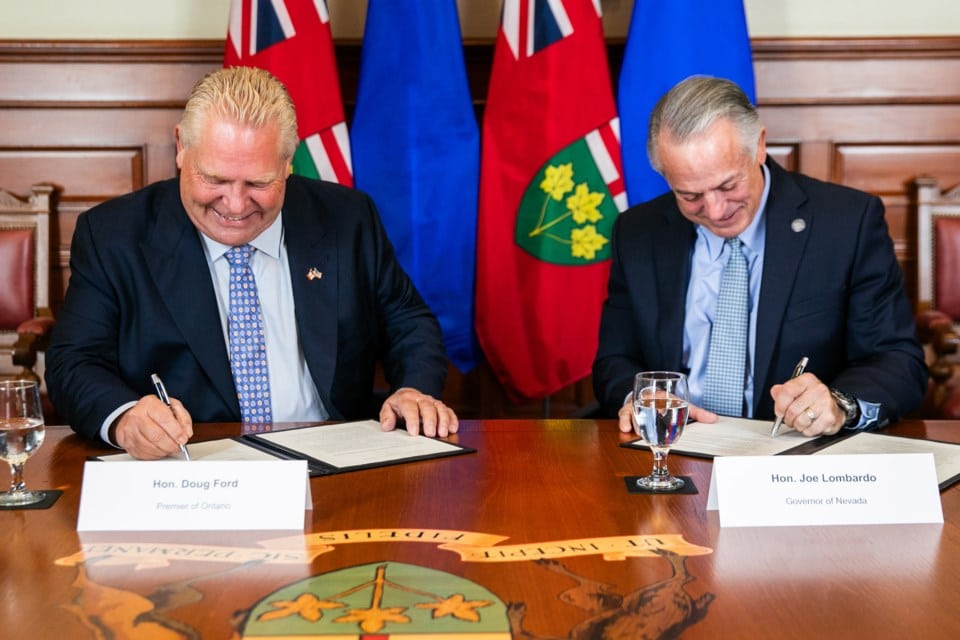
Last fall, the state of Nevada entered into an agreement with the provincial government of Ontario, Canada, to collaborate in developing their respective critical mineral and renewable energy industries. The emerging partnership demonstrates the push for a more domestic supply chain of critical minerals, and outlines the strategic roles each can play in establishing national, economic and energy security in North America.
“The MOU process started about six or seven years ago,” said Sheldon Mudd, executive director of the Northeastern Nevada Regional Development Authority. “Ontario was looking to do more open-pit mining, while we were primarily seeking more efforts in underground mining. Since they’re the open-pit experts and we’re underground experts, we aimed to build on the synergies that exist between our two areas.”
Since then, the collaboration has grown beyond mining strategies to include capitalizing on an emerging critical mineral industry. These elements are of particular concern for the United States and its allies, largely due to reliance on importing these valuable commodities from geopolitical adversaries like Russia and China.
According to the Center for Strategic and International Studies, the critical mineral industry as a whole is projected to grow $2.78 trillion by 2027. As a result, Nevada and Ontario are working together to advance their interests in these emerging markets.
According to a press release provided by the Nevada Governor’s Office of Economic Development, Nevada and Ontario are seeking to promote bilateral trade and investment in developing battery, mining and renewable energy technologies.
“The [MOU agreement] is undoubtedly important because Nevada shares so many attributes with Ontario,” Mudd said. “We are both primarily mining jurisdictions, particularly for northern Nevada and northern Ontario, because our population bases are somewhere else. Whether it’s Toronto or Las Vegas, we share this disparity between population bases and other rural, remote parts of the state or province.”
The MOU agreement is a tangible embodiment of their shared vision for the future of these technologies, and recognizes their respective roles in capitalizing on these industry opportunities.
“This cooperation between the Ontario province and the state of Nevada, is looking at ways that we can source materials and collaborate to build that critical mineral economy and scale it to be competitive on a global landscape,” Smith said.
Leaders are quick to point to the economic opportunities that could flourish from embracing these industries, as well as a way to support the rural communities of Nevada and Ontario.
“Critical minerals can facilitate an economic transition throughout rural Nevada,” Mudd said. “When we think of critical mineral extraction and mining, most people just think of the actual mining process. But if we want to see that full lifecycle of critical minerals, from extraction and value-added manufacturing, to use and recycling, the potential for all of those elements exist primarily in rural Nevada.”
Who benefits from the green energy transition?
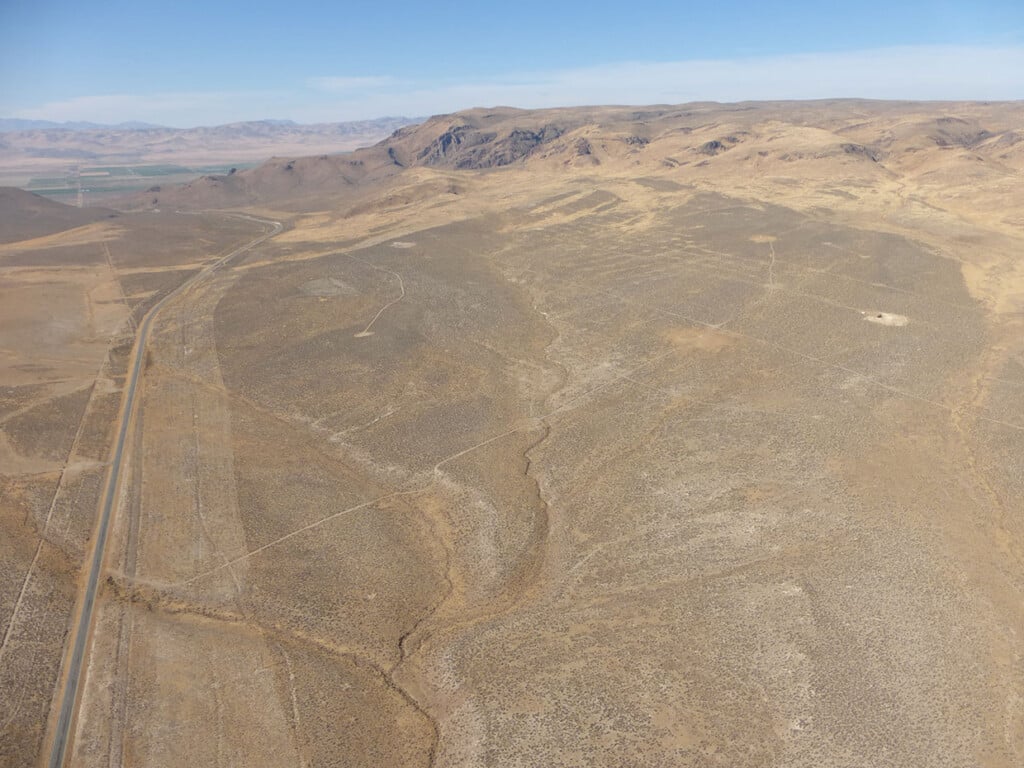
Last year, General Motors announced a $650 million equity investment in Lithium Americas, which oversees the controversial Thacker Pass lithium mine proposed for development in Nevada. Automotive manufacturers are increasingly recognizing the potential of the EV market, which by some estimates is expected to reach $82.8 billion in 2024. Consequently, investing in mining for critical minerals like lithium now, to meet these future demands for renewable energy technologies like EV batteries, could prove a massive return on investment for corporations like GM.
But according to the same GM press release, processing and manufacturing for GM’s batteries is projected to take place outside of Nevada, at various plants across the United States and Canada. While still within North American borders, this may prove counterintuitive to Nevada’s intention for developing a complete “lithium loop” supply chain within the state. While Nevada counties and state coffers do get royalties thanks to these mining operations, the U.S. Treasury doesn’t – even when operating on federal public lands.
Meanwhile, opponents of Thacker Pass call into question the human rights violations and environmental impacts that exist within GM’s battery supply chain. The proposed Thacker Pass mine also shares the burial site of an 1865 massacre of 31 Paiutes by federal soldiers. As a result, a series of lawsuits were filed accusing the federal government of fast-tracking the Thacker Pass project to meet ambitious green energy goals, without proper environmental and cultural considerations.

Consequently, the Thacker Pass example suggests that rural Nevada residents may bear the brunt of environmental and cultural impacts, while county and state coffers and international conglomerates like GM may be the ones that ultimately profit.
So while the economic partnership between Nevada and Ontario demonstrates the massive potential for the critical mineral and renewable energy industries in the state, it remains important that measures are also implemented to protect the rural and tribal communities that will be most directly affected by these mining operations. This MOU agreement could be a step toward laying the foundation for these safeguards to be implemented.
“A lot of opportunity exists for rural Nevada to capture the various elements of the critical mineral supply chain and change the economic paradigm,” Mudd said. “Right now, it’s primarily mining and extraction, but hopefully within the next ten years, it’ll be battery recycling or even the manufacturing of cathodes or anodes within batteries. There is potential for all of those [supply chain] elements in rural Nevada, and this agreement is going to open up a lot of those opportunities.”
In the meantime, Global Energy Metals Corporation is moving forward with its strategic review of the Lovelock and Treasure Box sites. According to a recent press release, a Technical Report on the two potential mines found “positive exploration results,” indicating momentum is continuing to build.
Therefore, the attention surrounding these potential critical mineral mines – and the search for others like them – may become a common occurrence in Nevada’s mining communities.
Noah Glick and Alejandra Rubio contributed to this report.
Republish our stories for free, under a Creative Commons license.
Author

Related Articles

Forging a Brighter Future
A thank you for your support and a preview of what’s ahead

Uphold the Power of Local Journalism for Just Pennies a Day
In five minutes, you can make a meaningful contribution toward local journalism–and your donation made by tomorrow is doubled.

Looking Back and Celebrating our First Five Years
The Ally began as an experiment in community-supported journalism, and five years later, we’re continuing to evolve, thanks to your financial support.