
As Reno warms, could trees be one solution to cooling the city?
Reno continues to warm faster than any other city in the country, and leaders are looking toward solutions.
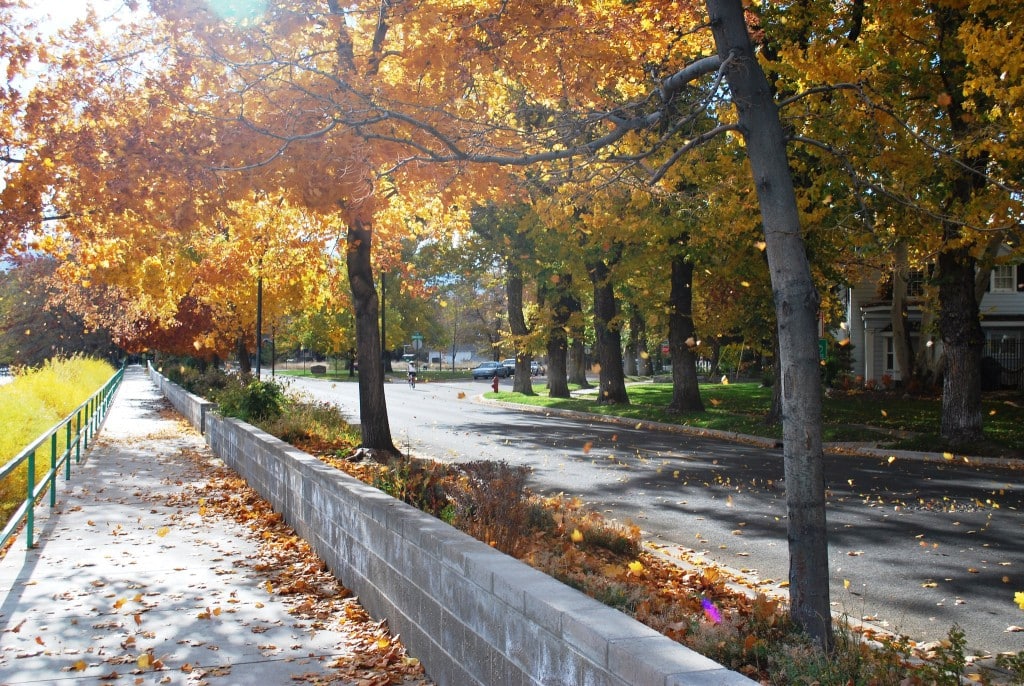
Summer temperatures in the Biggest Little City have increased by nearly 11 degrees over the last 50 years, and trees have been identified as a positive and affordable solution to this fast rise in urban temperatures.
It makes sense; it’s always cooler under the shade of a tree. The city plans to use a recent grant from the United States Department of Agriculture, to augment the ReLeaf program, a local program which seeks to double the tree cover across Reno by 2036.
“I spearheaded the establishment of that program,” said Reno Councilwoman Naomi Duerr. A report completed in 2012 found that the city had a tree canopy cover of five percent, which prompted Duerr to spearhead the ReLeaf initiative nearly a decade ago.
The United States Department of Agriculture (USDA), through the Forest Service, awarded the city a $500,000 grant to increase the number of trees, which the city plans to plant in one of the hottest parts of town near the airport, more than 130 new trees in all. The goal is to address the growing climate change issue known as heat islands.
“An urban heat island is a phenomenon that has come from a variety of different mechanisms having to do with how reflective the surfaces are, their capacity to hold heat, the amount of humidity in the air, [and] the effects of building,” explained Dr. Tom Albright, the Nevada State Interim Climatologist and geography professor at the University of Nevada, Reno.
Predominantly happening in the summer, heat islands tend to increase temperatures relative to areas outside of the urban core. During the day, infrastructure such as buildings and streets absorb the sun’s heat. During the night, the stored energy is then released, resulting in higher night-time lows.

Urban heat islands become a greater risk to people during summer heat waves. That’s because cooler night-time temperatures are one of the predominant ways people can cool down. If the human body can’t find respite from warm temperatures during the evening, long-term exposure to heat can lead to heat stroke, cardiovascular issues, and death. To make matters worse, lower-income neighborhoods are the most impacted due to the lack of tree coverage and green spaces.
“When you look at some places like Reno and Las Vegas, those places have especially seen large increases in night-time temperature,” said Albright. Research points toward higher overnight temperatures being detrimental to people’s health.
Albright is in the early stages of research that will map the heat index of Las Vegas via NASA satellites, which are equipped with infrared measuring cameras. These cameras are like the type used when conducting a thermal home imaging audit which looks for heat leakages and insulation gaps.
“[This research] is a real direct indicator of how hot our cities are feeling, and it gives us an advantage over traditional meteorological observations,” explained Albright. The difference is that the satellites will provide hundreds of thousands of temperature observations over a selected area, whereas meteorological observations are limited to a few locations a few times a day.
Albright’s team is particularly interested in the extremes. For example, looking at the 2021 and 2022 heat waves in Portland, Ore. – extreme heat events that resulted in hundreds of heat-related deaths.
“Because these are places where the thresholds are crossed more, for example in Las Vegas, in the eastern part of the valley, that’s where we see some of the hottest temperatures,” said Albright. “[That is where] we see some of the people that have the hardest time dealing with the [heat] problem.”
Common issues that increase the exposure to these extremes are lack of air conditioning, working outside, or no tree cover.
“Trees are these giant extensions of surface area that can help evaporate water,” said Albright. This is what is known as evapotranspiration. It is the process by which plants transfer water to the atmosphere. “What that does is sort of like the skin of the earth sweating; if you have areas where the earth is sweating, you’re cooling the skin of the earth.”
Federal funding to address climate change locally
Funding for the USDA grant helping to plant more trees in Reno is part of the Filling the GAPP, or Green Airway Planting Project. It’s part of President Joe Biden’s Inflation Reduction Act of 2022. With it, the city will plant 132 trees near the airport along Airway Drive.
“Trees are one of the most inexpensive things that we can do to combat climate change,” said Duerr. “For two reasons, they provide shade and they help clean the air.”
While $500,000 may seem expensive for 132 trees, the city plans to use a significant portion of the funding to renovate and modernize its greenhouses. Duerr explained by being able to grow trees locally the city can increase the odds of survival. Updating the infrastructure will also allow for cultivating future trees and ultimately help the city get closer to its 2036 goals of the ReLeaf program.
Given the proximity to the airport, the city will select species that will not attract birds of prey while ultimately benefiting nearby neighborhoods. However, last fall nearly 200 mature trees were cut down to make way for a new infill development project. To make way for the Airway Commerce Center, developers began removing trees along Airway Drive to replace with new warehouses just south of McCarran Boulevard. Duerr explained the loss of trees is one of the challenges to the ReLeaf program.
“We don’t currently have an ordinance that mandates that you either keep trees,” said Duerr. “We do have an ordinance that requires planting so many trees per square foot of building.”
Tolles, the developer behind the Airway Commerce Center, did not respond to an interview request but the Reno Gazette Journal reported that Tolles has “plans to further expand tree coverage on the site.”
For Albright, he wants people to know that heat is not something we should take lightly.
“Most people don’t realize that heat is the most hazardous kind of weather phenomenon that we have in the United States,” he said.
Albright hopes the community is thinking about how to handle the next heat emergency, and he envisions neighbors helping neighbors and looking out for people with reduced mobility, especially those who have no air conditioning.
While there are many factors to urban heat islands, trees can play a pivotal role in reducing the ambient temperature of urban centers. Though trees may take a decade before any noticeable cooling happens, the key is to remain forward-thinking by planting trees today.
“I think there’s a lot to be proud of here,” said Duerr “and I’m very pleased that the government, the federal government in this case, chose to focus on this initiative.”
Republish our stories for free, under a Creative Commons license.
Author

Related Articles
Hard Work, Low Pay, High Risk: Who Wants a Job in Forestry?
How local efforts are helping to better opportunities in forestry for people and the profession.
Ally Audio: Where’s the Mountain Snow We All Love?
Check out the latest edition of Sierra Nevada Ally’s podcast
When Winter Comes as Rain in the Sierra Nevada
A warm, wet start to the season is reshaping snowpack — and what it means for local businesses in Truckee and beyond.